The JPMorgan Asset Management money manager at the helm of the largest active exchange-traded fund in the $7.2 trillion industry is coming to market with another equity strategy geared toward investors bracing for a period of uncertainty.
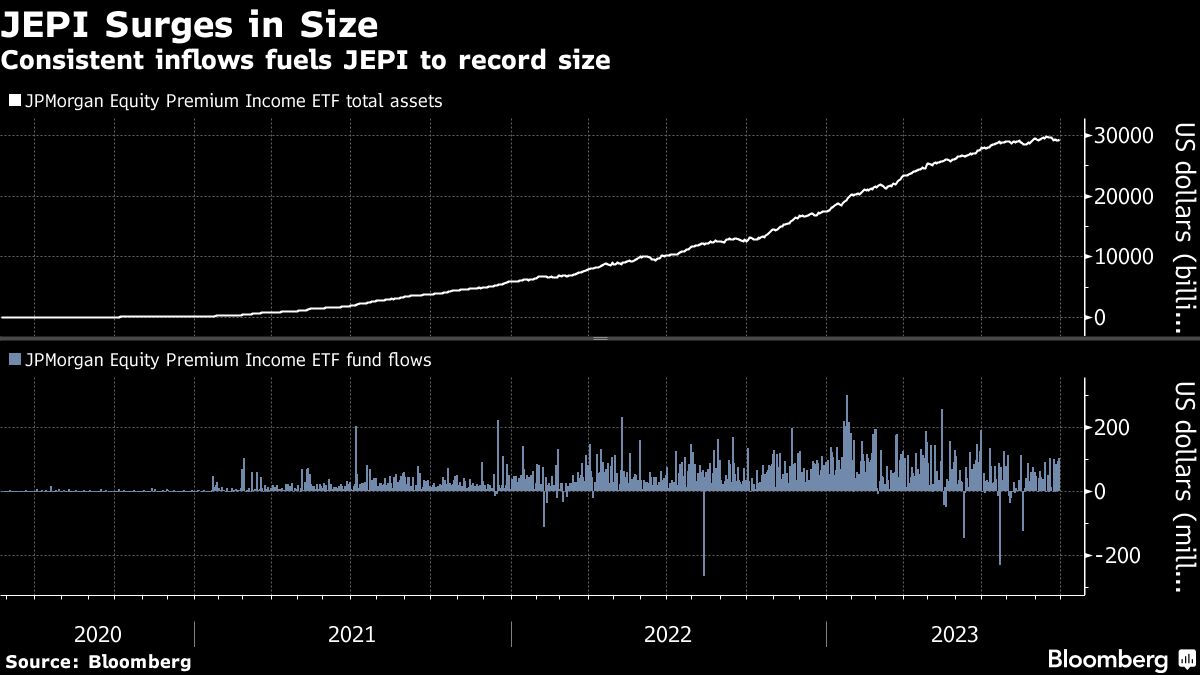
The JPMorgan Hedged Equity Laddered Overlay ETF (ticker HELO), which begins trading Friday, tracks large-cap US stocks and employs an options-overlay strategy — buying and selling put contracts while selling calls. HELO charges 50 basis points and is actively managed by a team that includes Hamilton Reiner, who oversees the $29 billion JPMorgan Equity Premium Income ETF (JEPI).
HELO complements JEPI and its sister fund, the $5.6 billion JPMorgan Nasdaq Equity Premium Income ETF (JEPQ), in that it’s also designed to minimize downside in volatile markets, according to Reiner. While the ETF’s hedges may come at the cost of missing some upside during a bull run, HELO is launching at a fragile moment in markets. Risk assets are shuddering under the weight of soaring rates as the Federal Reserve signaled it will keep borrowing costs higher for longer, while the US government is heading into an all-but-guaranteed shutdown over the weekend.
Against that fraught backdrop, HELO’s strategy should help people “stay invested” while also allowing for “some semblance of sleeping at night,” Reiner said.
“I don’t believe in timing our hedges, so we’re always, 100% of the time, hedged on our portfolio,” Reiner said in a phone interview. “We’re all our own worst enemies. Every time you’ve tried to time the market, it’s too darn hard to always get it right, so this strategy helps eliminate some of that desire to time the market.”
HELO provides so-called laddered exposure by holdings the options for three different three-month periods during a typical year, which are staggered a month apart. The goal of such an approach is to provide lower volatility in any market cycle through the series of three-month hedges, versus a single hedge period, according to Reiner.












