Spartanburg, not Atlanta. San Antonio, not Austin. A challenging housing market is pulling builders away from metros they’ve long favored to smaller cities, where it’s easier to construct the kinds of homes Americans can afford.
The shift raises questions about the future of big Southern metros that have historically made affordability central to their pitch to migrants from high-cost parts of the country. Many house hunters now find themselves priced out in these destinations by a combination of expensive homes and mortgage rates near 7%. Moreover, cautious buyers are driving resale inventory higher in traditional construction hot spots, depressing prices enough that the economics of building there have become more difficult.
In response, developers are embracing a tweak of an old baseball aphorism — “build ’em where they ain’t” — in this case smaller metros where there’s less competition from the resale market or other builders. D.R. Horton Inc., the largest US homebuilder, called out this dynamic during its recent earnings update. Chief Executive Officer Paul Romanowski noted that smaller markets, where the company competes against private players and a few public builders, have been performing better than larger ones. The company is just starting to build out its teams in these communities, he said.
This gets to an important nuance in the current housing market slump — the downturn isn’t due to a crash in demand or a surge in unemployment, it’s due to affordability. And, America continues to have a housing shortage overall. The inventory of existing homes for sale has been climbing because buyers are holding out for lower interest rates or prices and, at the same time, new homes started during the pandemic housing boom are coming online. Where prices are more reasonable and there’s less supply, builders can still make the math work for buyers.
It seems unlikely that building more in metros such as Spartanburg, South Carolina, and Savannah, Georgia, will fully offset declining activity in metros including Atlanta and Charlotte, but it should keep the national construction slump modest.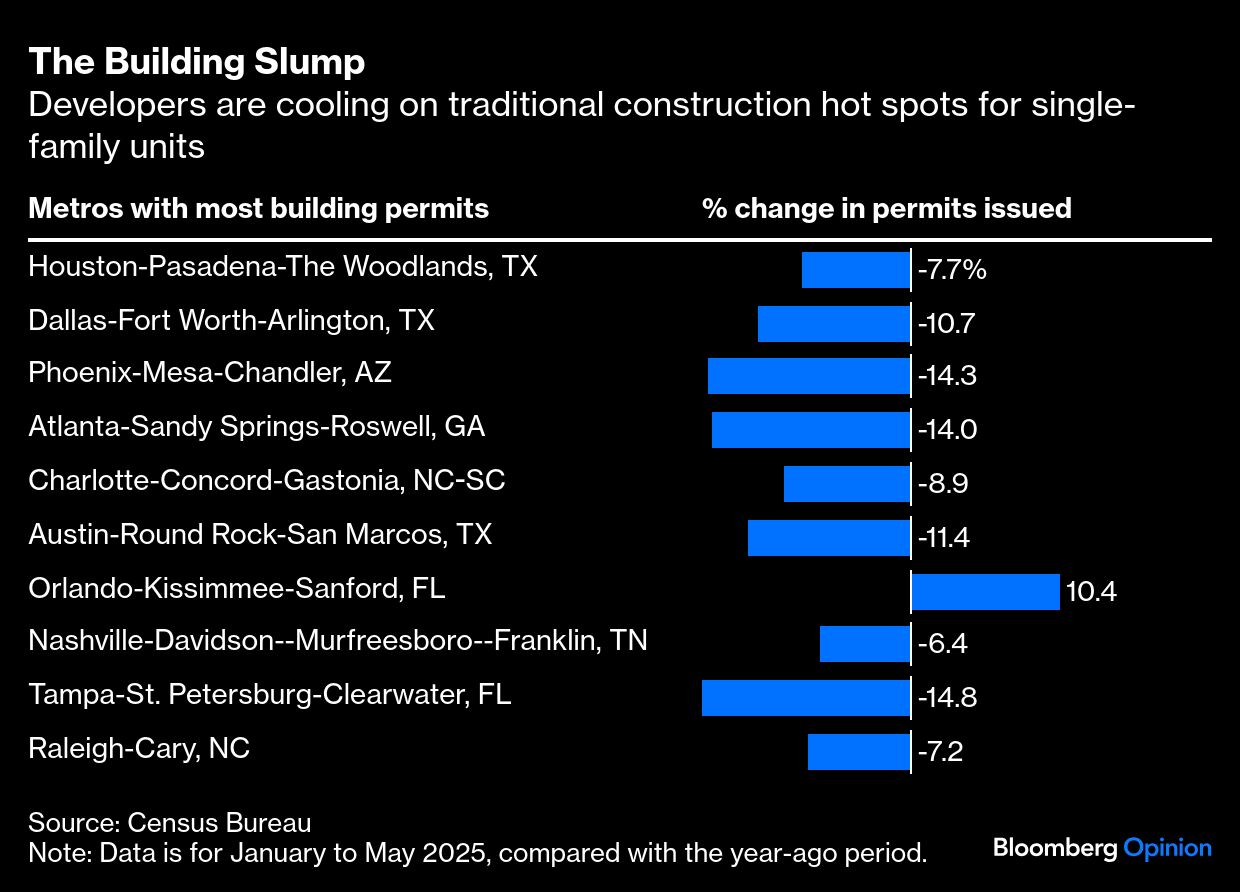
The decline nationally in single-family building permits masks huge variations. Out of the 10 largest metros by permits issued that experienced slumping activity in the year through May 9, half are down by double-digit percentages. At the same time, many smaller metros are experiencing substantial growth, among them the aforementioned Spartanburg and Savannah in the Southeast, but also Oklahoma City, Kansas City and Cincinnati in the middle of the country. These are all areas that have seen modest inventory growth over the past few years and more stable pricing. John Burns Research and Consulting has noted affordability-driven migration from Austin to San Antonio, and from Denver to Greeley and Colorado Springs.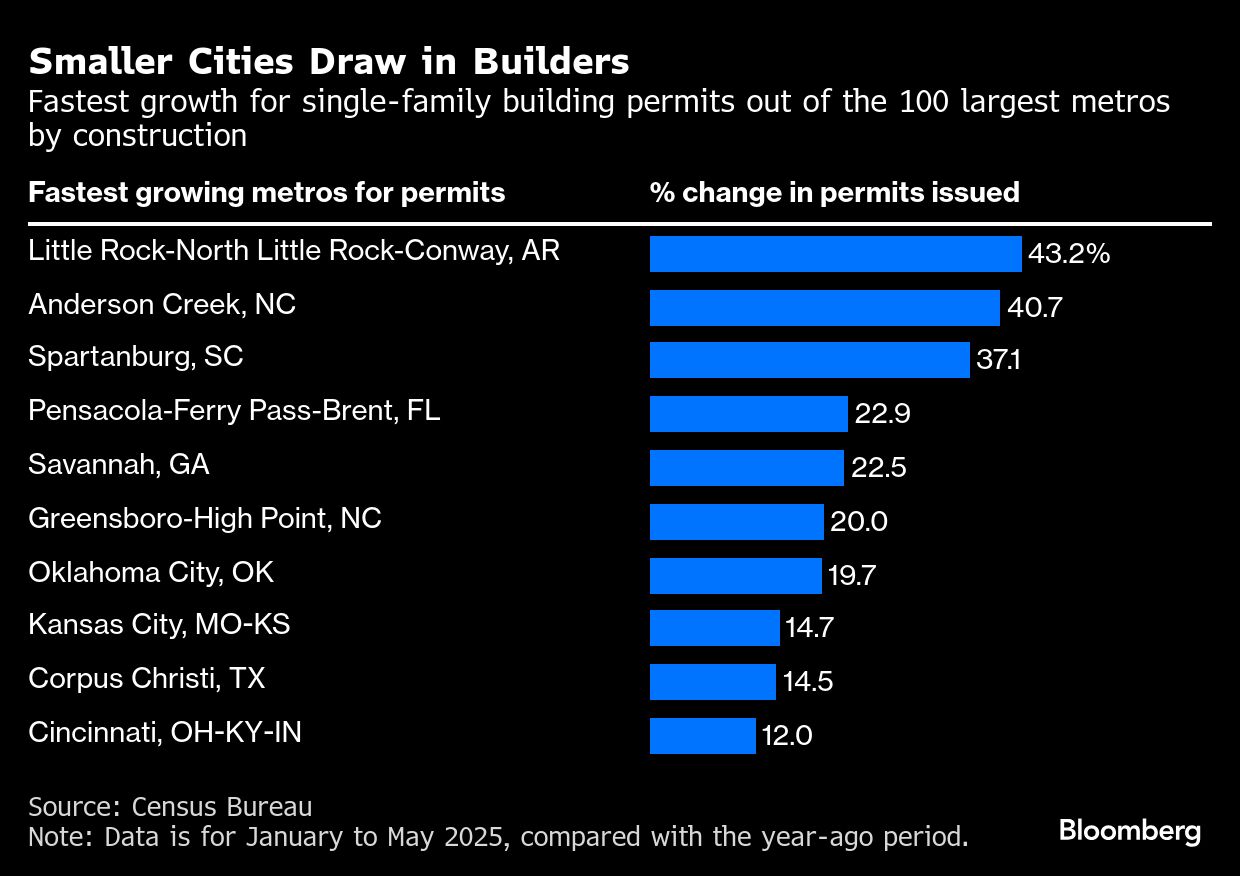
Fresh attention from builders is good news for places where land and other costs are cheaper than in the bigger Sun Belt metros that typically account for a large share of residential construction. Richmond Federal Reserve President Tom Barkin said last year on the Bloomberg Odd Lots podcast that one of the biggest challenges for smaller communities is getting homebuilders to start projects there.












