 The views presented here do not necessarily represent those of Advisor Perspectives.
If you’re really interested in a lengthy chronicle of the U.S.’s efforts to impose financial sanctions on its enemies — or putative enemies — Edward Fishman’s most recent book may be something to consider. It intricately describes the minutiae of deciding on and applying sanctions. However, it does so at such length and in such detail that, as one feels increasingly enlightened, one might also feel a growing sense of exhaustion.
Chokepoints: How the Global Economy Became a Weapon of War chronicles the efforts over more than 45 years by the U.S. “deep state” to exert pressure on geopolitical adversaries using economic weapons — i.e. sanctions — rather than military weapons. Fishman’s confidence and investment in this strategy is expressed in the title of the introduction to his book, “Win Without Fighting.”
Nevertheless, even Fishman himself expresses some doubts about its effectiveness:
“Export controls against Huawei [the Chinese technology firm and smartphone provider] stifled the company’s quest to dominate global 5G networks and slashed its revenue, but they neither put an end to Chinese economic aggression nor created a new stable equilibrium in U.S.-China relations. Most tragically of all, the barrage of economic weapons fired at Russia failed to stop the invasion of Ukraine. With such a mixed track record, it’s reasonable to ask whether the benefits of economic warfare are worth the costs.”
In response to this passage it is, first, worth mentioning that, in fact, Huawei has weathered U.S. sanctions exceedingly well. Its revenues grew by 22% in 2024, despite the sanctions, to a level of $118 billion.
Second, the phrase “they neither put an end to Chinese economic aggression” deserves further analysis, to which we shall come shortly.
The Complicated Process of Imposing Sanctions
Fishman is obviously privy to the most intimate details of the processes involved in imposing economic and financial sanctions on countries that are, or are presumed to be, U.S. adversaries. According to Wikipedia:
“Between 2011 and 2017, Fishman served in various roles at the U.S. Department of State, the U.S. Department of Defense, and the U.S. Department of the Treasury. In 2011, Fishman served as special assistant to the Under Secretary for Terrorism and Financial Intelligence at the Treasury Department. From 2013 to 2014, Fishman was a member of the Iran sanctions team at the State Department, focusing on strengthening sanctions during international nuclear negotiations.”
Hence, his accounts of the machinations and debates involved in deciding what sanctions to impose and how to impose them are thoroughly credible.
Those machinations and debates involve a swath of departments within what has been called the U.S. deep state. One example was the complicated efforts to impose sanctions on Russia before and after its invasion of Ukraine in February 2022. Fishman’s book opens with the image of a thousand-foot-long line of gigantic oil tankers stalled in the Black Sea in December 2022 at the mouth of Turkey’s Bosphorous Strait.
The tankers were delayed while Turkish officials checked to make sure they were insured by non-Russian insurers before being allowed to proceed through the strait. The Turks were worried that if not properly insured, a disaster such as an oil spill would be their liability. This was the result of newly imposed U.S. regulations, under which “U.S. and European firms could no longer ship, insure, or finance cargoes of Russian oil sold for any price above $60 per barrel.”
The story of how this regulation was fashioned is one of the most interesting in the book. There was a desire to curtail Russia’s revenues to impair its ability to pursue the Ukraine war. But the bulk of Russia’s revenues came from its sales of oil and gas — including sales to European countries such as Germany.
Russia is a major oil exporter, second only to Saudi Arabia. If Russia’s oil sales plummeted, the global price of oil would spike upward. Americans are famously sensitive to the price of oil. Any U.S. president who presides over an economy in which the price of gasoline lurches upward is in serious political trouble. Therefore, it was important to impose a sanction on Russia that did not curtail its sales of oil.
The solution was to impose a price cap. To enforce this price cap required the cooperation of the oil transport services industries, including shipping, financing, and especially, maritime insurance. The story in the book of how the price cap and its means of enforcement were determined is fascinating to read. Nevertheless, it is unclear how effective it was, since oil prices did at times surge, leading to a comparable surge in Russia’s revenues, and Russia was able to massively increase its sales of oil and gas to non-cooperating countries such as India and China.
Fishman’s narrative shows some signs of partisanship, subtle in the case of U.S. politics. He served during Democratic administrations, and while his selective knowledge and approval of actions under Democratic administrations is understated, it is likely that some partisan Republicans would notice it and disapprove. For example, Fishman celebrates the sanctions that drove Iran to accept and sign the JCPOA, the Joint Comprehensive Plan of Action, “a diplomatic agreement reached in 2015…exchanging sanctions relief for constraints on Iran’s nuclear program.” But Republicans generally opposed the JCPOA, and Donald Trump withdrew from it during his first presidential term in 2018.
The earliest instance of the application of sanctions related in Fishman’s book was the freezing of $12 billion of Iranian assets by president Jimmy Carter after the 1979 revolution against the Shah of Iran, which resulted in the extremist Islamic Republic of Iran. Fishman attributes the freeing of the 52 US Embassy employees that were taken hostage by the revolutionaries to these sanctions.
According to Fishman, one of Carter’s top advisors later reflected, “It was indeed the leverage provided by the frozen assets that solidified the final deal. The fledgling Iranian regime was in desperate need of cash.” The hostage release is sometimes mistakenly attributed to President Reagan because it took place on the last day of Carter’s presidency, just before Reagan took office.
The China Syndrome
Now to the passage about “Chinese economic aggression.” First, it is useful to quote a noteworthy passage from Fishman’s own book:
“…defensive measures may not seem so defensive from the outside. The world economy is experiencing what scholars call a ‘security dilemma’: as one state builds up its economic arsenal to improve its security, others feel less secure and build up their own arsenals in turn.”
The security dilemma usually applies to military defenses, but it applies to economic defenses as well. Fishman speaks of “Chinese economic aggression” in the very same book in which he describes — and champions — the project of American economic aggression, i.e. sanctions. Of course, one might — as Fishman surely does — interpret sanctions imposed by America as defensive, while similar Chinese actions are interpreted as aggressive. It is the security dilemma all over again: One side sees its actions as defensive while the other sees them as aggressive. And thus, the conflict escalates.
But Fishman’s interpretation of virtually everything China does as aggression goes well beyond that. This approach to China is bipartisan. In this case, Fishman’s primary source is Matt Pottinger, a fiercely anti-China Republican. Pottinger was deputy national security advisor on the National Security Council during the first Trump administration.
The routine allegations against China that Fishman makes have become par for the course in the anti-China U.S. of the past several years. The only allegation that is fully true and of genuine concern is that the PRC, the People’s Republic of China, has a strong desire and intention to absorb the ROC or Republic of China, the official name of Taiwan, back into the mainland polity in the not-distant future.
But most of the other allegations stated by Fishman (and Pottinger) are either untrue or misleadingly stated. We hear yet again of China’s “forced technology transfer.” But what that means is that when a Chinese company has joined with a U.S. or European company in a joint venture, China has often required as a condition of the agreement that the Western company transfer its technology to the Chinese company. There is nothing “forced” about it, as it is obviously the Western company’s choice. The Western company has often agreed to it because the transfer of its technology was less of a drawback than would be the loss of the Chinese market.
Another allegation is that Chinese investments in various countries around the world, as part of its Belt and Road Initiative (BRI), amount to “debt-trap diplomacy.” According to the debt-trap diplomacy theory, in Fishman’s words, “…recipients of Chinese largesse soon found themselves drowning in debt and interest payments, as BRI loans carried interest rates several times higher than typical infrastructure loans. When countries struggled to repay, Beijing simply seized the infrastructure that it built.” But the debt-trap diplomacy allegation has been thoroughly debunked.
This line of attack reaches its utterly ridiculous peak when Fishman relates that when secretary of state Rex Tillerson travelled to Beijing in March 2017, affecting a conciliatory tone, “Matt Pottinger, who joined Tillerson on the trip, winced as America’s top diplomat stressed the need for ‘win-win solutions,’ a phrase borrowed straight from Xi’s talking points.”
If speaking of “win-win solutions” is a naïve surrender to Chinese propaganda, then virtually everything that isn’t an expression of bellicosity toward China also is. But of course, those like Pottinger and Fishman who believe that bellicosity toward China is the only way to defend the U.S. against it are falling into the trap of the “security dilemma.”
Fishman also makes casual allegations against China that are based on little evidence, such as: “Xi [Jinping, China’s president since 2012] set out to build a twenty-first-century economic empire, one that would rival America’s global network of economic dominance and ultimately serve as a launchpad for China to achieve ’national rejuvenation’— shorthand for replacing the United States as the world’s preeminent superpower.” (Emphasis added.)
But what clear evidence is there for “national rejuvenation” actually meaning the replacement of the United States as the world’s preeminent superpower?
And as for common statements about “Chinese aggression,” it should be noted that apart from a brief invasion of Vietnam in 1979 and a one-day conflict on the India-China border in June 2020 that left 20 Indian soldiers and 4 Chinese soldiers dead, China has not engaged in any major aggressive military actions in more than 45 years. Its intentions toward Taiwan are indeed aggressive and stated unabashedly, but most nations in the world do not recognize Taiwan as a country separate from China.
Fishman gets to the bottom of the U.S. antipathy toward China when he says, “as the Chinese economy skyrocketed, American officials felt powerless to do anything that might stifle its rise. This might have been fine if China’s political system was evolving as U.S. officials expected.”
In other words, the U.S. is angry that China has been successful without fully adopting our system. In the end, Fishman acknowledges that “The penalties were not designed to change behavior but to downsize China’s role in the world economy. Over time, inflicting economic damage on China became an end in and of itself.”
Fishman does seem to acknowledge, by quoting a Chinese official, Guo Ping, that China’s actions, which sanctions were meant to curtail, are also actions that the U.S. itself practices:
“Instead of talking a big game on security, the Americans should look in the mirror. ‘Prism, prism on the wall. Who’s the most trustworthy of them all?’ Guo asked, as if reciting an incantation. ‘If you don’t understand this question, go ask Edward Snowden.’ Guo was referring to PRISM, an American program that collected online data from foreigners, whose existence had been leaked by a former NSA contractor.”
Apart from its probably futile sanctions against China, and the moderately unsuccessful sanctions against Russia, some of the sanctions the U.S. has levied against Iran and on a few other occasions may have been somewhat successful. Fishman is probably right in saying that sanctions have had a mixed track record.
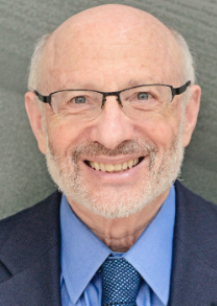
Economist and mathematician Michael Edesess is an adjunct professor and visiting faculty at the Hong Kong University of Science and Technology. In 2007, he authored a book about the investment services industry titled The Big Investment Lie, published by Berrett-Koehler. His new book, The Three Simple Rules of Investing, co-authored with Kwok L. Tsui, Carol Fabbri and George Peacock, was published by Berrett-Koehler in June 2014.
A message from Advisor Perspectives and VettaFi: Discover something new! Click here to register for our upcoming webcasts.
Read more articles by Michael Edesess
 The views presented here do not necessarily represent those of Advisor Perspectives.











