Traders Brace for Lower Treasury Yields as Hedging Costs Rise
Bond traders are preparing for Treasury yields to drop further even as the 30-year reached its lowest level in six months on Tuesday.
The cost of protection against a bigger decline in yields across the curve is rapidly rising, according to pricing of options wagers. With the US government shutdown on its way to becoming the second longest on record, renewed concerns over the credit market and heightened US-China trade tensions, traders are piling into quality, risk-off assets. The advance in the Treasury market is pushing yields across the curve lower.
Over the past week, the cost of Treasury call options rose sharply relative to puts. That skew in favor of calls remains close to the most extreme levels last seen in early April when President Donald Trump announced global tariffs.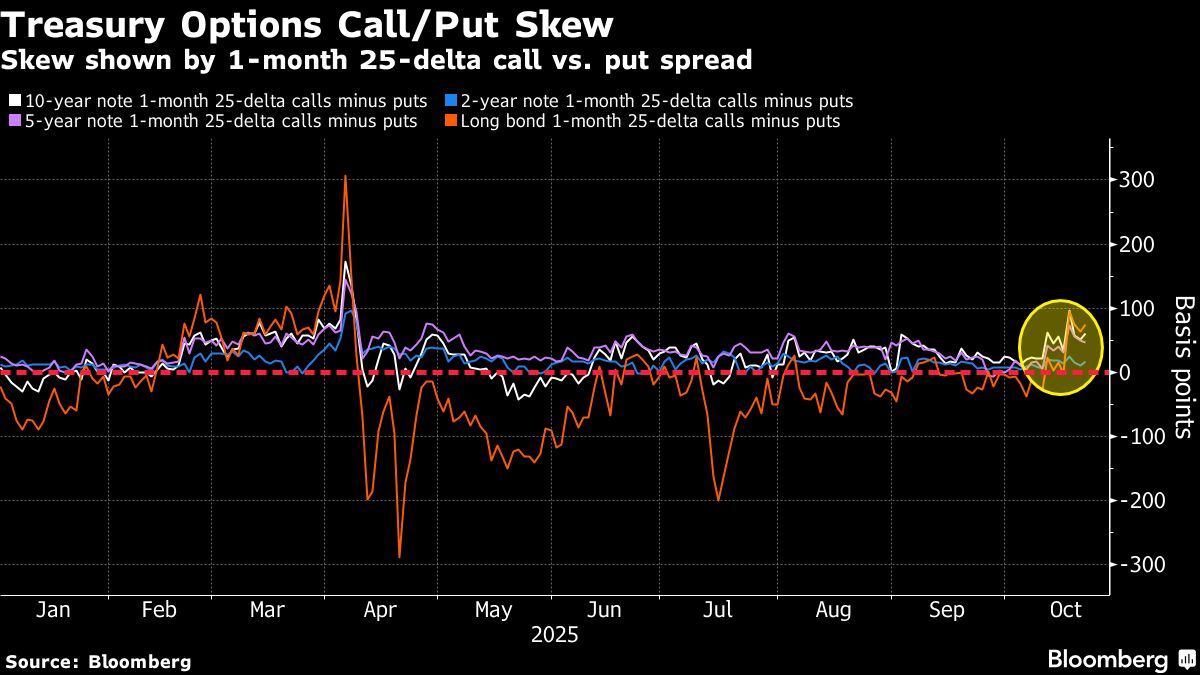
“In terms of positioning the tactical setup is clear — long everything with the market rapidly chasing the richening moves” in US bonds, Citi strategist David Bieber wrote in a Tuesday note.
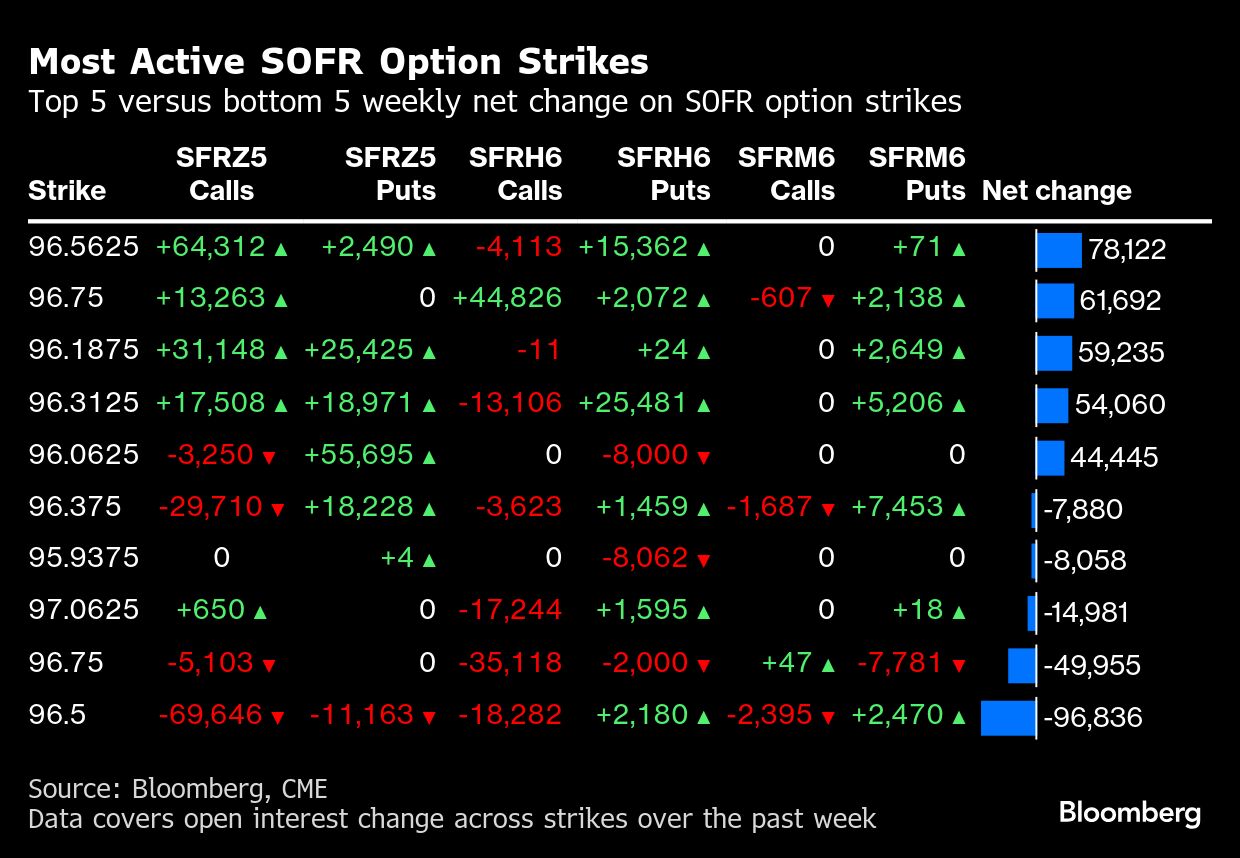
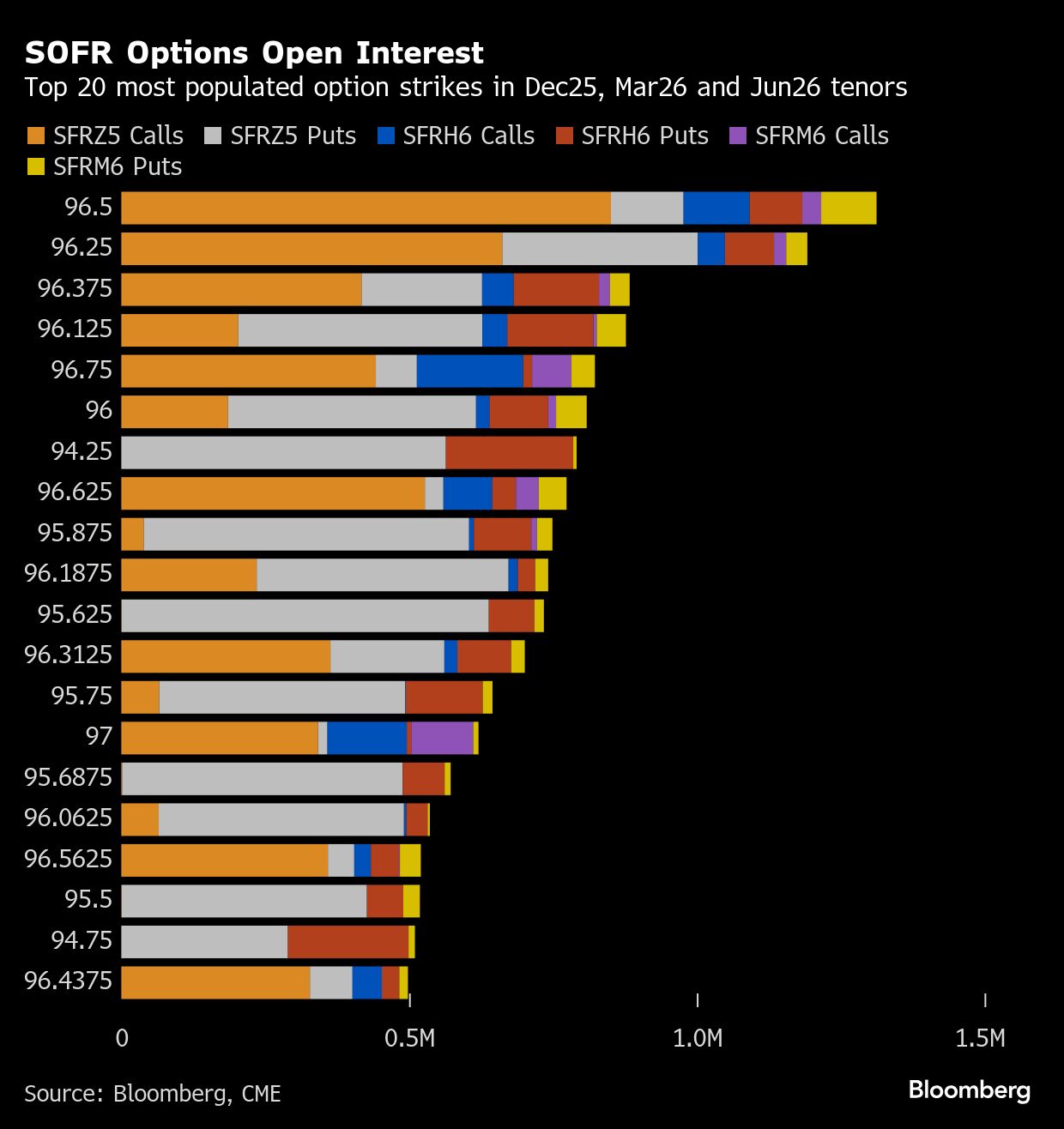
Increased hedging by traders who sold protection against a further decline in yields can also trigger more buying of Treasuries. Recently, there was a flurry of hedges targeting 10-year yields to fall below 4%.
In the December 10-year Treasury options, recent flows have reflected traders moving positions to target a deeper rally, as yields extended under the 4% handle last week, reaching 3.93% and lowest in about six months. The bullish positioning reflects a scenario of 10-year yields dropping as low as 3.75% to 3.70%, shown by rising open interest in the 115.00 and 115.50 December options call strikes.
Yields on US 10-year bonds were one basis point lower at 3.96%, while 30-year peers were steady at 4.54% at 5:55 a.m. in New York
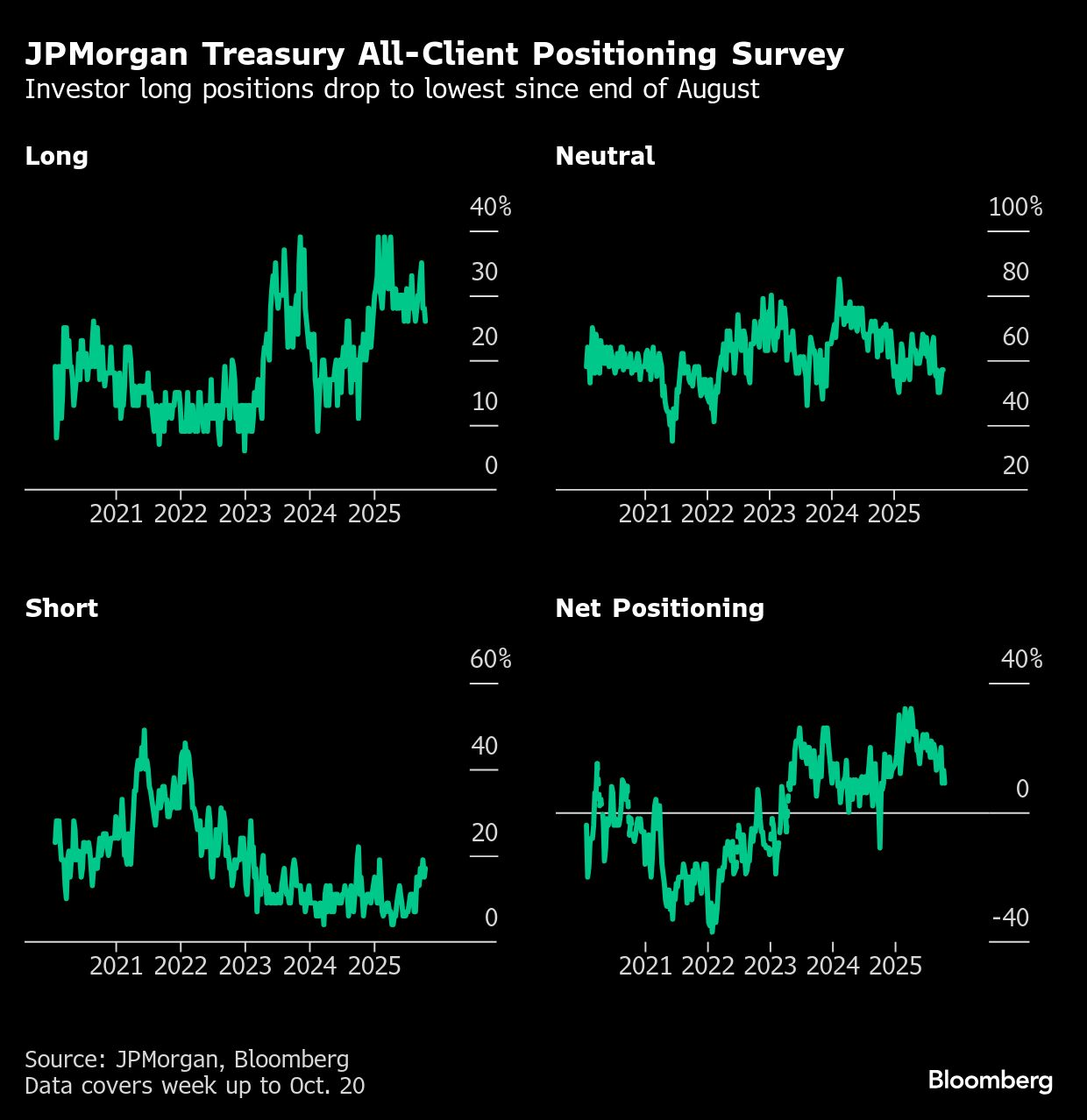
Meanwhile in the cash market, a JPMorgan survey released Tuesday showed outright short positions edge up and long positions drop, also keeping the bond market susceptible to short covering rallies.
Here’s a rundown of the latest positioning indicators across the rates market: