For investors, a concentrated portfolio of equity-market winners tends to work just fine — until it doesn’t. At the moment, the S&P 500 is a case in point: Its earnings remain both spectacular and spectacularly concentrated around the artificial intelligence story. The particulars are changing, and the profits are no longer accruing solely to tech and communications firms. But that doesn’t mean that the index’s fortunes are any less hitched to the AI theme.
First, the good news: With 78% of companies reporting, S&P 500 earnings per share are on pace to grow around 13.9% from a year earlier, better than the 7.6% analysts expected prior to the reporting season. This is, on the surface, extraordinary. Optimists can also take heart in knowing that the growth isn’t coming overwhelmingly from the Magnificent 7, as was the case in the recent past. Even excluding the Magnificents, earnings would have been up almost 11% in the quarter. That’s encouraging, sort of.
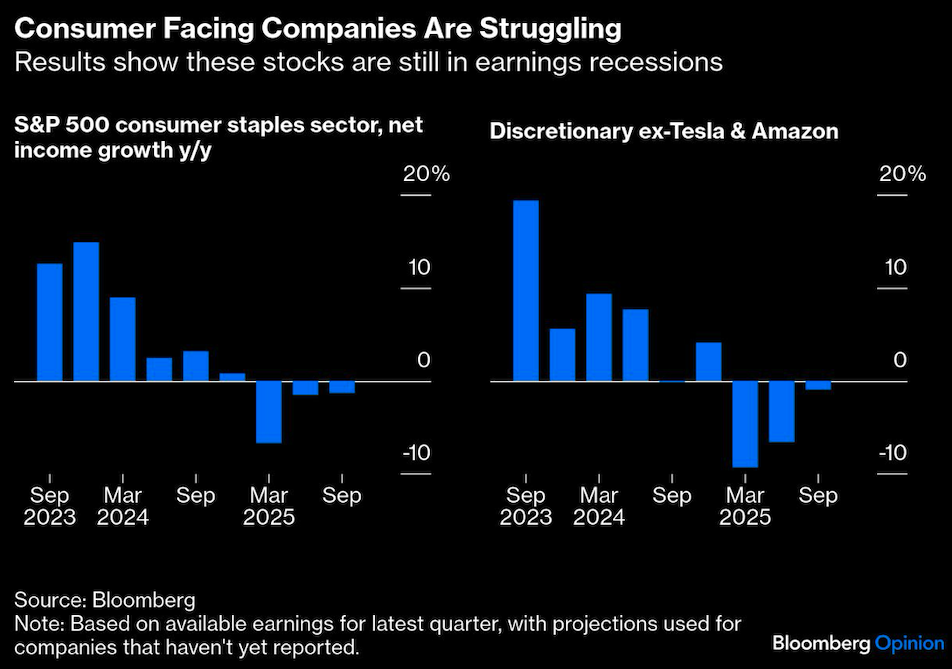
But the “broadening out” narrative effectively ends there. Excluding Amazon.com Inc. and Tesla Inc., the S&P 500 consumer discretionary sector is wading through an earnings recession, as are consumer staples. For its part, the materials sector still looks fairly abysmal: The apparent earnings bounce (off an even worse comparison quarter in 2024) largely reflects the run-up in precious metals prices. On the Russell 2000 index of small-cap stocks, sales are up a paltry 1.1% from a year earlier.1
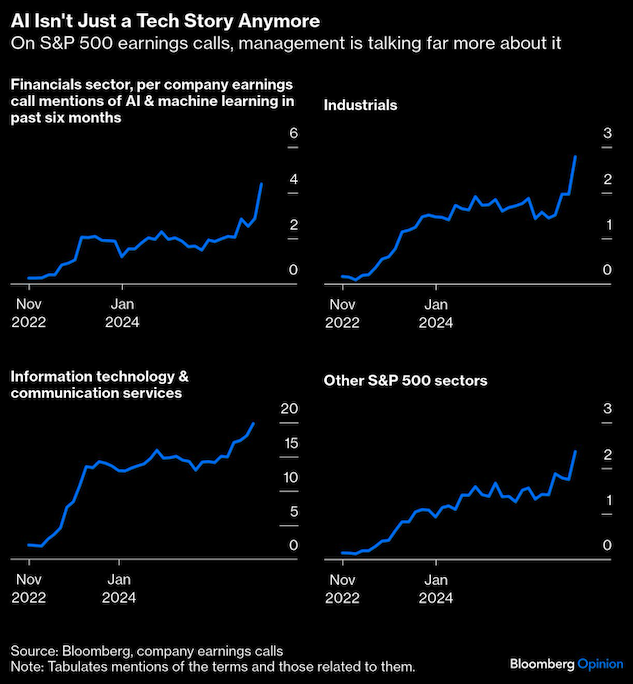
Elsewhere, earnings strength reflects the insidious AI takeover of the stock market.
The S&P 500 financial sector was one of the most positive surprises of the quarter, but it’s clearly reaping the benefits of an uptick in dealmaking and securities issuance tied to — you guessed it! — AI. Likewise, banks have been propped up by strong trading activity and inflows into their wealth management businesses as customers get richer on speculation about the technology. It’s not hard to imagine how this could end poorly, when it ends.
The industrials sector is slightly more nuanced. It’s littered with firms profiting from the massive buildout of AI data centers, but it’s also benefitting from a recovery in aerospace and defense earnings. In the equity market, bulls speculate that rising geopolitical tensions — and President Donald Trump’s moves to pull back the US security umbrella — will create a profitable environment for private defense contractors over the coming decade or so.
But the defense investing theme has itself gotten intertwined with AI: Many industrials companies are simultaneously supplying the AI and defense booms, and others are explicitly pushing AI technology directly into zones of conflict. Is an arms race a recipe for long-run equity-market optimism? I’m a bit skeptical. Like the rally in gold, you could potentially read the bull market in defense stocks as the opposite — a warning sign.
The stock market is never the perfect barometer for the real economy, but the messages it’s sending lately aren’t particularly encouraging. Speaking on the company’s quarterly investor call, Booking Holdings Inc.’s Chief Financial Officer Ewout Steenbergen said that travelers are opting for shorter trips than last year and that the trend may signal a move toward more “thoughtful” discretionary spending. Chipotle Mexican Grill Inc.’s Chief Executive Officer Scott Boatwright said the company had seen a “broad-based pullback in frequency across all income cohorts” this year, and that it’s getting worse with low-to-middle income customers and young adults.
So while earnings strength appears to be broadening to new companies, I’m not so sure that is has really broadened to include new stories. The latest results don’t seem particularly bullish for anything except the companies directly exposed to AI. For investors, that may be just fine for the time being, but presumably this won’t last forever.
1. This index has a lot of profitless companies, so I prefer to look at sales rather than net income.
A message from Advisor Perspectives and VettaFi: Discover something new! Click here to register for our upcoming webcasts.
Bloomberg News provided this article. For more articles like this please visit
bloomberg.com.