Here’s how Michael Saylor’s Bitcoin treasury company Strategy Inc. is supposed to work: The firm raises funds to buy Bitcoin; that buying drives up the price of Bitcoin; the share price of Strategy follows suit. Rinse and repeat. The trade, helped along by the utter self-belief of Saylor as a hype capitalist on par with OpenAI Inc.’s Sam Altman, has been so lucrative it has spawned dozens of imitators hoping to capture the same “infinite money glitch,” like a cheat code on a video game.
But the glitch is glitching out. Bitcoin’s price has fallen below $90,000, making it harder for Strategy to keep the number-go-up boosterism alive as the cryptocurrency nears the $74,000 average price it paid for its 650,000-coin stash. Copycat firms and investment vehicles are competing away Strategy’s premium, with French entrepreneur Eric Larcheveque the latest to announce a Bitcoin treasury company. As well as their speculative appeal, these Saylor-imitating corporates say they hedge against inflation by plowing capital reserves into apparently safer Bitcoins.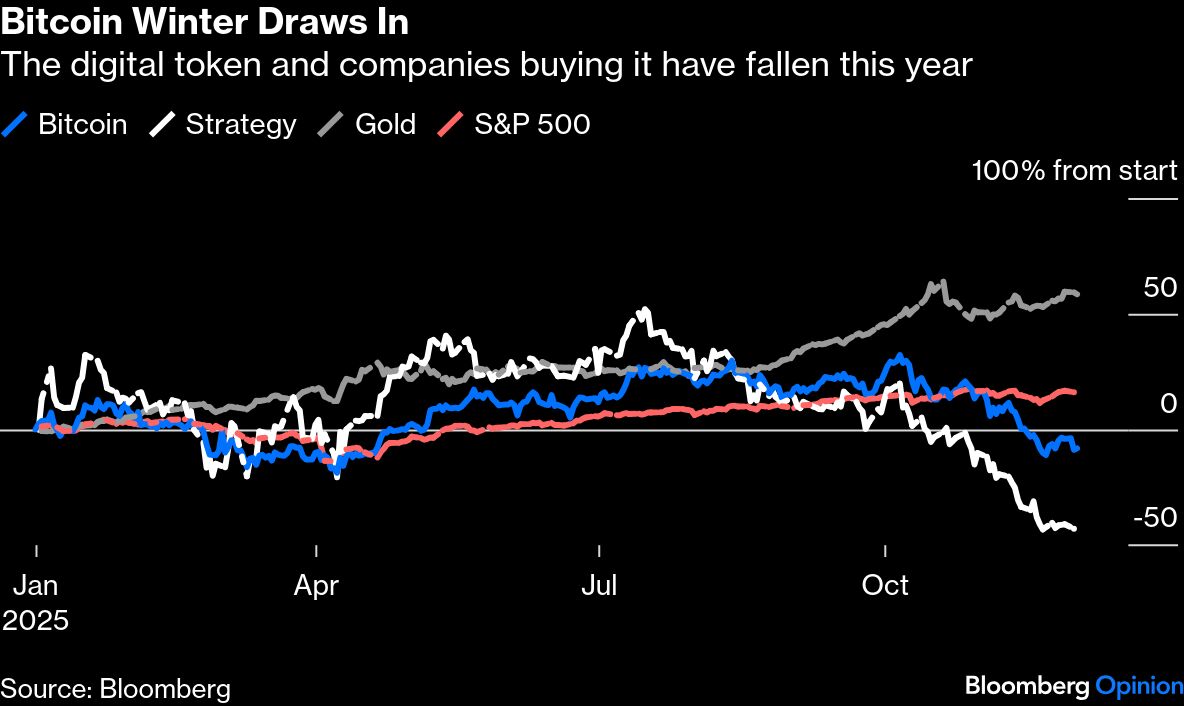
With investors in these firms sitting on the sidelines after an estimated $17 billion share-price wipeout across the nascent sector, the Bitcoin-buying machine is running out of fuel. Short-seller Jim Chanos and others betting against Saylor have been the winners this year.
So far, so predictable for such a frothy part of the market. Now the test for Saylor is whether he can draw a line under the latest sell off by changing course. After years of his “we’ll never sell Bitcoin” bombast, Strategy has let slip the idea that yes, it might sell if necessary to meet yearly dividend and interest payments of about $689 million. And on Monday the firm said it had created a $1.4 billion cash reserve to cover at least 21 months’ worth of payments, funded from the sale of common stock. Pragmatic stuff from a company whose communications usually veer more into the cultish, claiming that Bitcoin will go up “forever” while fiat currency melts like an “ice cube.”
The problem is the message it’s sending to the Bitcoin faithful sounds more like a hunkering down for crypto winter than the revving up of a fundraising machine. A $1.4 billion reserve can keep the lights on at Strategy but can’t on its own backstop a $1.7 trillion Bitcoin market suddenly lacking in FOMO-fueled narratives (especially if treasury firms become sellers.) The Trump administration’s endorsement of crypto has enriched insiders but done little to spread adoption. Meanwhile, Bitcoin has underperformed the gold it was supposed to replace. Co-Pierre Georg of the Frankfurt School of Finance says Strategy has become a victim of its market success. “They can’t deter imitators and there’s only so much finite hedge fund capital,” he tells me.












