 Advisor Perspectives welcomes guest contributions. The views presented here do not necessarily represent those of Advisor Perspectives.
In the midst of running a busy investment practice, it can be easy to put off thinking about issues like retirement, selling the business, or who will someday take the reins.
However, it’s never too early to be making plans for succession, because even when retirement seems far off, circumstances can change quickly. There may be a need for an unexpected relocation. A medical issue could arise. Or a principal in the business could want to pursue a change mid-career. Many firms have implemented clear plans for their future to ensure that their successful advisors and key employees stay loyal and engaged.
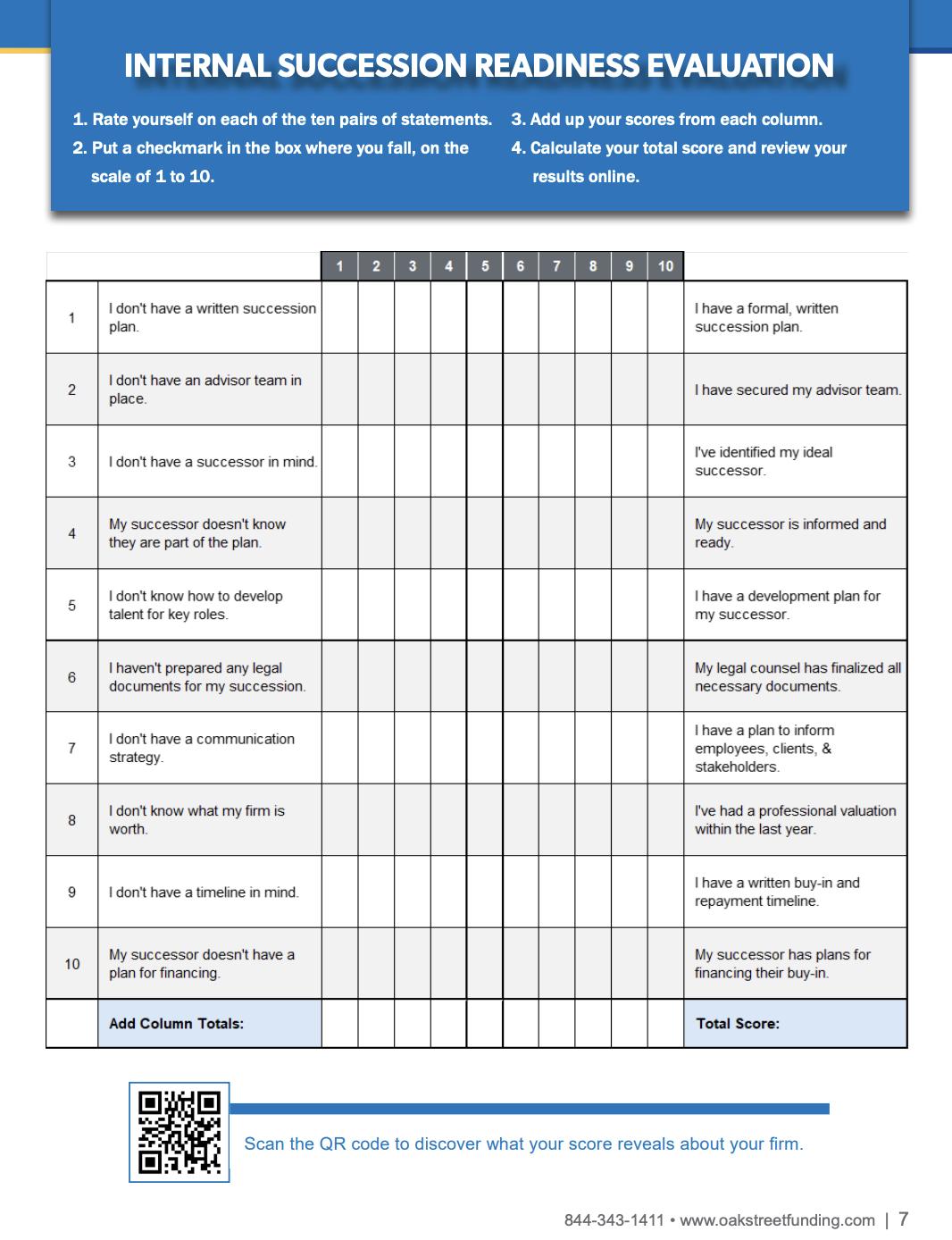
In this article, we’ll discuss options for selling an RIA practice and considerations for valuing a firm. We’ll also introduce a self-evaluation tool practice owners can use to determine their readiness to sell.
Options for Selling
The three main options for transferring ownership of an RIA practice are choosing an internal successor(s), finding an external buyer, or a hybrid of those two options.
Internal Succession
With internal succession, the existing owner identifies one or more team members who are motivated to purchase the business and have the aptitude to run it successfully. Conversations about their interest in taking over the business should start well before the owner’s expected departure — three to five years is often recommended. Being able to have these discussions with potential successors early also has the benefit of having them invested in the business growing and becoming more valuable.
Benefits to internal succession include:
- Continuity with client base: Existing relationships can be transitioned, built on and strengthened;
- Time for developing the successors’ leadership skills while under the mentorship of the owner;
- Institutional knowledge: a critical component when considering new ideas and opportunities for growth; and
- Buy-in from the rest of the team: A strong leader who has good relationships with the existing team helps with firm culture and camaraderie.
Succession With an External Buyer
If no suitable internal successor is available, an owner may choose to sell the practice to an outside entity. Potential buyers could include other RIA owners; aggregators, who often are backed by private equity; and strategic buyers (e.g., banks or investment companies).
Advantages of selling to an external buyer include:
- Absence of emotional ties – no worries about feeling obligated to sell to a particular team member or take a discounted purchase price;
- Ability of buyer to provide cash or obtain financing – less need for seller financing; and
- Opportunity to sell and go – good for owners who want a quick exit.