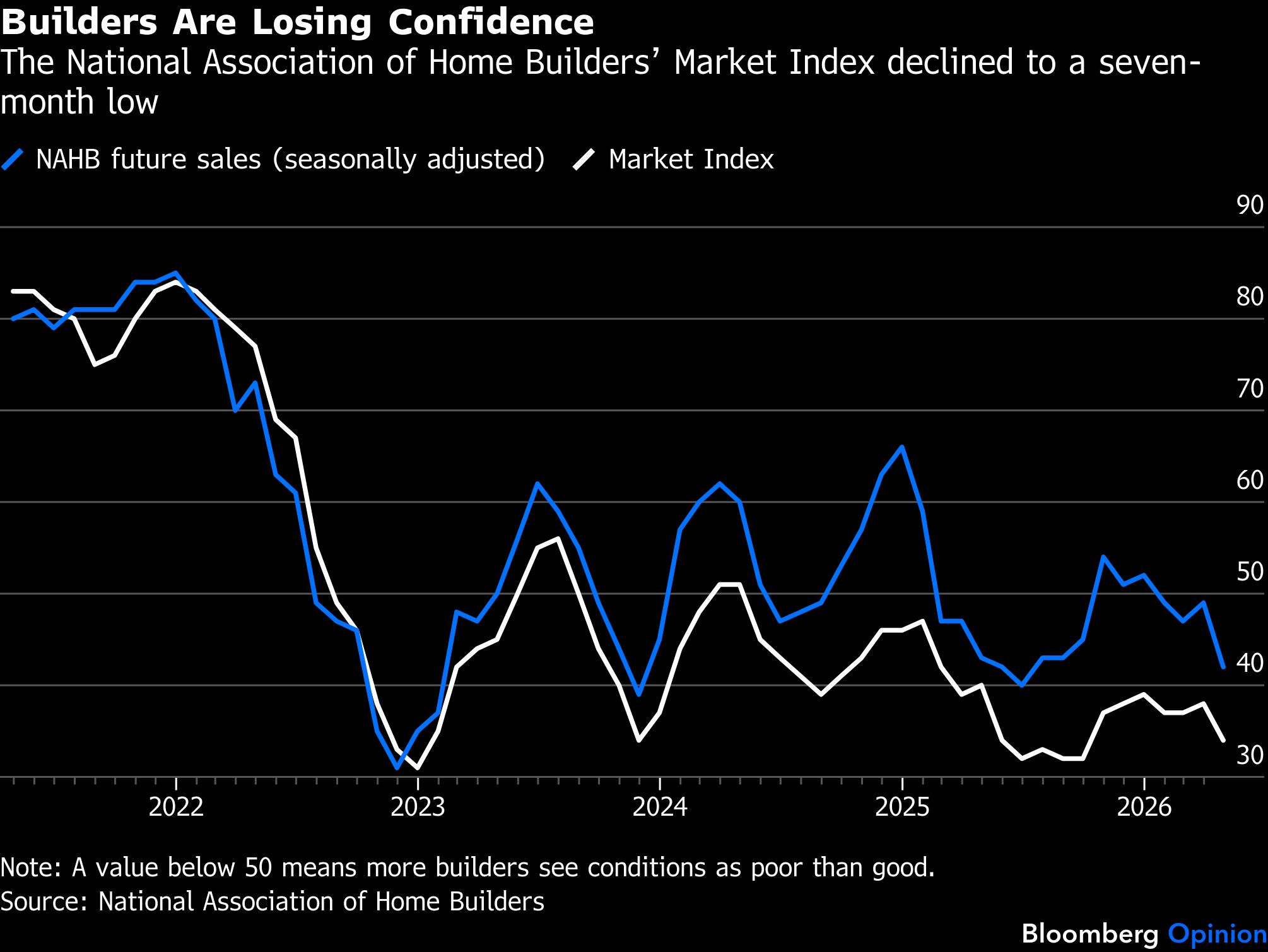
The housing industry had good reasons for optimism heading into 2026. Transactions were picking up after three listless years as improved affordability and decent inventory levels brought buyers back into the market. The timing of the war in Iran and its impact on mortgage rates and sentiment have clouded the outlook once again.
The conflict began just as the spring selling season was kicking off, and it has continued into what is typically a peak buying period. With the academic year ending in about six or seven weeks across most of the country, this is typically the time when families are out scouting for new homes and school districts. Instead, signs of a buyers’ retreat are building, and with it, the prospect that a market rebound will once again be postponed.
The war has been painful on two fronts. It has raised costs for homebuilders and buyers, and suppressed activity in two of the most crucial months of the year for the industry.
For builders, falling construction costs were a bright spot coming into 2026, allowing companies to protect profit margins even as they continued to use incentives such as mortgage-rate buydowns to entice buyers. But the war and its disruption of the Strait of Hormuz have raised prices for inputs, including plastic pipes, aluminum and diesel.
For homebuyers, the war has been a shock to mortgage rates, gasoline prices and confidence. After ticking below 6% on the eve of the conflict, 30-year mortgage rates surged through March, hitting 6.64% on March 27, according to Mortgage News Daily. The prospect of rate cuts from the Federal Reserve has also been pushed far into the future. Retail gasoline prices have increased by $1 a gallon and the University of Michigan Consumer Sentiment Index hit a record low this month. Mortgage purchase applications, which were up nearly 25% from a year earlier at the end of 2025, have been slightly negative over the past two weeks.
As a result, the National Association of Home Builders’ confidence index slumped to a seven-month low in April, with builders saying the uncertainty around rising material costs has made it challenging to price homes. A gauge for present sales and one for prospective buyer traffic both decreased, while a measure of sales expectations over the next six months was particularly soft.

Builders came into the year thinking that mortgage rates would fall below 6%, that economic and employment growth would accelerate as many Wall Street economists had forecast, and that the White House would act to address housing affordability. Instead, they got another unwelcome spring surprise, just as they had last April when the “Liberation Day” tariffs announcement caused economic volatility and uncertainty. The next few quarters may once again be a story of clearing out stale inventory, tightly managing production and hoping for better conditions next year.
Even as the calendar for the spring selling season in much of the country tightens — here in Atlanta, school ends in late May and the new academic year begins Aug. 3 — there is still a case to be made for an improvement in the market if the self-inflicted exogenous shocks would only stop.
On Wednesday, 30-year mortgage rates were at 6.32%, higher than the 6% we had in late February but almost 0.7 percentage point lower than a year ago. The asking price per square foot for inventory for sale is 2.4% below 2025 levels, according to Mike Simonsen, chief economist at Compass Inc., the largest real estate brokerage in the US. Added to that, average hourly earnings for all workers climbed 3.5% in March from a year earlier. Stack a 0.7 percentage point drop in mortgage rates, a modest decline in home prices, and continued wage gains together, and affordability has improved by close to 10% from a year ago in much of the US.
A productive resolution to the war that gets oil flowing freely again, pushing down energy prices and interest rates, could unleash a flurry of housing market activity in the month or so before households turn their attention to summer travel and the start of the next school year.
That’s still likely to fall short of the expectations that homebuilders and real estate agents had coming into the year, but it makes the case for a real recovery in 2027 even stronger. By now, people have held that hope too many times for it to instill much confidence, and for a beleaguered industry, the spring of 2027 surely feels like a long way away.
A message from Advisor Perspectives and VettaFi: Discover something new! Click here to register for our upcoming webcasts.
Bloomberg News provided this article. For more articles like this please visit
bloomberg.com.
Read more articles by Conor Sen