At White House urging, Securities and Exchange Commission regulators have proposed ending a 56-year-old requirement endured by US-listed companies: the filing of quarterly reports. The change isn’t just unnecessary — it also risks undermining the world’s largest and most dynamic equity market.
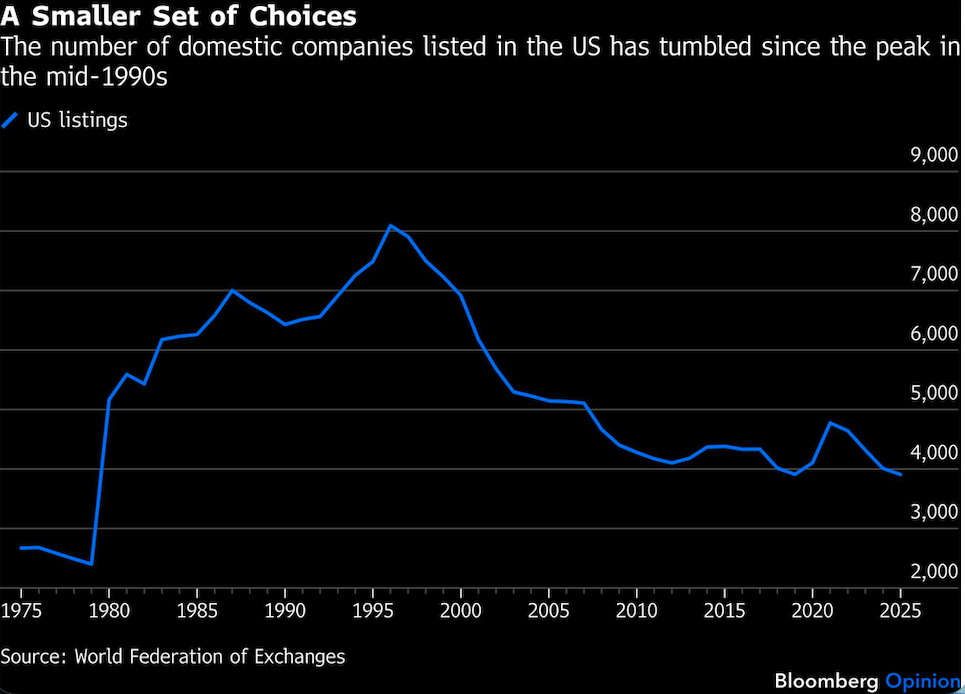
With stocks near all-time highs, the need for change is hardly obvious. Proponents argue that requiring fewer reports will reduce the time and cost of compliance. Some blame an increase in disclosure demands over the last three decades for a sharp decline in the number of public companies.

While there may be some truth to that argument, it fails to account for how markets and technology are evolving. For one thing, artificial intelligence software is making it faster and easier for companies to prepare filings. More than a year ago, Goldman Sachs Group Inc. Chief Executive Officer David Solomon estimated that AI could produce 95% of an initial public offering registration document within minutes. Those capabilities are only improving.
If technology can’t eliminate all the work and expense of generating an accurate financial report, neither will a semi-annual schedule. Most of the cost of producing quarterly filings involves functions such as internal audits and investor communications that are needed no matter how often the reports are published.
Moreover, investors are increasingly deploying AI tools to enhance their own analyses. They cite data quality and availability as their biggest frustrations. In other words, markets are demanding more frequent and reliable data, not less. Studies of non-US companies that file semi-annually show they tend to have less liquid stocks, weaker corporate governance and, in some cases, lower valuations than those of quarterly filers.
Information gaps create other problems as well, including increasing the opportunity for insider trading. Private fund investors, who have contributed to the decline in public offerings by providing an alternate and less transparent source of financing, have lately discovered the risks of opacity. As a result, some are demanding more data and disclosure. Apollo Global Management Inc. is moving toward daily pricing of some of its credit assets.
The SEC, which lost about 18% of its staff last year, shouldn’t be wasting its depleted resources on an unnecessary regulatory change. Its time would be better spent streamlining disclosure demands and helping to reduce litigation risk for public companies. The challenges posed by fraud in the private markets and the rise of AI-powered investors provide the agency with plenty of additional work to do.
Giving companies more options for how often they file may seem harmless. Yet, for nearly a century, the SEC has helped US markets and investors benefit from the best corporate disclosure in the world — an advantage that will only grow in a world hungry for data. It’s an edge worth preserving.
A message from Advisor Perspectives and VettaFi: Discover something new! Click here to register for our upcoming webcasts.
Bloomberg News provided this article. For more articles like this please visit
bloomberg.com.
More Practice Management Topics >