Najimah Roberson, a lifelong renter, spent the past two years searching around Harrisburg, Pennsylvania, for a home she could afford — getting outbid nearly 30 times along the way.
The ordeal had the 42-year-old daycare business owner “in tears for weeks” before she finally found a five-bedroom fixer-upper for $340,000. It has an overgrown backyard and dated carpet. But more troubling is the mortgage rate she’s facing as the June closing approaches, leaving her on the fence about whether to even go through with it.
“It’s beyond stressful,” she said. “For my plan to buy, the rate has to be reasonable.”
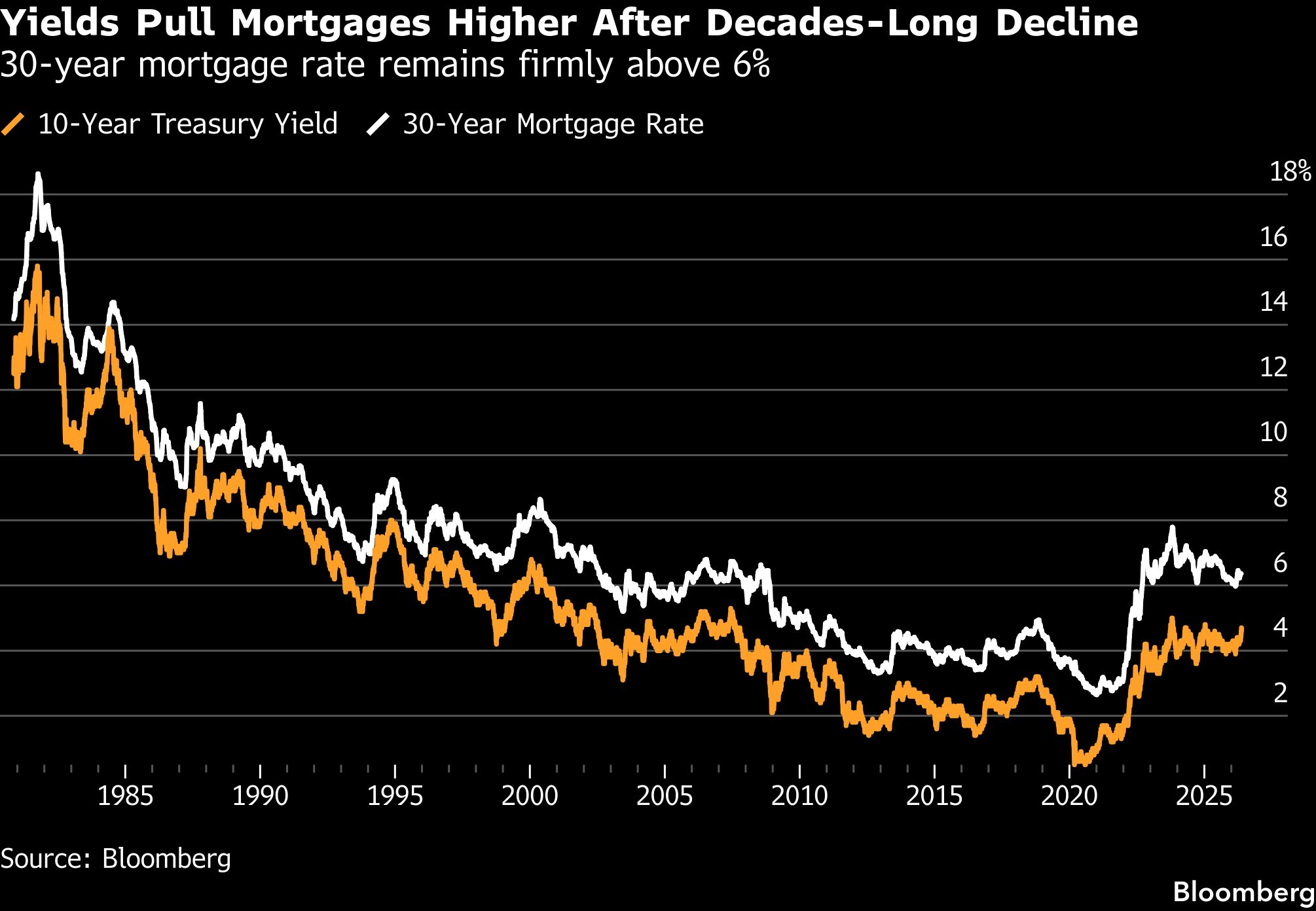
Her situation reflects a larger reality: The era of ultra-cheap mortgages that reshaped American housing for a generation shows no signs of coming back. In fact, every signal from the $31 trillion Treasury market indicates that rates may rise even more.
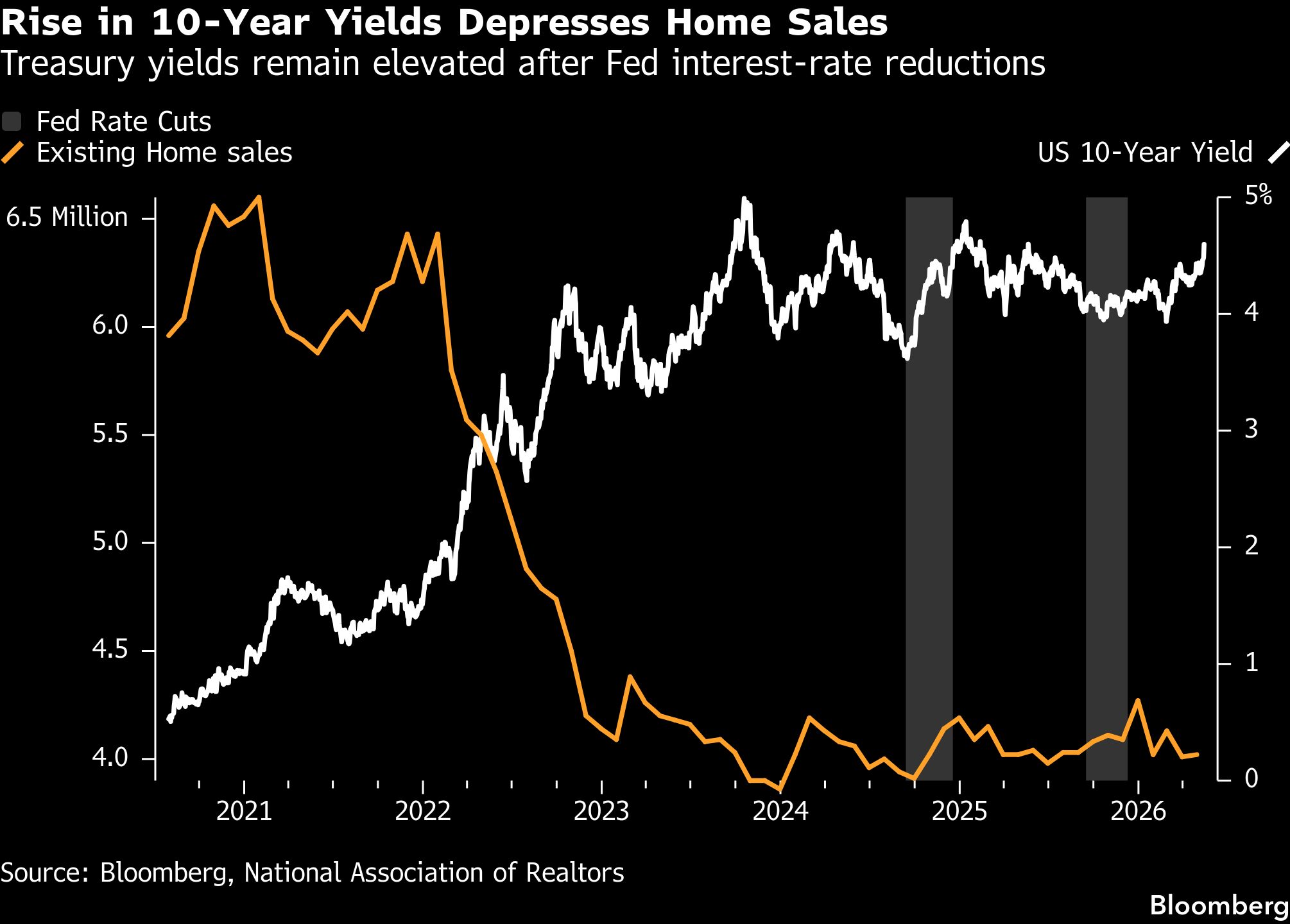
Since the oil-price shock from President Donald Trump’s Iran war unleashed the biggest jump in inflation since 2023, bond prices have tumbled, pushing yields on some US government debt to the highest levels in nearly two decades. The rate on 10-year Treasuries, which sets the floor for mortgages, has climbed to around 4.6%, with traders saying 5% is within reach. That has pushed the average 30-year home loan to over 6.5%.
Across Wall Street, traders expect inflation — the main driver of rising borrowing costs — to worsen as the energy price increases filter through the economy. Investors have abandoned bets that the Federal Reserve will resume cutting interest rates, with many now wagering it will instead start raising them as soon as late this year.
“If you’re looking for relief on 30-year conventional mortgage rates, you’re not going to get it anytime soon,” said Kevin Flanagan, head of investment strategy at WisdomTree.
The bond market’s movements are exerting a major drag on a real estate industry that for decades benefited from a steady drop in interest rates, in part because of globalization and technological change that largely kept inflation at bay. That crested when the Fed dropped rates to near zero after Covid hit in 2020, creating a bonanza for those who seized on it to buy homes or slash their bills by refinancing. As a result roughly half of American homeowners have mortgages at 4% or less, according to data from Intercontinental Exchange Inc.
That twin legacy of that period — a flood of low-rate mortgages and higher inflation — is now vexing buyers like Roberson. With many locked into loans well below market rates, Americans have been saying put longer than ever before, or 8.6 years on average, according to data from ATTOM. That’s contributing to a dearth of inventory just as borrowing costs climb. Many have shifted to the sidelines to wait it out. Others are discovering the American Dream of homeownership painfully out of reach.
“Decisions made during the period of ultra-low interest rates coming out of the pandemic are still shaping behavior,” said Torsten Slok, the chief economist at Apollo Global Management, citing the reticence of those with low-rate mortgages to move. “The shift to higher rates has fundamentally changed the economics.”
Home sales had been expected to pick up during the spring selling season, akin to retail’s holiday stretch. There are tentative signs of improvement in the market, with pending sales rising for three straight months and new listings increasing. But demand is stuck at historically low levels, with the pace of closings last month more than 20% below what they were in April 2019, before the pandemic hit.
Nick Barta, a regional manager at Security First Financial, a mortgage company in Englewood, Colorado, said the spike in rates has had a chilling effect. In February, he was seeing more business than he had in four years as customers refinanced or considered buying again. Then it slowed virtually overnight.
“All you hear about is gas prices and higher interest rates,” said Barta, who has worked in the mortgage industry for 38 years. “It freaks people out.”
The trend has been both a drag on the broader economy and a political liability for Trump, who won re-election partly due to an inflation surge fueled by the unprecedented stimulus that kept the economy afloat during the pandemic.
Treasury Secretary Scott Bessent last year expressed confidence that bond yields would come down as the administration reduced spending, lowered energy prices and unleashed a period of non-inflationary growth. But Trump’s tax cuts, tariffs and war in Iran have had the opposite effect by adding to the federal debt and rekindling inflation.
At the same time, the rise in gas prices is taking a toll on consumer confidence, which has tumbled to a record low. An April Gallup poll found that inflation, housing and energy prices are the three biggest financial worries for US households.
“The vibes right now are not great,” said Jake Krimmel, senior economist at Realtor.com.
Early this year, Trump directed Fannie Mae and Freddie Mac to start buying $200 billion of mortgage-backed securities in an effort to nudge mortgage costs lower. Federal Housing Finance Agency Director William Pulte, who oversees the firms, said the Trump administration is monitoring mortgage rates and remains focused on supporting the housing market.
“FHFA and the administration are actively evaluating a range of tools and policy options to improve affordability and expand access to homeownership for American families," he said.
Trump has also repeatedly criticized the Fed for not lowering rates. A half-percentage-point drop in mortgage costs would make homeownership possible for roughly 3 million more Americans, according to the National Association of Realtors. About 10% of those newly eligible buyers would likely purchase a home within 12 to 18 months, the group said.
Yet even with Trump ally Kevin Warsh set to take over the central bank on Friday, traders are betting the Fed is done cutting and is virtually certain to start raising rates by early next year.
As a result, market rates are already ticking up. That’s leaving a generation of would-be home buyers locked out of the market, said Sarah Wolfe, a senior economist at Morgan Stanley Wealth Management.
“They want the same things as the generation before them,” she said, “and the bar to entry is getting higher and higher.”
That’s a shift from recent decades. Rates started falling in the early 1980s. After the dot-com bust drove the US into a recession, the lower interest rates orchestrated by the Fed helped trigger a housing boom. When that collapsed, rates fell again, and after Covid hit, further still.
The outcome is a sharp divide between the property haves and the have-nots. Rising real estate values have left owners with roughly $34 trillion of equity they can tap for vacations, big-ticket items and other spending. With the stock market hitting record highs, too, wealthier households are continuing to spend, contributing to the economy’s surprising resilience despite the slowdown in the job market.
In communities around New York and San Francisco, which have benefited from the wealth thrown off by Wall Street and the tech industry, bidding wars are still common. In Texas and Florida — traditionally more affordable — demand has softened as higher rates and economic uncertainty put buyers on hold.
Barta, the mortgage banker in Colorado, said he’s fielded calls from clients who four years ago qualified for loans at rates around 3.5% but were unable to find the right home and were interested in trying again.
“When they hear the payment is over 6%,” he said, “they say: ‘I’ll just keep renting.’”
Roberson, in Harrisburg, said she has wanted to buy because the rent on her apartment has risen to $2,500 a month.
But as the closing on her new home approaches, she’s been quoted a 6.8% mortgage rate. That’s already a stretch, she says, given some of the difficulties of running her business, and she’s not sure she can afford to buy it.
“Everybody says, ‘don’t worry, you can refinance in a couple years,’” she said. “But I don’t want to do that.”
A message from Advisor Perspectives and VettaFi: Discover something new! Click here to register for our upcoming webcasts.
Bloomberg News provided this article. For more articles like this please visit
bloomberg.com.