Is Putin greeting with "Check" or "Checkmate"?
The White House is not giving up on the Attack, but they will have to run the board this week to sell it to Congress…
The White House’s goal is to persuade Congress to authorize a limited military strike against Syria to punish it for a deadly chemical weapons attack. But after a frenetic week of wall-to-wall intelligence briefings, dozens of phone calls, and hours of hearings with senior members of Mr. Obama’s war council, more and more lawmakers, Republican and Democrat, are lining up to vote against the president.
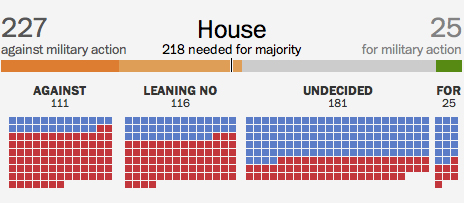
Officials are guardedly optimistic about the Senate, but the blows keep coming. On Saturday, Senator Mark Pryor, Democrat of Arkansas, perhaps the most endangered incumbent up for re-election, came out against the authorization to use force. In the House, the number of rank-and-file members who have declared that they will oppose or are leaning against military action is approaching 218, the point of no return for the White House. Getting them to reverse their positions will be extremely difficult.
Meanwhile, Congress is getting an earful from its voters…
@RameshPonnuru: An undeclared senator’s office tells me calls have run roughly 1200-7 against intervention in Syria.
And the polls show that American's have no interest in this conflict…
The American people do not support military action. A Reuters-Ipsos poll had support for military action at 20%, Pew at 29%. Members of Congress have been struck, in some cases shocked, by the depth of opposition from their constituents. A great nation cannot go to war—and that's what a strike on Syria, a sovereign nation, is, an act of war—without some rough unity as to the rightness of the decision. Widespread public opposition is in itself reason not to go forward. Can the president change minds? Yes, and he'll try. But it hasn't worked so far. This thing has jelled earlier than anyone thought.
The Denver Posteditorial board is as balanced as you can find for major metro newspapers…
Congress is supposed to be the branch of government closest to the people. If so, it will listen to the voices of war-weary Americans when it reconvenes next week and reject President Obama's plan to jump into another conflict halfway around the globe with no clear objectives and no compelling national security interest at stake. Congress should say no, loudly and clearly, to the president's request for authorization of military strikes against Syria in response to its use of chemical weapons.
As of Monday morning…
Latest WashPost count of House members. 227 against military action. 25 for.
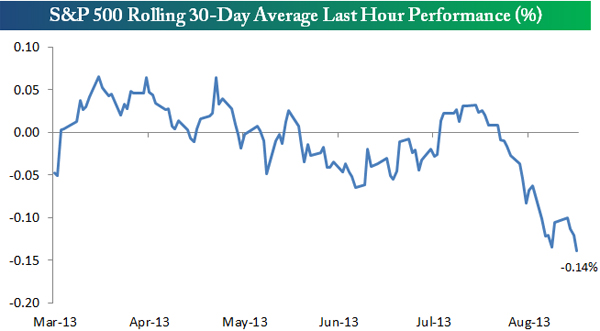
The last hour performance of the Stock Market shows that few want to hold risk overnight…
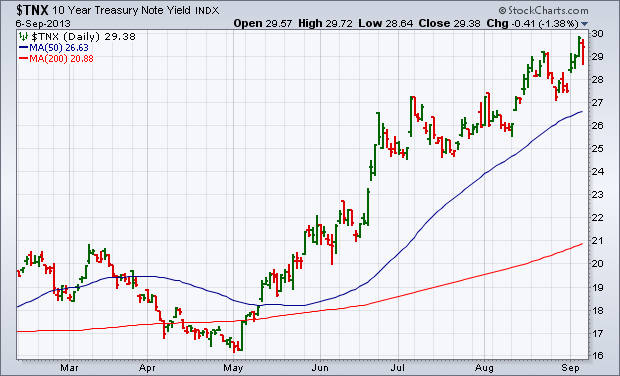
But while they might be cautious on Equities, investors still hate risk-free U.S. Treasuries…
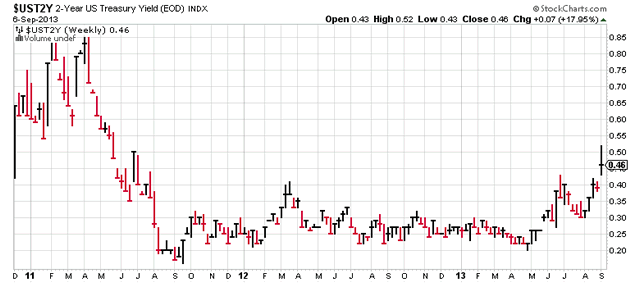
And especially so at the short end of the Treasury curve…
But remember, equity investors would like to see a gradual rise in short rates from these historic lows, because it reflects rising growth & inflation expectations.
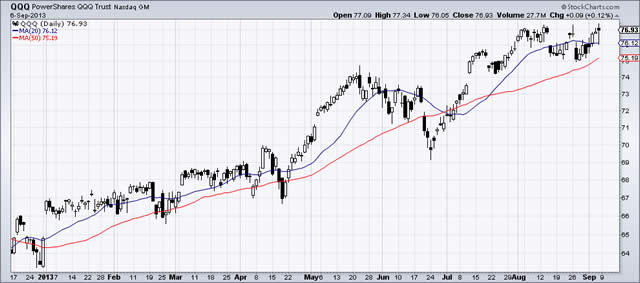
Now check this out, QQQ near YTD and 13 YEAR HIGHS…
And it would have broken thru had Microsoft not bought Nokia this week!
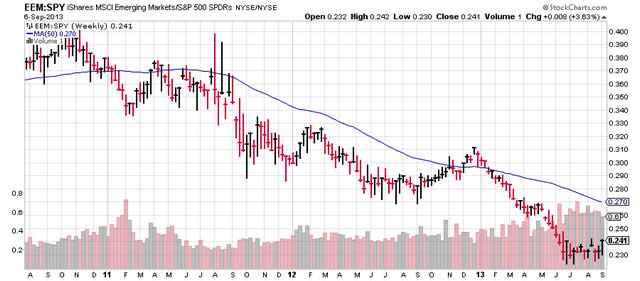
Emerging Markets trying their best to put in a relative bottom versus the S&P500…
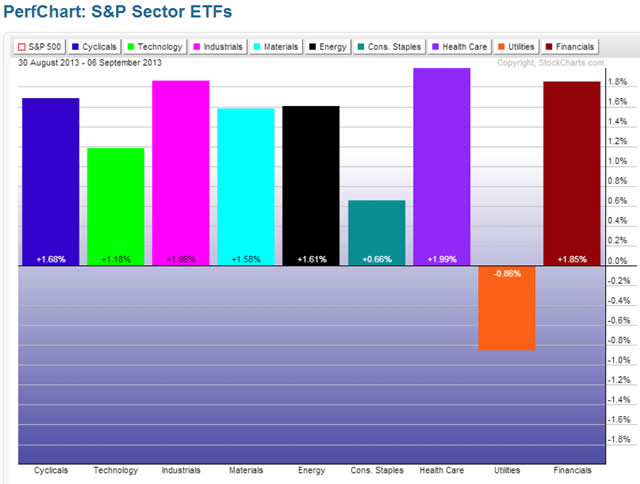
For the week, all sectors, but Utilities, posted bounces…
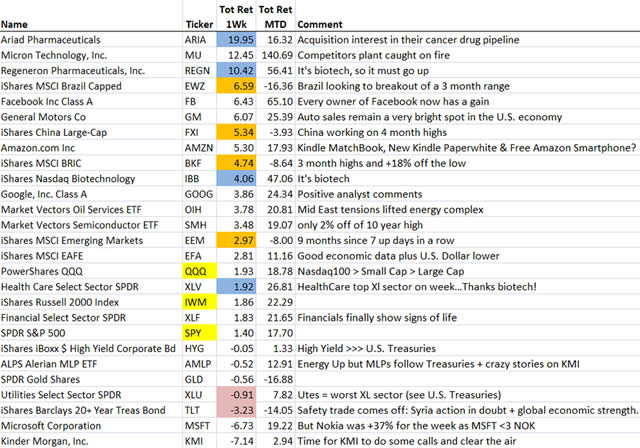
Among Stocks and ETFs, Biotech and Foreigns ruled the week…
Economic data on the week was fine, except for the Friday's job report. In the words of Josh Brown…
The jobs report - it was a debacle. Everything about it:
- The headline number was a miss (169k jobs added versus consensus of 175k and a whisper number closer to 200k).
- Teen unemployment above 22%.
- Most of the adds were McJobs - low wage, low productivity stuff (retail +44,000 positions, leisure and hospitality +27,000).
- Construction jobs actually down!
- They revised down the June and July jobs added totals by a combined 74,000!
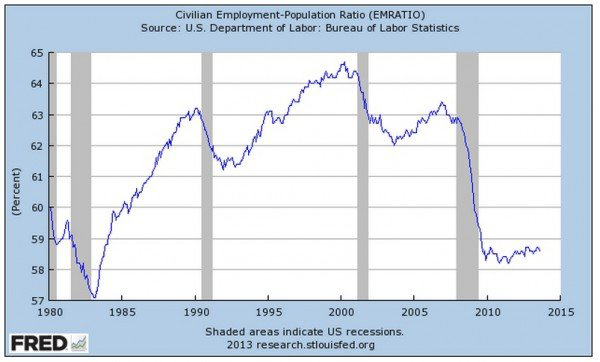
- Labor Force Participation Rate hits 63%, a low not seen since 1978. That's 90.47 million people out of the workforce, in case you're keeping count - that's a larger count than the population of Germany or about four Hollands. We have nine Portugals worth of people on the jobs market sidelines. Rock n' roll.
This chart shows Employed/Population and how sick this specific recovery is…
In 1984, 1994, 2004 posted solid gains in job creation. Will it take a "4" calendar year to improve this recovery?
Hilsenrath suggests that the weak jobs data could shrink the size of 'the Taper'…
The disappointing jobs report released Friday leaves Federal Reserve officials without a clear-cut signal of an economy on the mend, creating a dilemma for the central bank as it contemplates pulling back on a landmark bond-buying program designed to stoke growth. Many investors have grown convinced in recent months that Fed officials would take a first step toward reducing the $85-billion-a-month bond-buying program at their Sept. 17-18 policy meeting. The program has become an almost-daily obsession in markets, and the prospect of it shrinking has pushed long-term interest rates higher while stocks have seesawed…
One option that has gained support among some Fed officials in recent weeks: Reduce monthly bond purchases by a small amount, say by $10 billion, to $75 billion a month, and signal as loudly as possible the next step will depend on more evidence the job market is continuing to improve and inflation is moving back toward 2% from its current low levels. "As I see it, a decision to proceed—whether it is in September, October, or December—ought to be thought of as a cautious first step," Atlanta Fed President Dennis Lockhart said in an August speech. Mr. Lockhart is a centrist at the Fed who often moves with the broader consensus of the central bank.
And Fed President Charles Evans added his thoughts to future interest rate moves…
For the interest rate thresholds, my outlook is for the unemployment rate to be 6-1/2 percent sometime in early to mid-2015. But I also think there is a very good chance that at that time inflation will still be far enough below our 2 percent target that it will be appropriate to wait longer before increasing the funds rate; currently, I think it's more likely that conditions for the first funds rate increase will be met in late 2015.
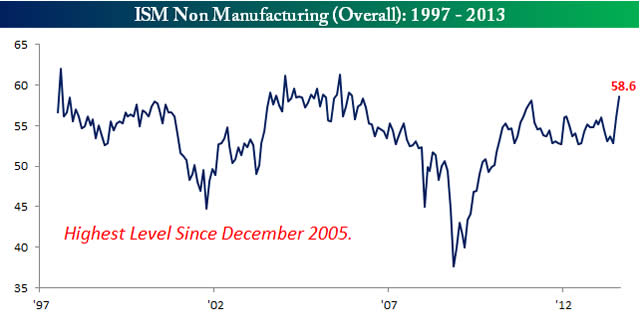
One bright spot on the week was the ISM Service data, which jumped to cycle highs…
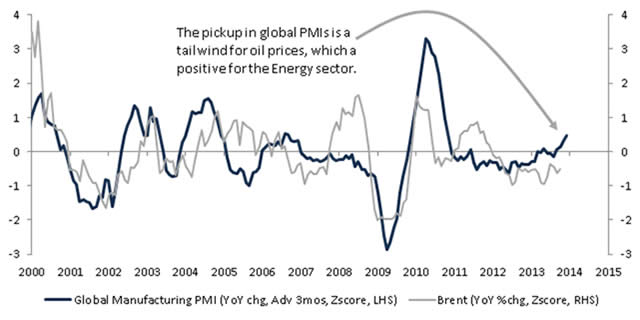
The pickup in Global activity also correlates nicely with the energy sector…
So maybe Exxon will stop acting like a Bond and instead rise like a Stock?
(ISI Group)
One of the stronger sets of data last week was the railroad series…
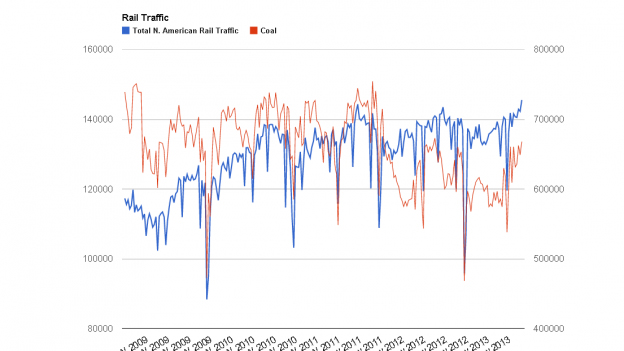
Rail transport had been both positive and negative YoY during midyear, but this week was the fourth positive week in a row since then, and the most positive showing in a long time. Railroad transport from the AAR:
+8900 carloads up +3.1% YoY
+8000 carloads or +4.9% ex-coal
+10,500 or +4.2% intermodal units
+19,500 or +3.6% YoY total loads
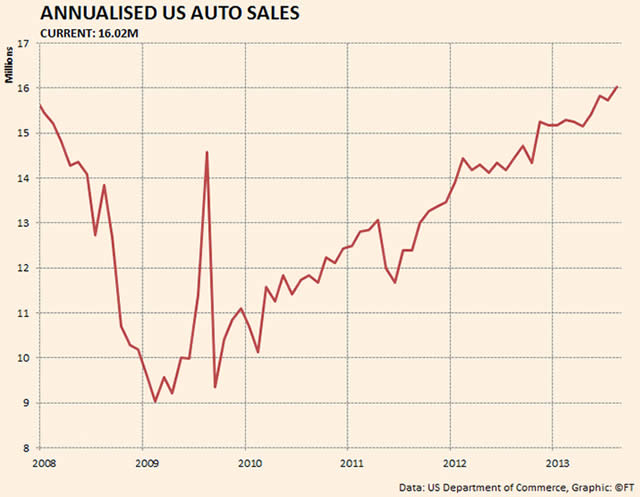
And Auto Sales continue to rip higher in the U.S…
( FinancialTimes)
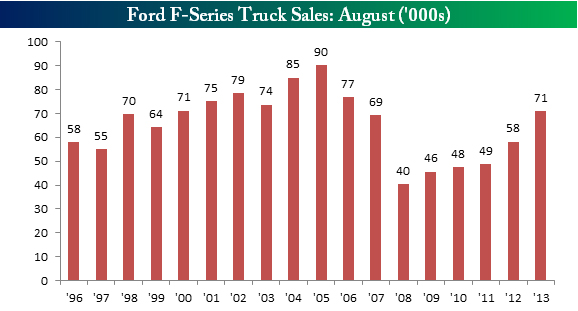
Following the tick up in Railroad shipping was Ford's pickup truck sales…
A good summary of the week behind…
Markets bounced last week as they await the September 18th FOMC meeting. We had suspected that employment number might miss, and that markets would hope we could get a kinder Fed as a consequence. Both the ADP and government numbers missed, and there was a big revision down in the July numbers. Rumors started that we will either get no tapering, or a very light tapering. Some of the rationale for such a policy response has been discussed in this column the past few weeks. They include the emerging market collapse, the crisis in Syrian, and now weaker job numbers. While we cannot predict what the Fed will do, we will state the following. The job market is not as strong as the Street assumed going into the week. We believe rising rates do matter. The EM crisis will impact U.S. earnings reports. Lastly, we believe the Syrian crisis, which was ignored for months, is serious business. Obama fumbled it last year, and now on Friday Russia was calling his bluff by stating they will assist Syria in case of an attack. So not only is the situation serious inside Syria, it’s also a mess diplomatically. For all his accolades for domestic policy, Obama is not respected by our foreign rivals – which gives them incentive to push the envelope when it comes to serious international issues.
The consensus opinion on equities from invested and interested financiers…
Nobody expected the Fed to totally stop its bond buying program. As long as the Fed was easing, Congress could feel it was “off the hook” in providing fiscal stimulus even though the United States budget deficit has declined from 10% of GDP in 2010 to 4% this year and is expected to trend lower over the next two years. There could be some federal stimulus if Congress had any appetite for it, but it does not. Because of low yields in the fixed income market and reasonable equity earnings, stocks were viewed as the most attractive asset class. Real estate had already appreciated significantly and cap rates were low except for special situations like warehouses. Commodities had been trending lower for more than a year and showed little chance of reversing that, so you had to be in stocks, particularly U.S. stocks.
Most of the participants thought the market would be higher at year-end, but not significantly. I had some takers for 2000 on the Standard & Poor’s 500, but most were at 1700–1800. Only a few thought the market would be down at year-end from its August level, but there were no real bears. Federal Reserve policy was considered key to market performance. While it is true that U.S. stocks have been strong since November 2012, the multiple on 2014 earnings was very moderate by historical standards at about 14x. Individuals have yet to invest in the stock market in any serious way and that should be a positive going forward.
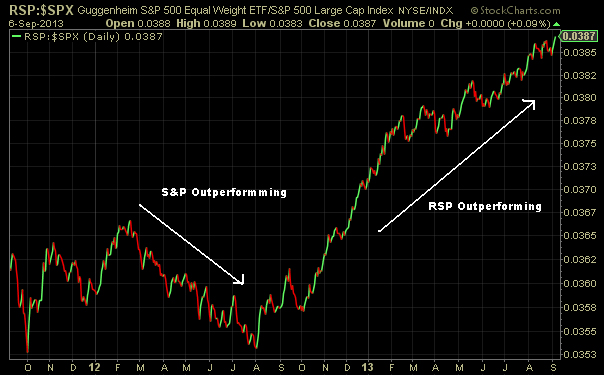
The market continues to suggest RISKON positioning as Smaller Caps outperform Larger Caps. Just no deterioration in this trend, so don't bet against it…
( DisciplinedInvesting )
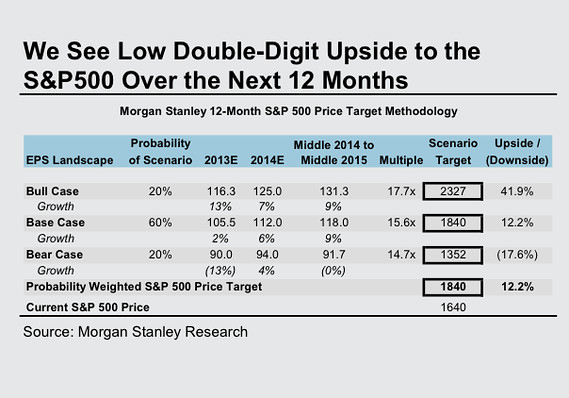
And Morgan Stanley agrees that the opportunity is to the upside…
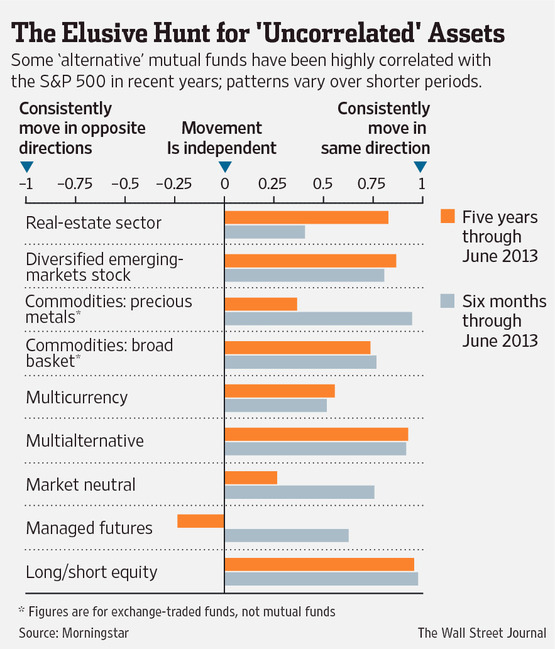
Most alternative investments have become increasingly correlated with the S&P500. If you are in need of an uncorrelated, top performing Managed Futures Fund, I have an idea for you…
Why we love fracking…
Surging oil and natural gas production brought on by hydraulic fracturing is lifting the U.S. economy by lowering energy costs for consumers and manufacturers, according to an industry-funded report. In 2012, the energy boom supported 2.1 million jobs, added almost $75 billion in federal and state revenues, contributed $283 billion to the gross domestic product and lifted household income by more than $1,200, according to the report released today from IHS CERA. The competitive advantage for U.S. manufacturers from lower fuel prices will raise industrial production by 3.5 percent by the end of the decade, said the report from CERA, which provides business advice for energy companies. “What really surprised me was how powerful an impact it is having to such a broad base of the economy,” John Larson, vice president of economics and public sector consulting for IHS CERA and lead author of the report, said in an interview. “It makes it to me a story that all Americans really need to come to grips with and understand.”
@dailydirtnap: If Elon Musk ran Ford - Detroit would be the United States of America's Capital.
In Colorado, we have auto/bike accidents almost daily now. I have given up riding on the open roads and will only stick to closed roads or bike/horse trails. I can't agree with Seth more that all phones should deactivate when a car is moving. The manufacturers and service providers should get together and make this happen now before regulators get involved…
Hundreds of thousands of people are going to die or be maimed because it's physically impossible for us to deal with the cultural imperative to stay in touch on our phones--and drive at the same time….
There's a technical solution, one that might work. There are two solutions I can think of actually, both cheap and fast and effective.
The first is to require the phone to automatically alert every person you're texting or emailing at the moment you use your phone while moving. As we've seen, knowingly interacting with someone who is driving is a crime in many locales, and yes, you should go to jail for it. We need to change the cultural imperative, and we can't do that with laws alone and we can't do that with movies. Technology, though, can fix what it broke.
The second solution is even simpler: when a phone is moving, don't permit it to accomplish certain tasks.
People won't die as a result.
In the event that you missed a past Research Briefing, here is the archive…
361 Capital Research Briefing Archive
The information presented here is for informational purposes only, and this document is not to be construed as an offer to sell, or the solicitation of an offer to buy, securities. Some investments are not suitable for all investors, and there can be no assurance that any investment strategy will be successful.
© 361 Capital