Advisors and investors find themselves inundated with decisions and choices when investing in the crypto economy. Between deciding what cryptocurrency to invest in (bitcoin, ether, tether, solana, etc.) and how to gain exposure (direct exposure, indirect exposure, via an ETF), fitting crypto into a portfolio can be a complicated affair. Alex Chalekian, founder and CEO of Lake Avenue Financial, recently discussed how to approach bitcoin investing and portfolio allocations with CoinShares.
The launch of spot bitcoin ETFs last year paved the way for institutional adoption that continues to grow. As more investors look to the potential in bitcoin allocation, advisors must familiarize themselves with bitcoin’s potential and pitfalls.
As a highly volatile asset with nontraditional valuation drivers, bitcoin investing should only be considered by experienced investors. “Unlike stocks, bitcoin does not generate cash flow or pay dividends,” Chalekian noted. “Its valuation is primarily driven by supply and demand dynamics, investor sentiment, and adoption trends.”
For those with the risk appetite and experience, however, bitcoin may provide a number of benefits to portfolios. These include greater risk-adjusted return potential, diversification from traditional assets, and an alternative source for upside potential.
Bitcoin Portfolio Allocations
When investing in crypto such as bitcoin, advisors and investors should allocate from capital that they don’t mind potentially losing. Chalekian noted that some advisors choose to tuck bitcoin into an alternatives sleeve. Others choose to slot it alongside their more aggressive equity growth exposures.
Wherever it ends up, advisors and investors must keep a close eye on their allocation. Rapid price swings and inherent volatility make bitcoin’s weight a dynamic one in portfolios. In order to maintain the desired weighting and risk-profile, prepare to be hands on with bitcoin exposures. Investors should also approach bitcoin investing with a long-term time horizon versus chasing short-term returns.
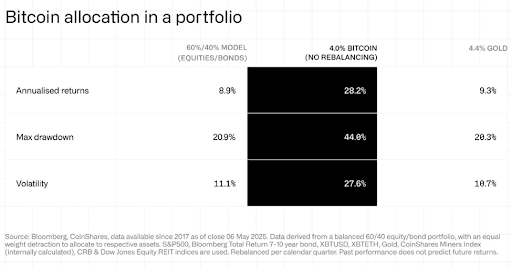
Chalekian recommended a 1–5% allocation to bitcoin which allows upside capture potential while constraining downside risks. “From January 2017 to May 2024, the standard 60/40 portfolio achieved a 9.1% annualized return,” explained Chalekian. “But by incorporating a 4% quarterly-rebalanced position in bitcoin to the standard 60/40 portfolio, the annualized return jumped to 16.2% in that same timeframe.”
The return-boosting potential of bitcoin make it an attractive addition to portfolios. For those with the risk appetite and experience, bitcoin investing may bring a number of benefits to traditional portfolios.