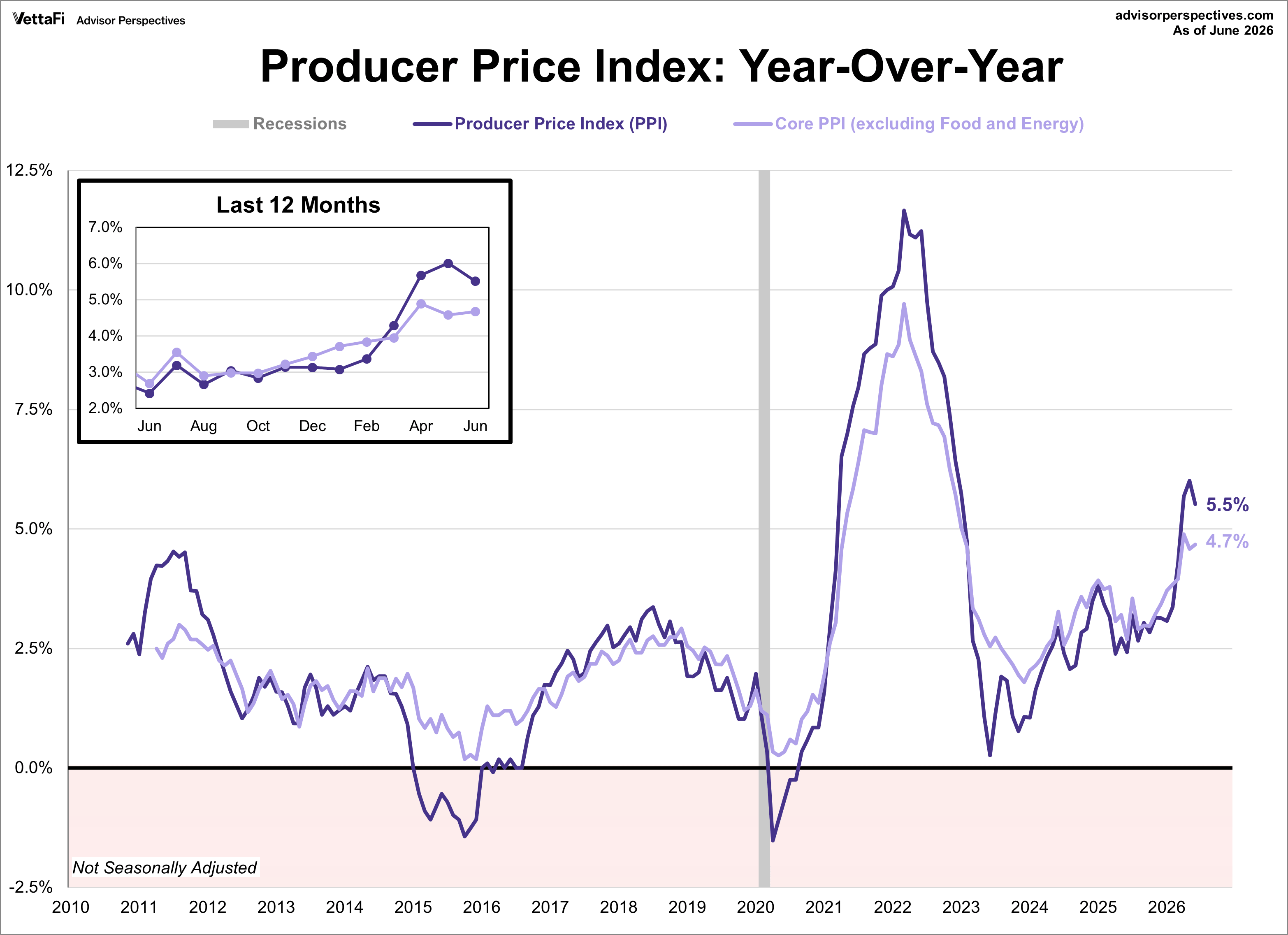
The Producer Price Index (PPI) experienced its largest decline in over a year in June, with wholesale inflation dropping 0.3%. This was below the anticipated 0.0% reading and marking the largest monthly decrease since April 2025. On an annual basis, headline PPI eased for the first time in five months, dropping from 6.0% in May to 5.5%, well below the 6.2% forecast.
Key Takeaways
- Headline PPI declined by 0.3% in June, the largest monthly drop since April 2025.
- Year-over-year headline wholesale inflation eased to 5.5%, falling below the 6.2% forecast.
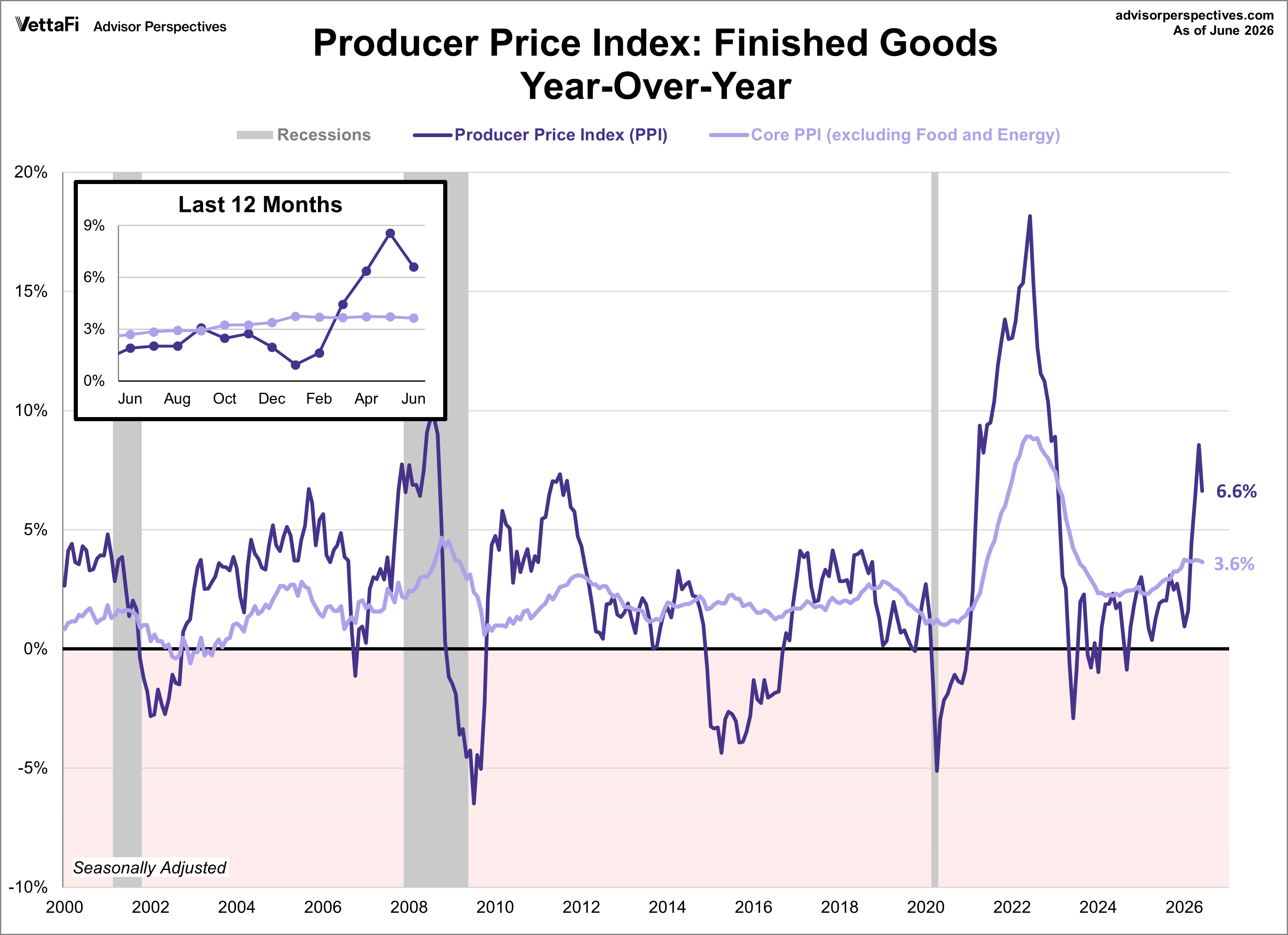
- Legacy PPI for finished goods dropped 1.4% month-over-month and fell 6.6% on an annual basis.
Core PPI, which strips out volatile food and energy costs, also came in lower than projected. It rose 0.2% for the month, just below the 0.3% forecast, and 4.7% on an annual basis, notably lower than the 5.2% forecast.

Analyzing the Legacy Producer Price Index for Finished Goods
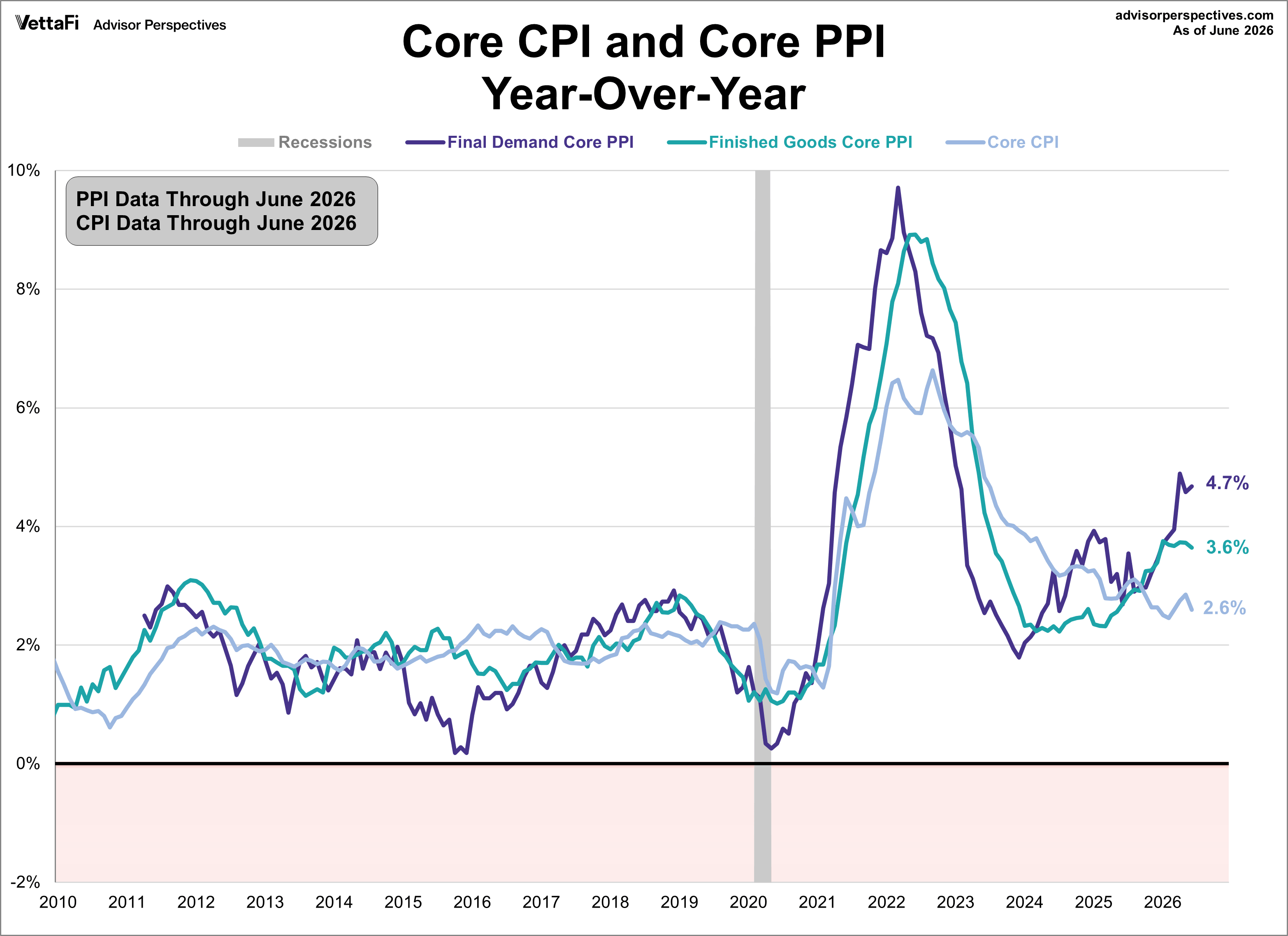
The BLS shifted its focus to the "final demand" PPI series in 2014, but data for these series extend only back to November 2009 for headline PPI and April 2010 for core PPI. Our analysis emphasizes longer-term trends. Consequently, we continue to track the legacy PPI for finished goods, which the BLS still includes in monthly updates. As a later overlay chart will illustrate, the final demand and finished goods indexes remain highly correlated.
In June, the PPI for finished goods was down 1.4% month-over-month, the largest monthly decline since October 2023. Year-over-year, headline PPI for finished goods cooled from 8.6% to 6.6%. Meanwhile, core PPI for finished goods was up 0.2% on the month and 3.6% annually.
How the Producer Price Index (PPI) Compares to the Consumer Price Index (CPI)
Both PPI and CPI illustrate monthly price changes. The Producer Price Index measures price changes from the producer perspective. In contrast, the Consumer Price Index measures price changes from the consumer perspective.
Economists view PPI as a leading indicator of consumer inflation because, for the most part, when producers pay more for goods and services they are likely to pass along those higher costs to the consumer. the next chart illustrates this relationship.
Read more updates by Jen Nash