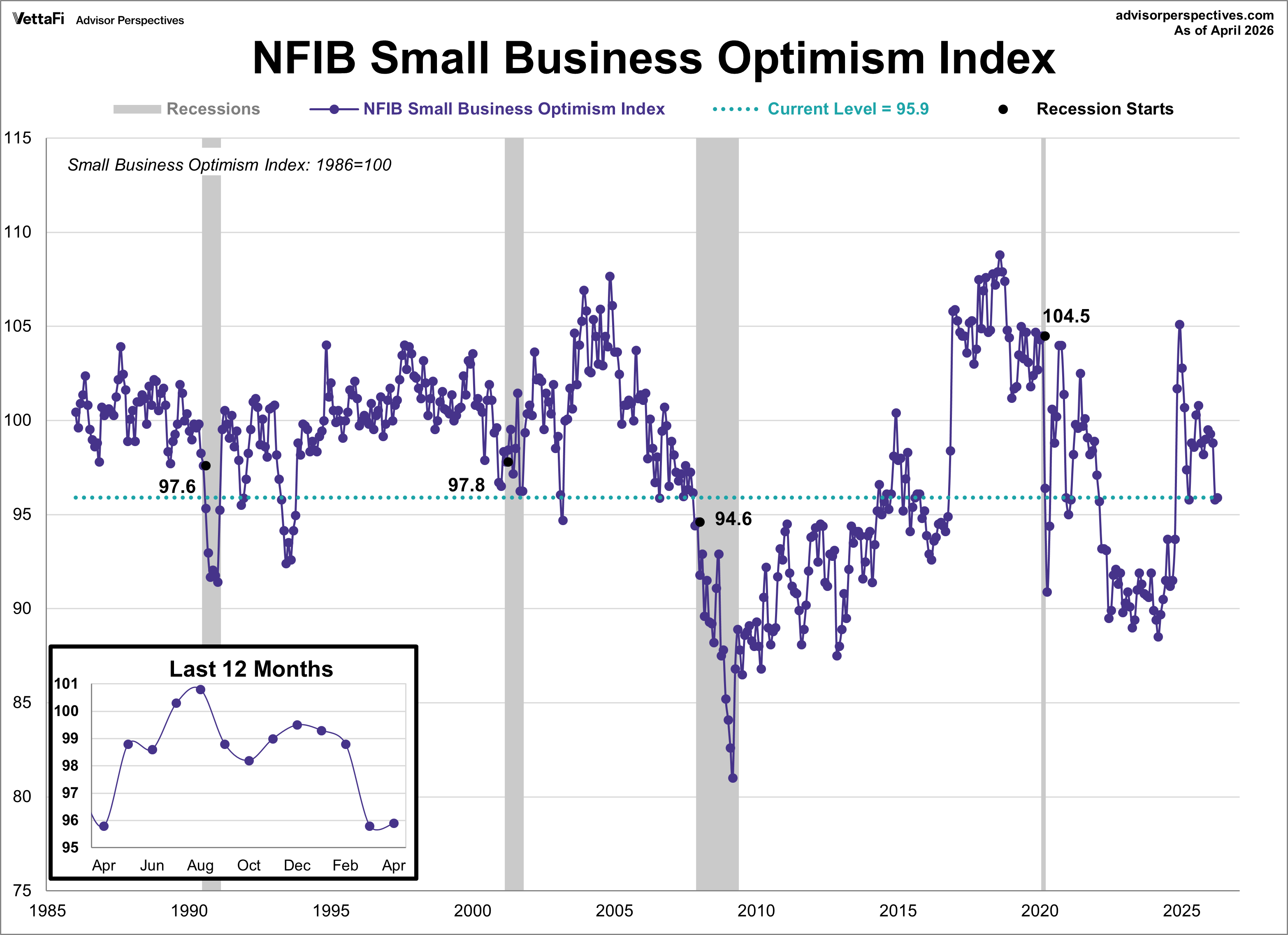
The NFIB Small Business Optimism Index inched up 0.1 points to 95.9, remaining below the index's historical average for a second straight month. This was below the forecast of 96.1 and puts the index at the 32nd percentile of the series.
“Inflationary pressures continue to be a challenge for Main Street,” said NFIB Chief Economist Bill Dunkelberg. “While small business optimism is currently fragile, the benefits of the Working Families Tax Cut Act should start to feed into the private sector over the next few months.”
Key Takeaways from April's report:
-
Labor Quality is the Top Problem: Finding qualified help remains the biggest headache for owners. 18% cited labor quality as their single most important business problem, with many reporting few or no qualified applicants for open positions.
-
Inflation Pressures are Rising: Small businesses are feeling the squeeze again. The net percent of owners raising average selling prices jumped 5 points to 30%, which is more than double the historical average.
-
Weakening Sales Trends: Customer demand appears to be cooling. Reports of higher nominal sales fell to a net negative 8%, and expectations for future sales volumes dropped to their lowest level in a year.
-
Business Outlook is Sliding: Optimism about the future is hitting a rough patch. Owners' expectations for better business conditions fell for the fourth month in a row, reaching the lowest level seen since late 2024.
-
Profitability is Under Pressure: While there was a slight uptick in the profit trend index, it remains firmly in the red at a net negative 19%. Owners primarily blame weaker sales and rising material costs for their lower profits.
- Overall health of business evaluations: Excellent 12%, Good 55%, Fair 29%, Poor 4%
The first chart below tracks the NFIB Small Business Optimism Index since 1986, with a baseline level of 100. Notice the sharp declines in sentiment during the Great Financial Crisis and the COVID-19 pandemic. In contrast, the index showed relative resilience during the 2000-2003 Tech Bubble collapse. Following the Great Recession, small-business sentiment remained weak for an extended period, a pattern that closely resembled the past two years of pandemic-related disruptions and high inflation. Another interesting pattern to the index was the nearly identical jumps following the 2016 and 2024 elections.
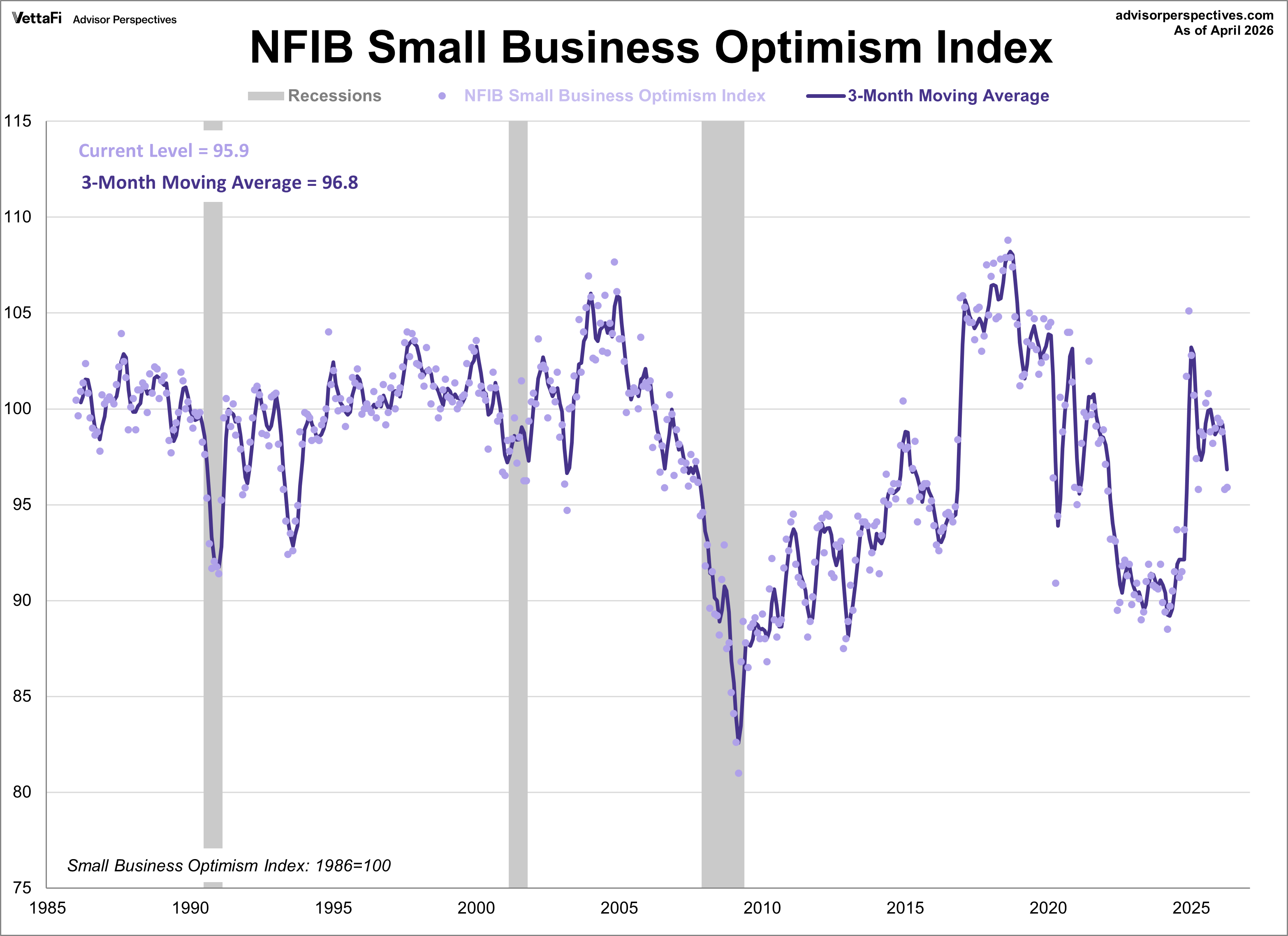
The average monthly change in the NFIB Small Business Optimism Index is 1.4 points. To filter out short-term fluctuations, the chart below presents a 3-month moving average alongside the individual monthly values, represented by dots.
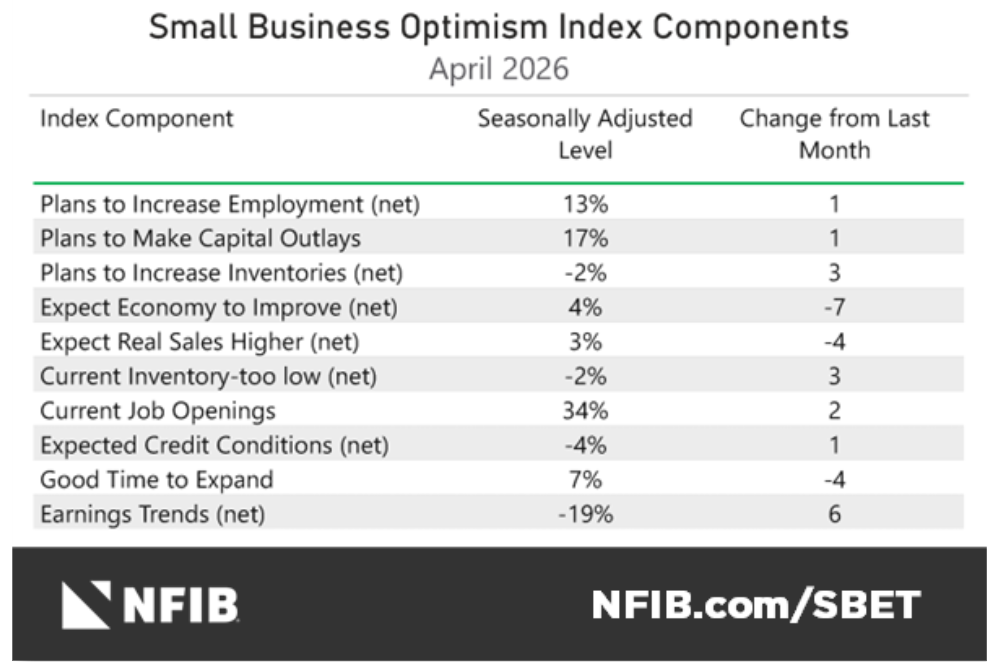
NFIB Small Business Survey Components
The NFIB Small Business Optimism Index is composed of ten components. In April, seven components increased and three declined.
Business Optimism and Consumer Attitudes
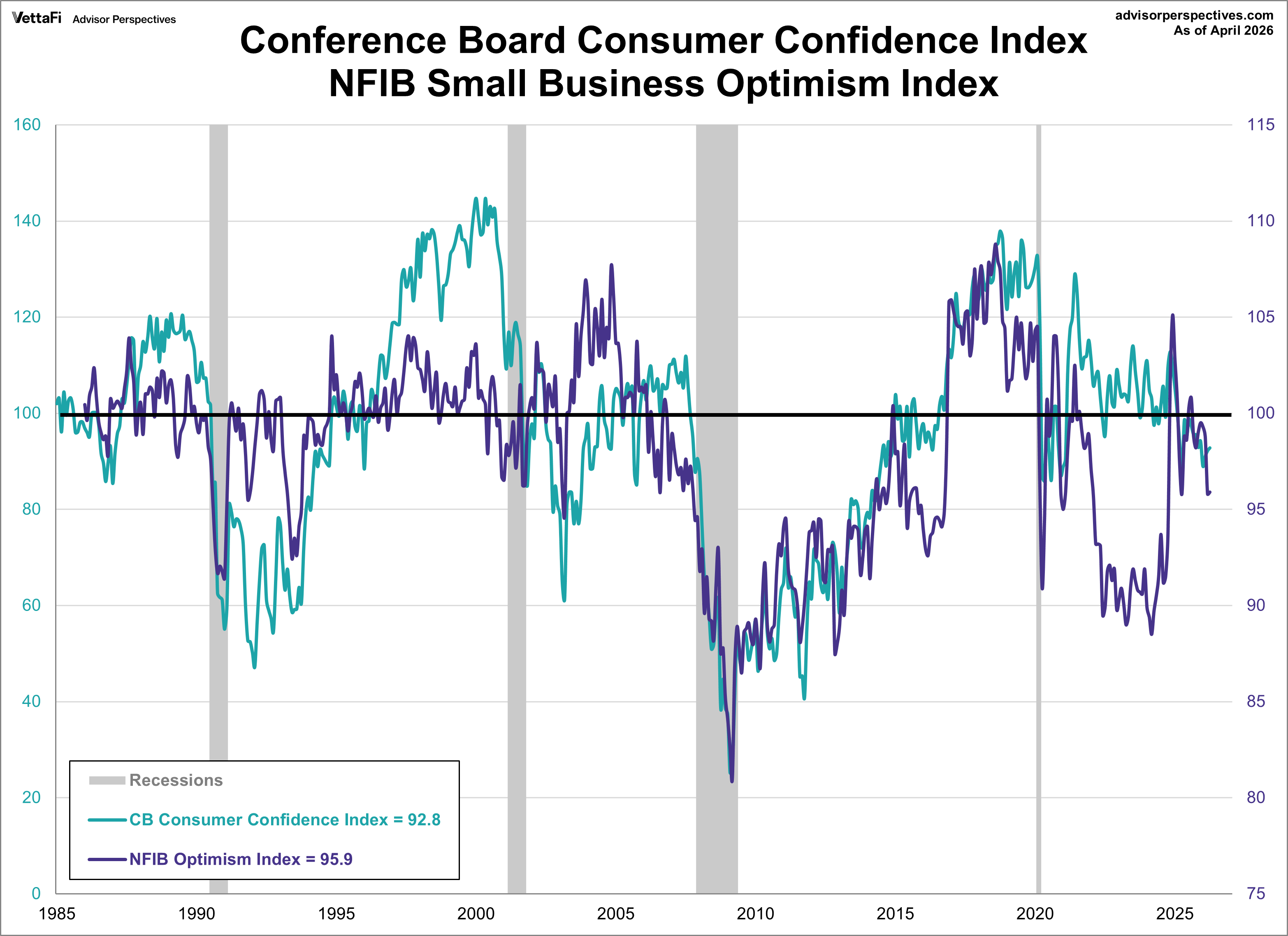
The next few charts are overlays of the Business Optimism Index with two of the main measures of consumer attitudes: Conference Board Consumer Confidence and University of Michigan Consumer Sentiment Index. The Consumer Confidence Index is influenced by employment and labor market conditions from the worker's perspective whereas the Michigan Sentiment Index is more focused on employment conditions from the business perspective. (For more information on how these indexes measure up against each other, check out our monthly update Two Measures of Consumer Attitudes: MCSI vs. CCI).
In our first chart comparing the NFIB Small Business Optimism Index with the Conference Board Consumer Confidence Index, we can see that the consumer measure is the more volatile of the two. Therefore, it is plotted on a separate axis to give a better comparison of the two series from the common baseline of 100.
Next, we compare the NFIB Small Business Optimism Index with the University of Michigan Consumer Sentiment Index. Again, we've plotted each index on a separate axis, however in this chart, we can see that the business measure is more volatile of the two.
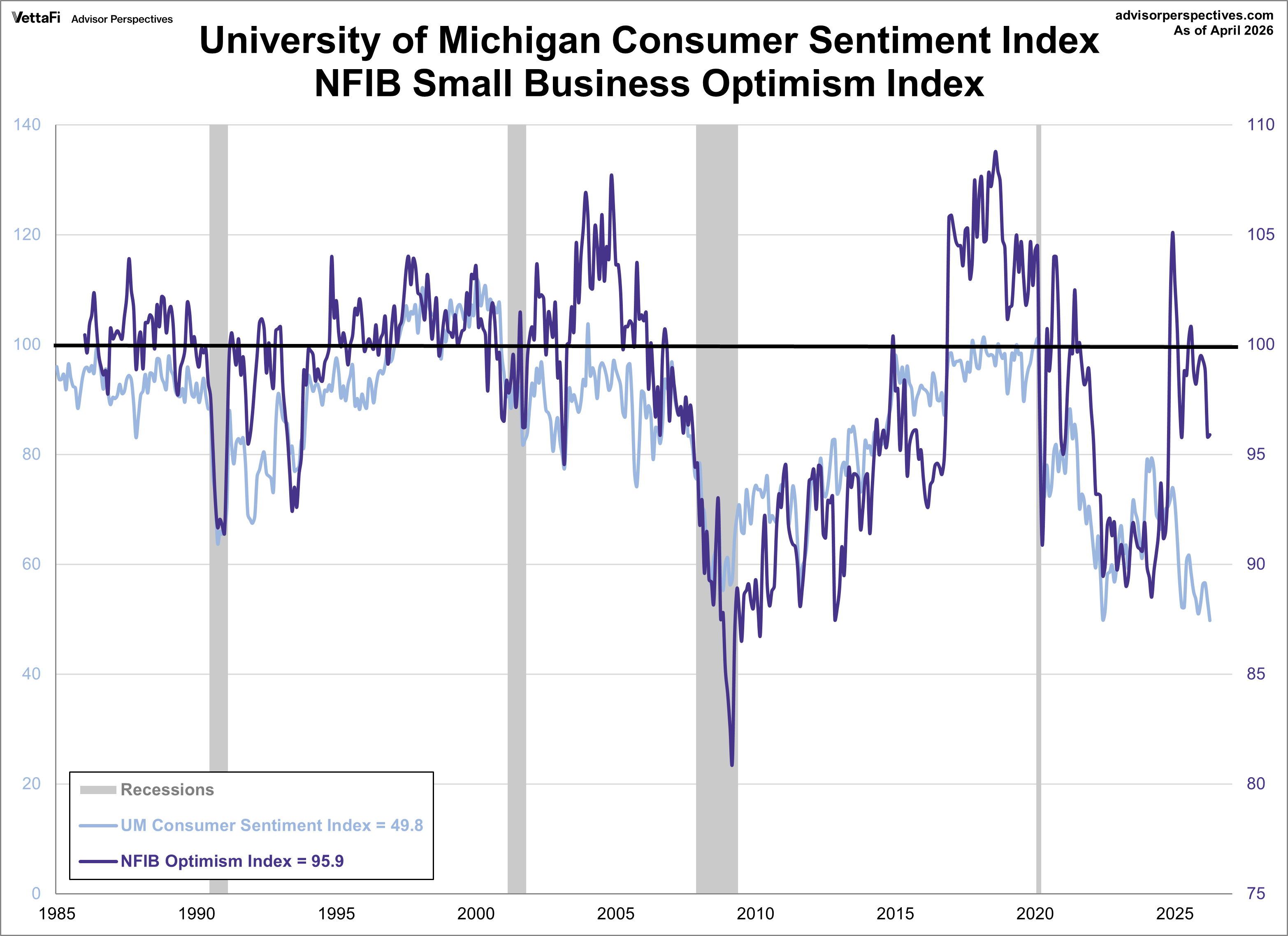
Despite the volatility though, we can see that these two measures of mood (business and consumer) have been highly correlated, falling and rising together for the most part. A decline in Small Business Sentiment was a long leading indicator for the first two recessions of the century, but clearly not for the Covid-19 recession.