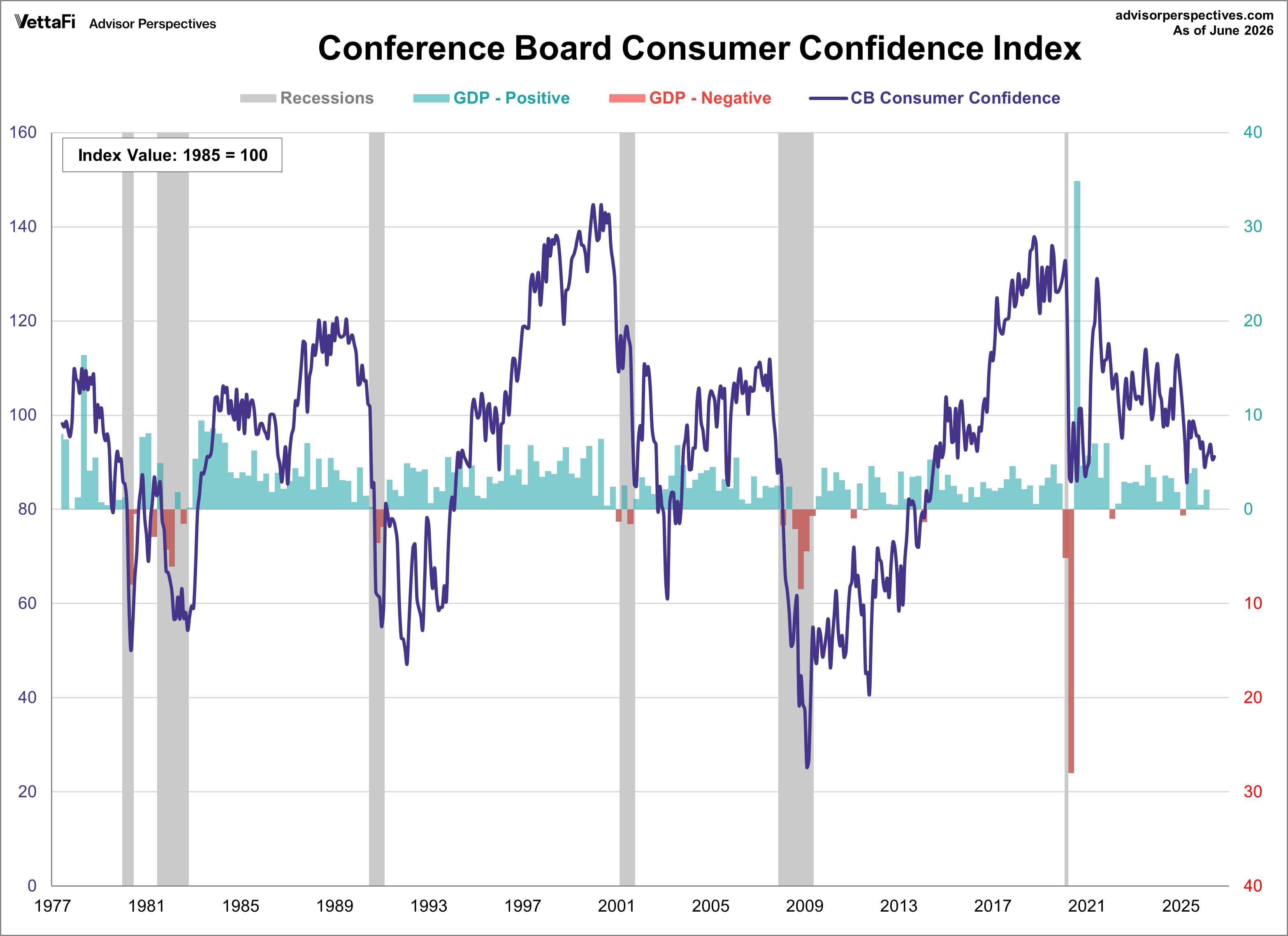
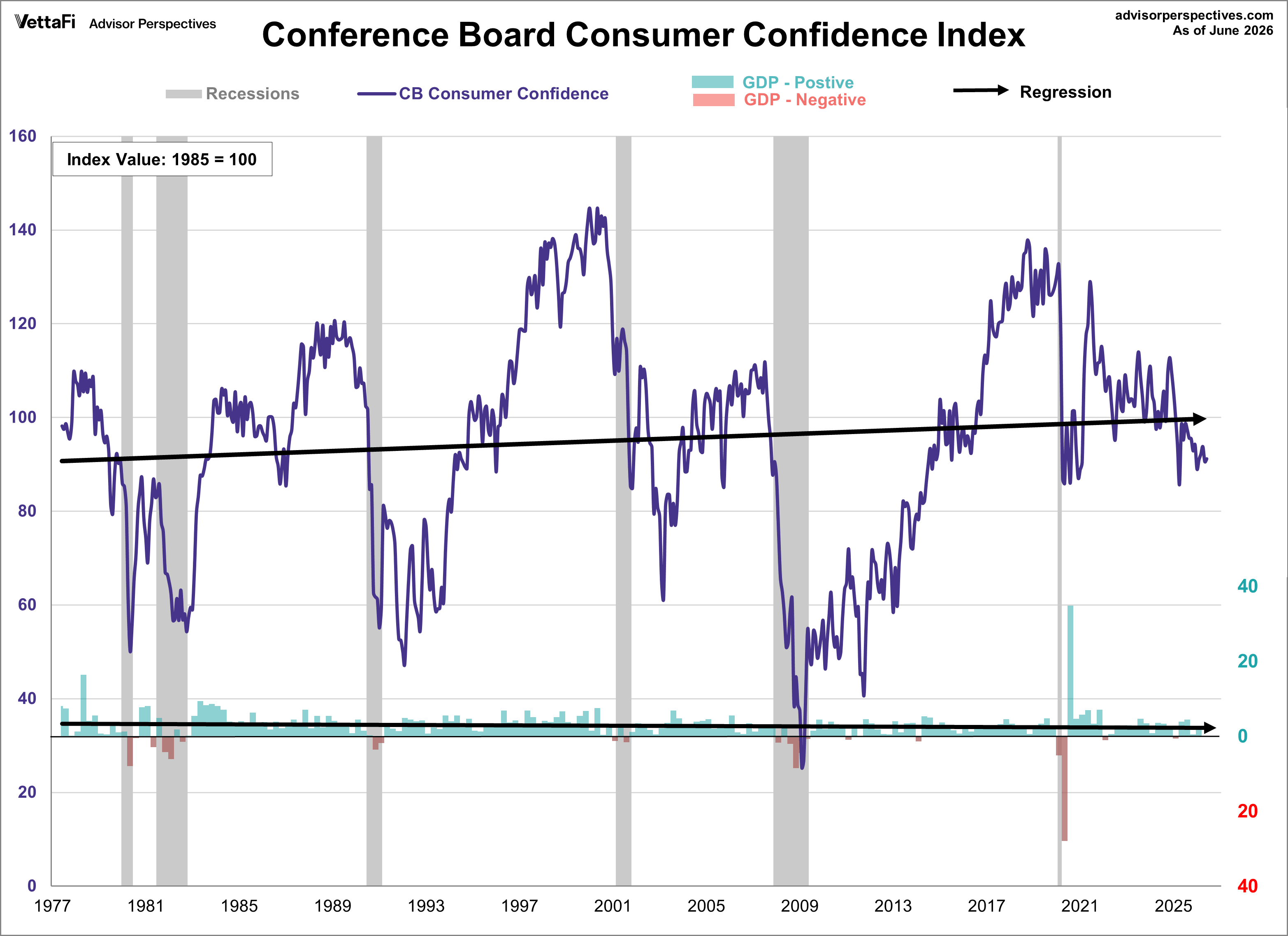
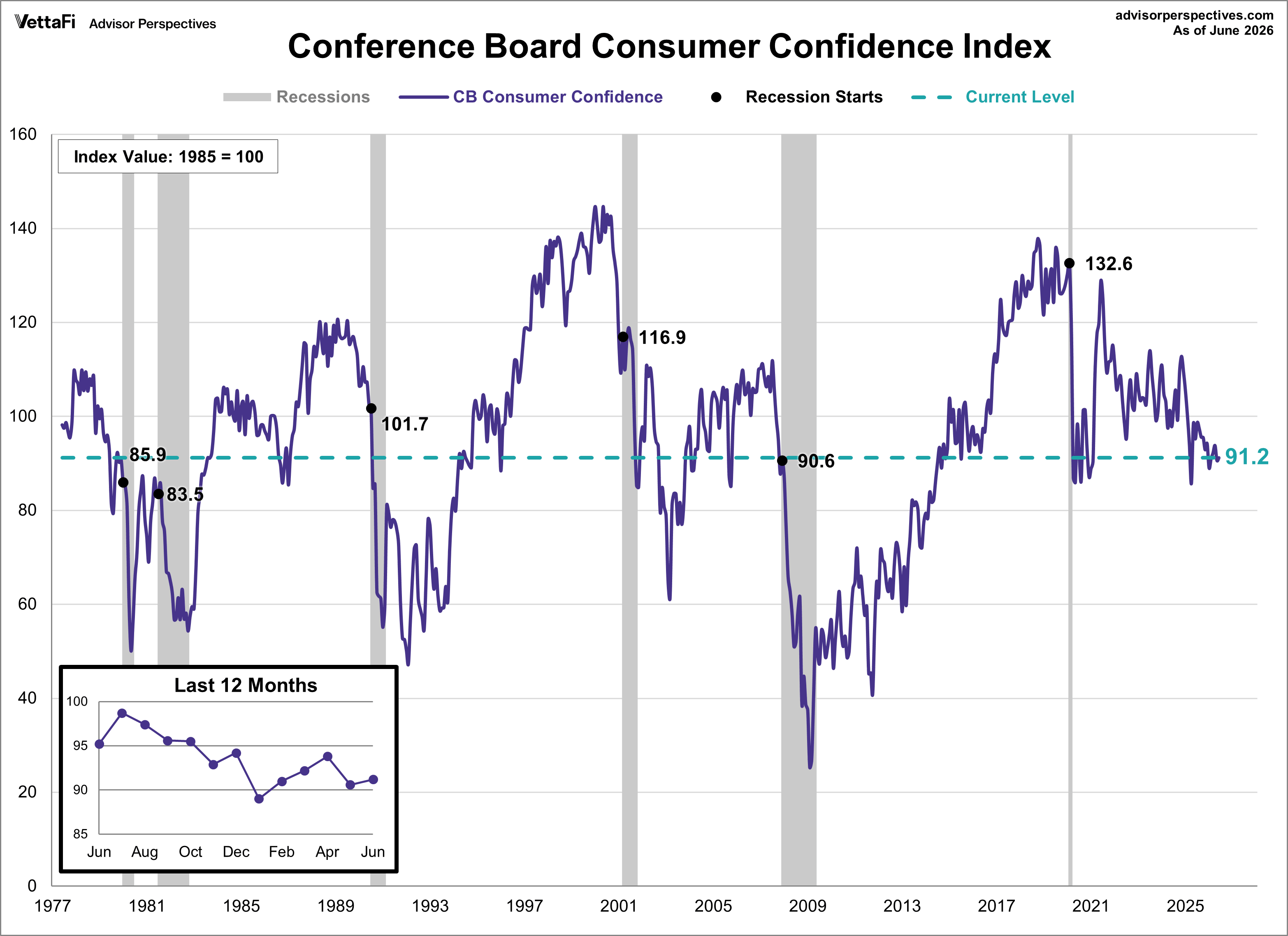
The Conference Board's Consumer Confidence Index® inched up in June, rising 0.6 points to 91.2. Despite the improvement, the index came in below the forecast of 94.4. Note that the survey period for this month's results was June 1st-23rd, a timeframe that includes the extension of the US-Iran ceasefire agreement.
Key Takeaways
-
The Conference Board's Consumer Confidence Index® increased by 0.6 points to 91.2 in June, missing forecasts of 94.4.
-
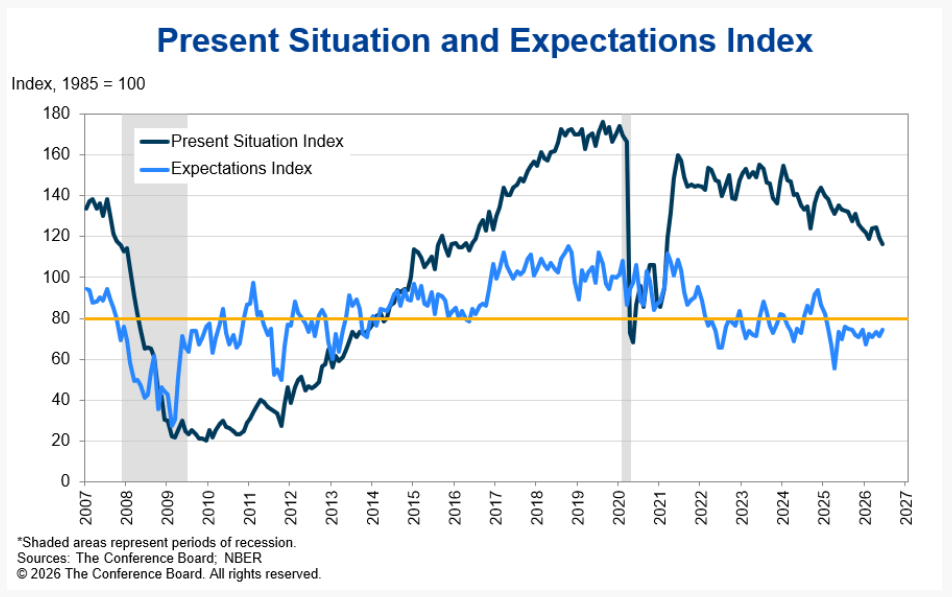
The Present Situation Index fell 3.0 points to 116.4 while the Expectations Index rose 3.0 points to 74.4.
- Consumers stating jobs were "hard to get" rose to 22.5%, the highest level since January 2021.
The Present Situation Index, which is based on consumers' assessment of current business and labor market conditions, fell 3.0 points to 116.4. Meanwhile, the Expectations Index, which is based on consumers' short-term outlook for income, business, and labor market conditions, rose 3.0 points to 74.4. Note that a level of 80 or below for the Expectations Index historically signals a recession within the next year and the index has been below 80 since February 2025.
“Consumer confidence inched up in June as falling oil prices in recent weeks provided some relief to consumer inflation fears,” said Dana M Peterson, Chief Economist, The Conference Board. “Consumer appraisals of current business conditions were slightly more positive compared to last month. However, perceptions of the current labor market softened measurably as the percentage of consumers saying jobs were ‘hard to get’ rose to 22.5%, the highest level since January 2021 (22.8%). Moreover, consumers anticipate little change in the labor market six months from now. This was offset by improving expectations for business conditions and incomes.”
Consumers’ write-in responses on factors affecting the economy continued to skew towards pessimism in June. References to prices and oil and gas eased in frequency but remain elevated. Mentions of war, geopolitics, and conflict eased, reflecting some easing of consumer concerns about the inflationary impacts of the war in the Middle East.
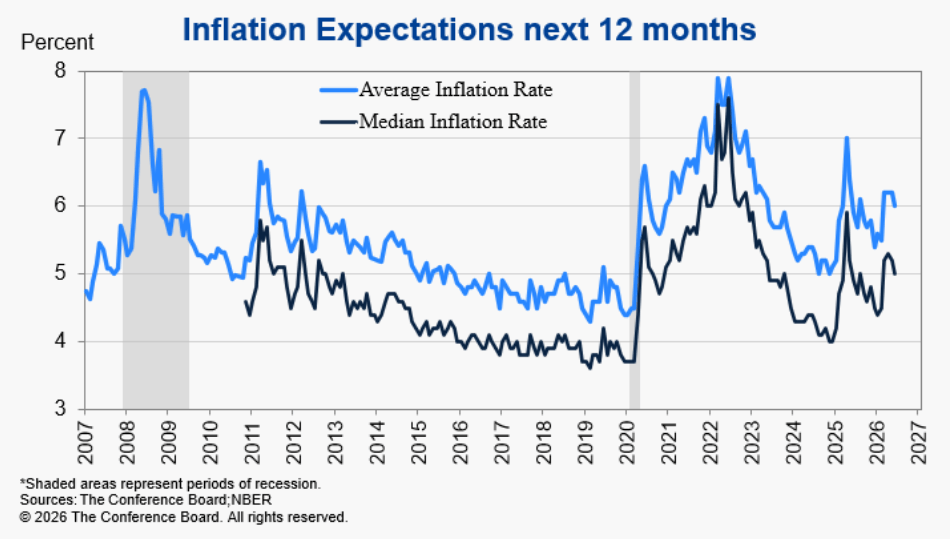
Consumers’ average and median 12-month inflation expectations were less elevated. While down somewhat from May (62.4%), most consumers (61.5%) in June still expected higher interest rates over the next 12 months. Equity market volatility, notwithstanding, the second half of the June survey period included an extension of the US-Iran ceasefire and likely influenced consumer expectations of even higher stock prices a year from now.
Background on the Consumer Confidence Index
The Conference Board Consumer Confidence Index measures the consumers attitudes and confidence in the economy, business conditions, and labor market, with higher readings indicating higher optimism. The general assumption is that when consumers are more optimistic they will spend more and stimulate economic growth. However, if consumers are pessimistic then spending will decline and the economy may slow down. The index is based on a 5 question survey, with 2 questions related to present conditions and 3 questions related to future expectations. The survey began in 1967 and was conducted every two months but changed to monthly reporting in 1977.