What prediction markets add is something equities never offered: a way for thousands of people to sell small bits of information — a logistics clerk’s observation, a local journalist’s hunch — that are individually worthless and collectively a forecast.
Coverage of prediction platform Polymarket has recently converged on a single statistic, delivered with the cadence of a verdict: Most users lose money. The top 1% of accounts capture roughly three-quarters of the gains, while most traders since 2022 are underwater.
The part of the bond ETF complex that’s growing fastest isn’t that part. It’s the active and outcome-oriented funds — multisector strategies, flexible income vehicles, securitized credit funds, options-overlay products — that charge 0.30 to 1 percentage point and promise more yield, less duration, or both. And the marketing pitch behind them quietly elides something important.
For the first time, stablecoins have surpassed the Automated Clearing House (ACH) payments network in monthly transaction volume. According to blockchain analytics platform Artemis, stablecoins processed $7.2 trillion in February, topping the ACH’s $6.8 trillion.
Sportsbooks profit from customer losses, making them structurally predatory. Kalshi, by contrast, operates as a peer-to-peer exchange: customers bet against each other, Kalshi takes fees from both sides, and the house has no stake in the outcome. It's a financial market, not a casino.
When Edward Jenner inoculated an eight-year-old boy with cowpox in 1796, the principle was radical: Expose a healthy body to a mild, manageable version of harm, and it builds the defenses to survive something far worse. The cowpox patient never got smallpox. Markets work in much the same way.
Every financial crisis has a moment — usually identified only in retrospect — when an obscure product intended to mitigate risk spreads through what author Rick Bookstaber called “tightly coupled” interconnections to cause widespread damage.
The rise of prediction markets offers statisticians and social scientists the kind of help that astronomers get from a new space telescope or particle physicists from a bigger supercollider. We finally get to test theories and resolve questions that people, held back by poor data, have been wrangling over for decades.
Kalshi Inc.’s Chief Executive Officer Tarek Mansour got my attention when he claimed last week that prediction markets could rival stock exchanges in a few years. Of course, this does not mean that people will buy and sell stocks on Kalshi, but that prediction markets will be where information is aggregated and prices set, with the New York Stock Exchange and its ilk relegated to processing orders.
Bankruptcies are a routine event for companies relying on large amounts of high-yield debt for their capital. Investors reserve much of the high income they receive in good times for the inevitable losses in bad times.
Polymarket is a rational system, with efficiency, security and incentives designed into the platform. But it may still see unanticipated problems.
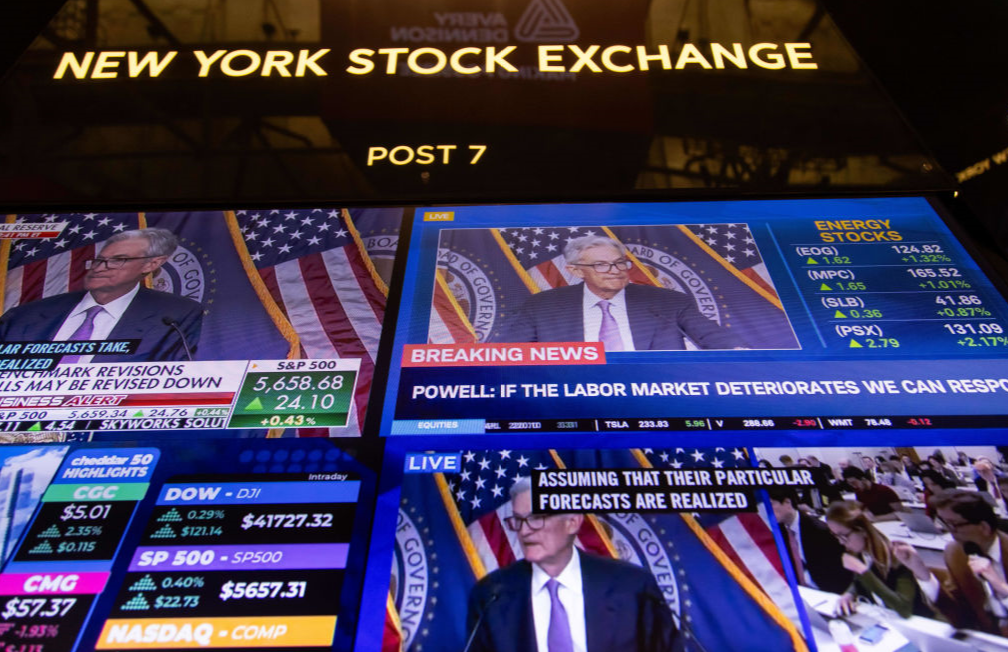
The stock market as we know it is on the brink of a transformation.
A paper from researchers at hedge fund AQR Capital Management and Yale University addresses one of the most important questions in finance: Will artificial intelligence and machine learning replace human researchers and traders?
The sharp division between public and private securities was a major bulwark of financial regulation from the New Deal in the 1930s to the end of the 20th century.
The digital assets platform Republic is touting plans to give retail investors access to the world’s hottest private companies starting with Elon Musk’s SpaceX via mirror tokens.
Retail traders using sophisticated quantitative strategies are starting to have a surprising and noticeable impact on financial prices.
A new report demonstrating that central banks can port their monetary policy tools into a tokenized financial system is an important step in transforming how we trade securities including stocks and bonds.
Banks including Goldman Sachs Group Inc. and JPMorgan Chase & Co. can thank the White House’s aggressive disruptions on tariff policy and other issues for record hauls from equities trading in the first quarter, when market volatility began to surge.
I suspect many people yawned when the popular online brokerage Robinhood Markets Inc. announced it will offer sports and other prediction market derivatives, starting with betting on the NCAA March Madness basketball games.
The tendency of stocks to produce all their gains at night, when markets are closed, and systematically lose money during the daylight hours, has baffled researchers for four decades and potentially put retail investors at a disadvantage.
Alternative investments including hedge funds and real estate will disappear from the portfolios of pension funds and endowments over the next 10 to 20 years, well-known institutional investment consultant Richard Ennis concludes in a recent report.
There are several answers, but an important financial one is that recent fundamental market changes have been much more disruptive for egg buyers than computer-processing users.
Over the past few months, I’ve had occasion to speak at a number of conferences concerned with the impact of artificial intelligence on financial jobs.
Before I undertake the hard task of predicting where the crypto industry will go in 2025, let’s take a minute to recall where it has been.
Hedge fund executive Cliff Asness says artificial intelligence is becoming “annoyingly better” at doing parts of his job.
Most important advances in technology occur when someone combines a variety of innovations in different fields in a commercially successful way.
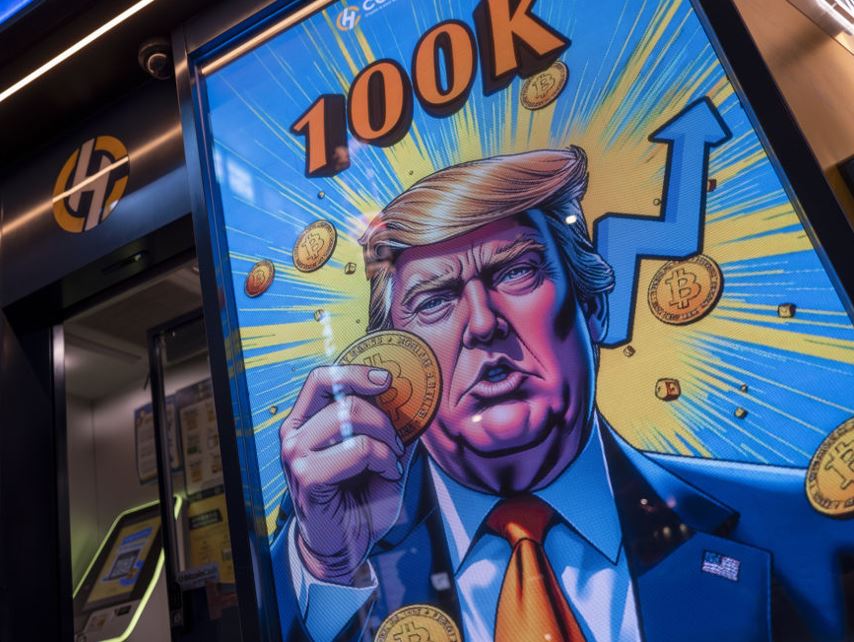
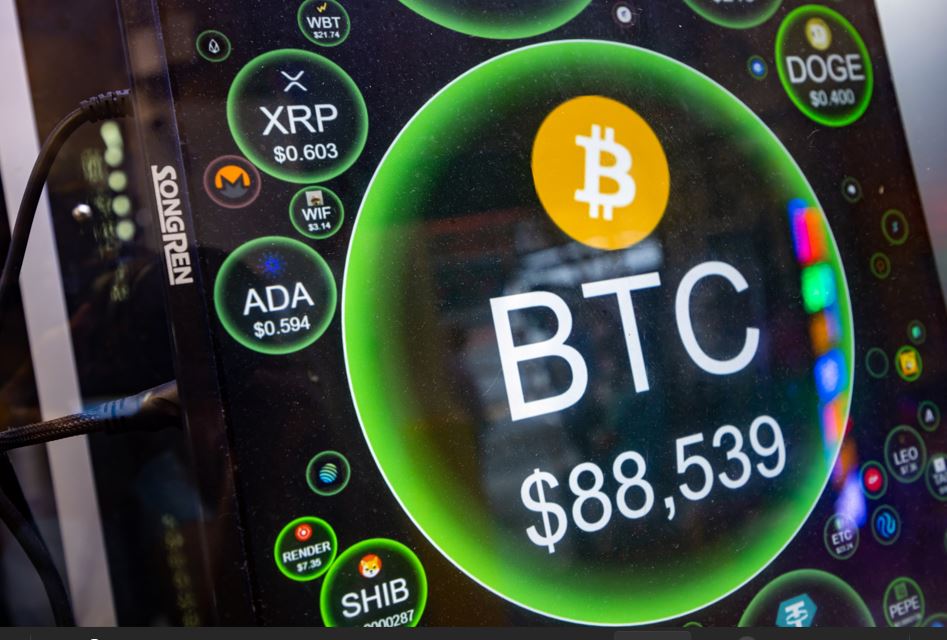
The price of Bitcoin has jumped by more than $20,000 since the Nov. 5 elections in the US, with about one-third of the gains coming with favorable early results for Republicans, and the rest trickling in as Donald Trump’s victory became certain and his party continued to pick up seats in the Senate and House of Representatives.
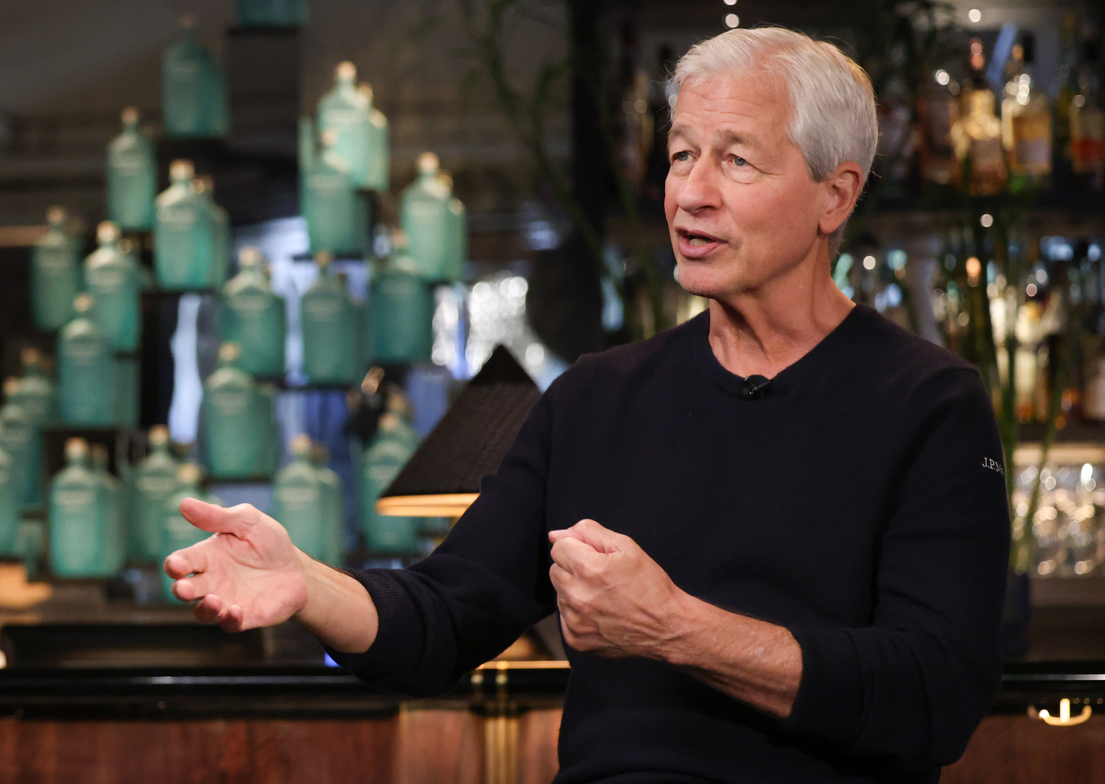
Two senior Wall Street executives complained this week that over-regulation is discouraging initial public offerings. JPMorgan Chase & Co. CEO Jamie Dimon partly blamed the zeal of securities regulators for the drop in IPOs that began in March 2022, a sentiment echoed by Citadel Securities CEO Peng Zhao.
Victor Haghani, James White and Jerry Bell of Elm Partners Management conducted a fascinating experiment to investigate the value of getting tomorrow’s headlines today, and the trading acumen of finance students. The results may suggest to some that finance courses need an upgrade...
Cliff Asness, co-founder of AQR Capital Management, made the news recently with the provocative claim that financial markets are getting less efficient. I worked at AQR for 10 years, but long before that I spent nearly two decades as the only mentee the renowned economist Fischer Black ever had. Fischer had a very different view of market efficiency and would, I think, have reached a different conclusion from Cliff’s data.
Private equity has been in the news frequently in the last few weeks, and not in a good way.
A recent Financial Times opinion piece laid out how illiquidity makes private equity hazardous for investors. The Bank of England’s Nathanaël Benjamin warns private equity illiquidity is a systemic risk to the financial system.
Last week, the Supreme Court overturned a decades-old legal doctrine that gave federal regulators the power to interpret unclear laws. This touched off a lot of wild rhetoric about the end of the administrative state.
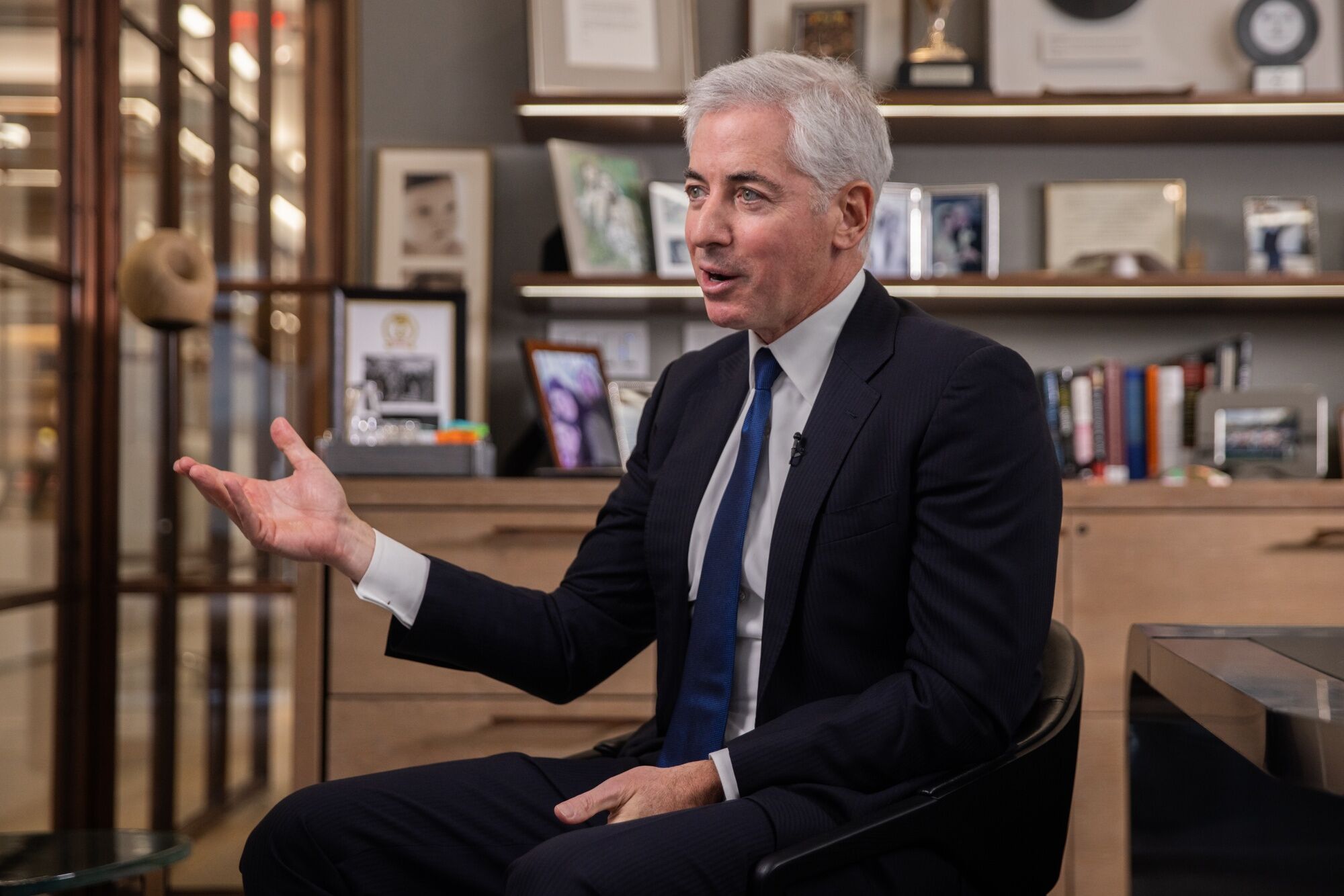
Celebrity fund manager and activist investor Bill Ackman just sold 10% of his investment management company in a deal that valued Pershing Square at $10.5 billion. An initial public offering could come as soon as next year, the Wall Street Journal has reported.
The Commodity Futures Trading Commission appears to have little respect for the power of markets, going by their proposal to ban futures contracts on electoral outcomes.
Active exchange-traded funds have seen record inflows in recent years, taking assets under management to $630 billion.
Gross was famous for squeezing out extra yield using corporate bonds, mortgages, derivatives and other instruments.
Rising interest rates and the fear of giving back stock market gains are pushing pension fund managers to move capital from stocks to bonds.
Last July, the House Financial Services Committee approved two major pieces of legislation aimed at creating a regulatory framework for the cryptocurrency industry, the Financial Innovation and Technology for the 21st Century Act and the Clarity for Payment Stablecoins Act.
Among the many too-good-to-be-true financial stories is the Alpha Architect 1-3 Month Box ETF, known by its ticker BOXX, that offers Treasury bill yields taxed at capital gains rates.
One of the hottest products for retail investors the last couple of years is the single-stock option-income exchange-traded fund. While the basic idea is similar to the old and respectable covered-call writing strategy, the modern versions grabbing attention and dollars are supercharged, promising income yields of 100% or more.
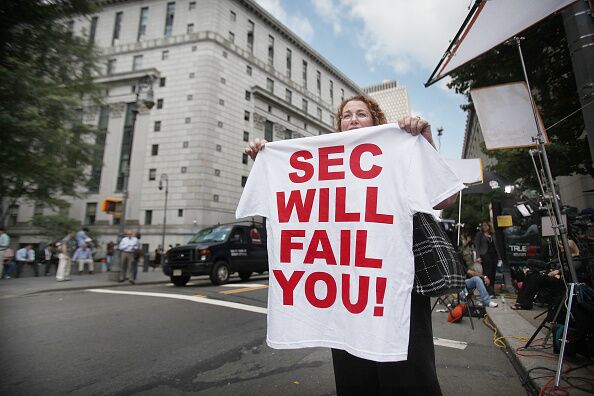
The SEC is using its authority over dealers to sneak in the back doors of these entities, which will inevitably create new or modified entities to reduce the cost of regulation.
What does a November 2023 hockey bet have to do with the 2008 financial crisis and the Chunnel connecting England to France? A lot, and the relation is key to understanding financial disasters — not to mention getting paid for longshot sports bets and getting from London to Paris safely.
Large language models, such as ChatGPT, are threatening to disrupt most areas of life and work. Financial trading is no exception.
Blackstone Inc.’s private equity fund for wealthy individuals is a harbinger of two trends that many expect will transform investment management in the next decade.
It should be no surprise that Bitcoin sold for over $44,000 this week, more than double its March 13 price. Going back to 2014, it has taken the cryptocurrency an average of nine months and 21 days to double; the milestone came 28 days early this time.
Two years ago, the Journal of Finance — the most prestigious journal in the field — retracted a published paper because of data errors, either the first or second withdrawal ever by a top-three finance journal.
Every time interest rates go up there is a flurry of demand for a product that has been around at least since the Roman Empire — annuities. The insurance industry has already seen rapid growth in annuity sales since 2021 and if rates remain at or move above current levels, demand seems poised to explode.
Former Bridgewater Associates LP executive Bob Elliott’s plan for exchange-traded funds that employ hedge fund strategies has sharpened the debate about whether retail investors should have access to such approaches.
News that a Washington DC Court of Appeals ruled in favor of Grayscale Investments LLC over the Securities and Exchange Commission has ignited hope that a Bitcoin exchange-traded fund will soon be available. Bitcoin prices jumped.