There’s a fallacy among advisors that selecting a platform partner is an either/or proposition: a TAMP or an open-architecture solution. There is a middle ground. Some describe it as a “full-service portfolio management platform.” The team at SEI calls it a TechstodianSM.
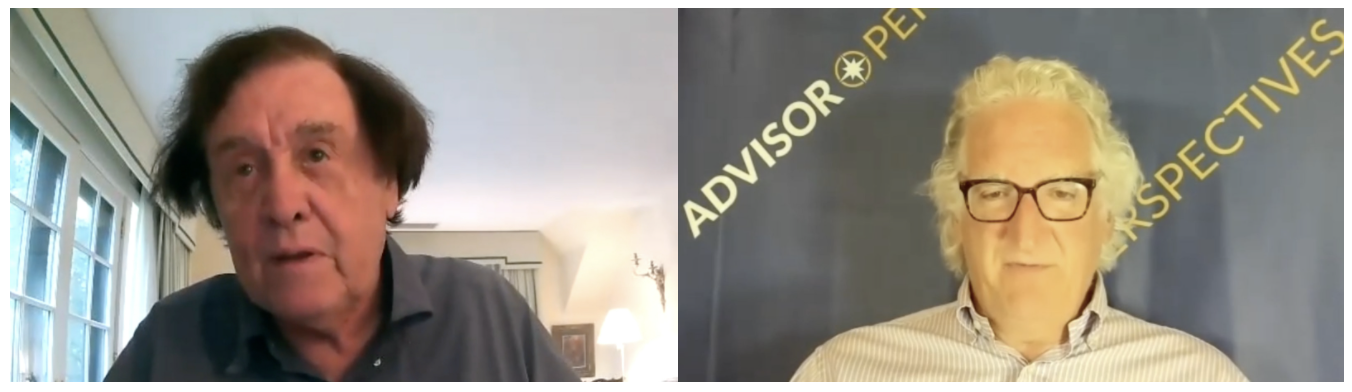
In this interview, the renowned economist Woody Brock explains why inflation will not be transitory.
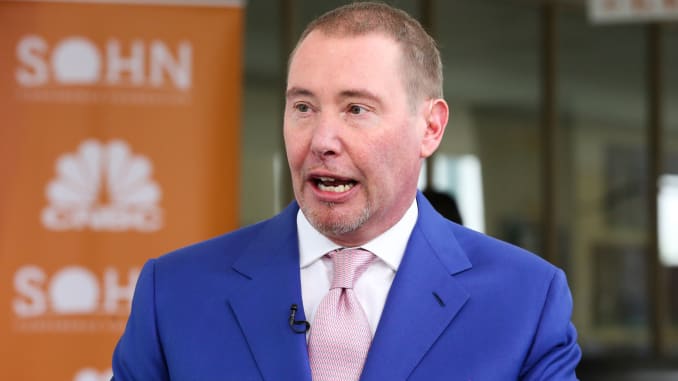
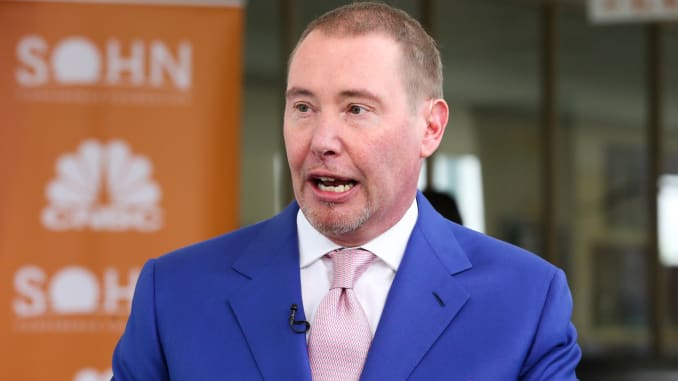
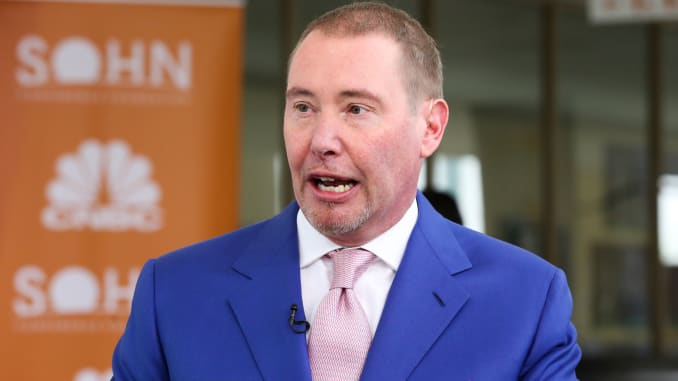
Jeffrey Gundlach’s highest conviction investment idea is that the dollar will head lower over the long term. That will lead to a strong rally in emerging equities, and they will outperform U.S. stocks.
The First Eagle Credit Opportunities Fund (FECRX) takes an intensive, research-driven approach to income-oriented opportunities available across the alternative credit spectrum—including both private and public investments—in an effort to deliver current income while providing long-term risk-adjusted returns through a focus on senior-secured assets. I spoke with its managers, Andrew Park and Christian Champ.
There is at least a 50/50 chance that headline CPI inflation will exceed 5% for all of 2021, according to Jeffrey Gundlach.
Rick Bookstaber warns that investors face the risk of a “leverage liquidity cascade,” where margin calls would trigger forced selling across asset classes.
Frank Pape is the senior director, portfolio consulting for Russell Investments’ advisor and intermediary solutions business. In this interview, he discusses the latest research on how advisors can maximize the after-tax income for their clients.
Tweedy Browne is one of the most respected value managers in the world, with a legacy that includes having Benjamin Graham and Warren Buffett as clients. In this interview, members of its investment committee explain why value investing is on the cusp of a resurgence.
“We are a long way from 1970s-style inflation,” Scott Minerd said. The data does not support the view that inflation is non-transitory, he said, despite what some people, including hedge fund manager Paul Tudor Jones, are claiming.
I spoke with Staley Cates, the vice chairman of Southeastern Asset Management, on the value opportunities he sees in the U.S. and abroad, and why his firm’s process has generated superior returns for its partners/investors.
The Fed stated in late April that it expects inflation to be “transitory,” but Jeffrey Gundlach gives that only a 60% chance of being true. If inflation is non-transitory, markets will be “severely stressed,” he said.
President Biden’s proposed $6 trillion budget will not be fully paid for with tax increases or other spending cuts.
Adding “alpha” to client relationships may be easier through effective estate and tax planning than with investment manager selection or portfolio construction. Potential changes to the tax code illustrate many of those planning opportunities.
Equity markets are not a bubble, according to Howard Marks. He expects six to nine months of very good economic news, followed by “decent” growth for several years.
Cathie Wood may be the most polarizing and controversial figure in finance. Her acolytes believe her vision will make them rich. Her detractors credit her sales skills but question her investing acumen.
The world’s largest SPAC – Pershing Square’s “tontine” – is “deeply engaged” in a transaction that could close in the next few weeks, according to Bill Ackman.
A wealth tax “crosses the line and is unnecessary,” according to Ray Dalio.
The strong economic recovery will not be interrupted by inflation or a credit crunch, according to Ed Yardeni, and the S&P 500 will soon reach 4,500.
We are about to see “non-transitory inflation,” according to Bianco. His words were chosen carefully to oppose Fed Chair Jay Powell’s statement on April 28 that the U.S. would face only “transitory” inflation.
The consensus is that U.S. equities will deliver strong performance as the economy recovers, and that higher inflation will drive rising interest rates. All of that is wrong, according to David Rosenberg.
The Fed is under the misconception that it controls events, according to James Grant. It is overconfident in its belief it can accurately calibrate and attain a 2% inflation target.
On April 20, we hosted our first ever virtual Market Outlook Summit. Here is a recap of each session with a link to watch the replay.
What value should we place on economic analysis from someone with antisemitic views?
Data has shown that investment strategies that address ESG issues constitute a third of professionally managed U.S. assets. That has led some to claim that asset prices have been driven up to the point where investors should expect poor performance going forward. That narrative is false.
Headline CPI inflation is almost certain to rise above 3% in June and July, according to Jeffrey Gundlach. It could even top 4%, he said, which would “really spook the bond market.”
U.S. stocks have the highest CAPE ratio of any global equity market, but they are still the place to invest. But the inventor of that metric, Robert Shiller, says that stocks are indeed risky.
The decade-long onslaught inflicted by growth stocks on value investors is due to end, according to Gerard O’Reilly. But the data is too “noisy” for him to say when that will happen.
This video explores the mindsets of those who support and oppose President Trump. It was recorded on November 24, six weeks before the rioting at the Capitol building.
In his forecast for 2021, Jeffrey Gundlach predicted a “regime change.” Investors should prepare for themes that reverse prior trends: U.S. equities will underperform the rest of the world, inflation will rise, volatility will be higher, and the dollar will weaken.
We’ve posted the 10 most-widely read practice management articles for the past year. Below are another 10 that you might have missed, but I believe merit reading:
As is our custom, we conclude the year by reflecting on the 10 most-read practice management articles over the past 12 months.
Great articles don’t always get the readership they deserve. Below are another 10 that you might have missed, but I believe merit reading.
As is our custom, we conclude the year by reflecting on the 10 most-read investment and planning articles over the past 12 months.
Special-purpose acquisition companies (SPACs) should be illegal, according to Jeremy Grantham. This article explains the misaligned incentives that will destroy the wealth of SPAC investors.
Investors should brace for a deflationary shock that will drive 10-year Treasury yields to zero or below, according to Albert Edwards.
Economic indicators suggest that the 10-year Treasury yield could double to nearly 2%, according to Jeffrey Gundlach, and the U.S. could face higher inflation over the next several years.
Special-purpose acquisition companies (SPACs) should be illegal, according to Jeremy Grantham, as they escape regulatory oversight and encourage the “most obscene type of investing.”
Amid historically low rates, the income solutions of yesterday are not going to cut it. Global X ETFs has recognized and reacted to this paradigm shift by developing alternative, higher-yielding strategies.
“I predict the bull market will continue next year,” says Jeremy Siegel. “Stocks are not overpriced.”
In a market ruled by historically low bond yields, income-seeking investors are being driven to products that carry risks, many of which are hard to identify or evaluate.
He is not sure when it will happen, but David Rosenberg is confident investors will face another big correction in the stock market.
A multilateral framework is needed to reverse the effects of secular stagnation and should be the primary focus of President-elect Biden’s administration, according to Larry Summers.
The world is smaller and people are poorer as a result of the COVID-19 crisis, from which it will take five to six years to recover, according to Martin Wolf.
Reflecting on the post-election landscape, Jeffrey Gundlach expects a split government to emerge, with a Biden presidency, Democratic House and Republican Senate. That outcome explains the gains in U.S. equities this week, but stocks are now “really overvalued.”
Jeffrey Gundlach, who famously predicted Trump’s victory in 2016, says the president will secure another term. David Rosenberg acknowledged that possibility, but is not so sure of the outcome. Both offered their predictions for the post-election economy and markets.
Jeremy Grantham has made a science of studying asset bubbles, correctly predicting the path of the Japanese, dot-com and housing overvaluations. Today’s bubble in U.S. equities is unlike any other, he says, but it will burst in months, if not weeks.
As devastating and disruptive as the pandemic has been for so many, it has also shined light on the industries and sectors that are best poised to innovate and keep our markets moving. From biotech to cybersecurity to AI and Robotics to Semiconductors and more, thematic tech ETFs are some of the best performing funds of the year. These groupings of industry-related securities are an effective way to gain exposure to companies in particular industries with growth potential. Learn how thematic tech ETFs may fit into your clients' portfolios from some of the biggest names in the business.
As we all navigate a crisis that’s dramatically changed our lives, one of the best-known commentators on the advisory profession takes a longer view on what it will take for your business to not just survive — but thrive. In an informative Q&A with Bob Huebscher, Veres will explore the many transitions facing advisors and offer advice on building deeper connections in a world where every other advisor can be your competitor.
Uncertainty. There is plenty. Climate change, human rights and social justice, and (of course) the coronavirus pandemic, are just a few of the sources of uncertainty today. COVID-19 has disrupted the way we work. Advances in healthcare are improving both outcomes and access. Social justice issues are evolving behavioral norms. Broader access to the internet has changed the way we connect and will continue to do so.
From the environment to social justice reform to healthcare improvements, small-cap companies lead the charge through innovation that can truly change the world. Please join expert small-cap growth portfolio manager Granahan Investment Management as they discuss how companies in their portfolios have an eye on transforming our tomorrows.
With the U.S. election nearing and economies around the world still grappling with the effects of the pandemic, investors need to weigh the latest developments carefully. Join David Rosenberg, one of the world’s best-known economists and investment strategists, for a Q&A with AP CEO Robert Huebscher in a far-reaching discussion on the markets, economics and politics. CFP and IWI CE credits pending.