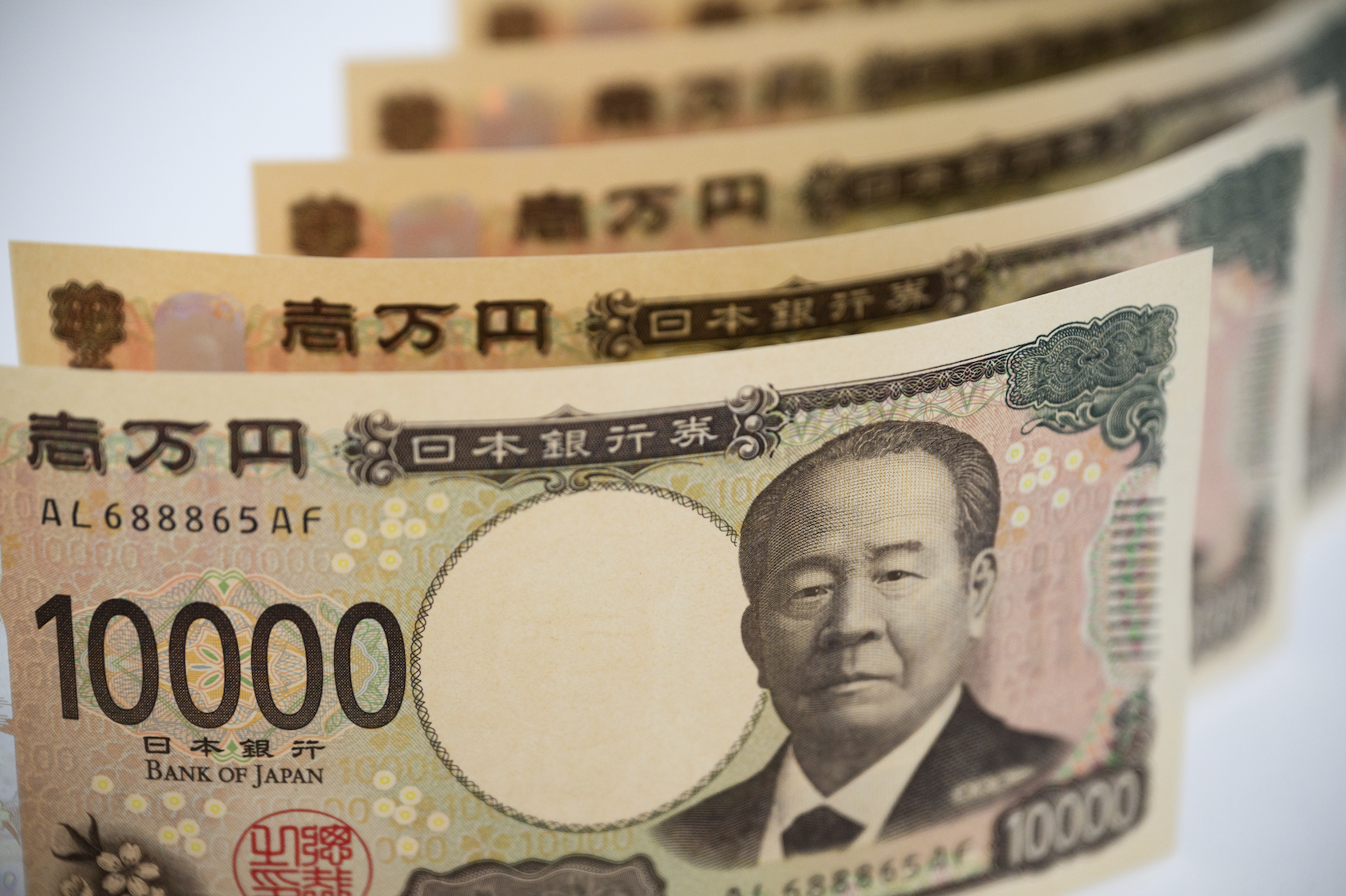
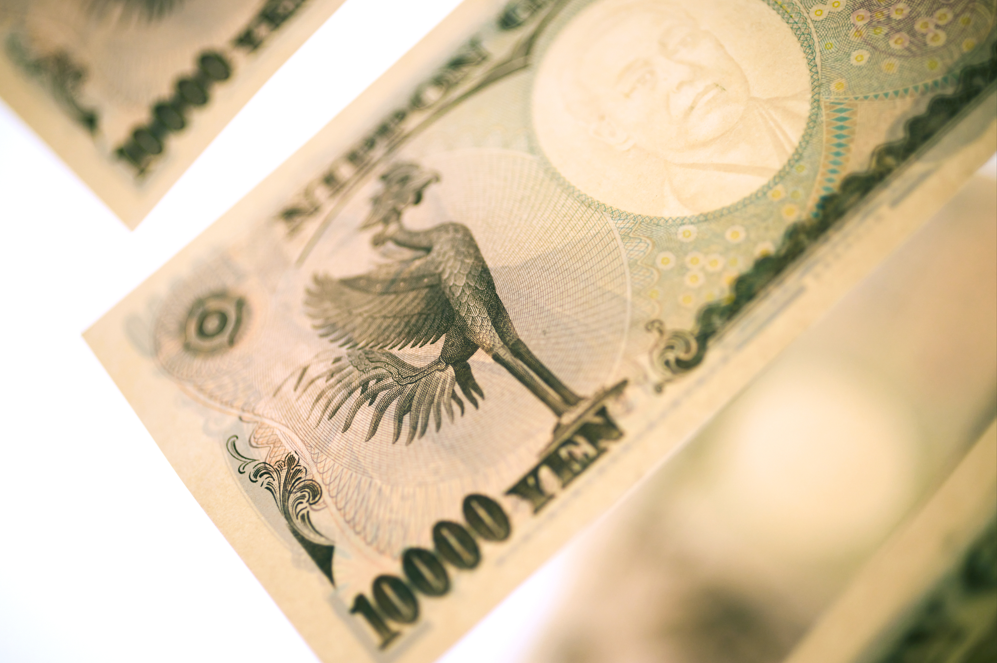
Goldman Sachs Group Inc. sees the yen weakening to 165 per dollar in a year’s time, driven in part by Japan’s interest rate differentials with the US.
A sharp rise in the dollar may emerge as one of the biggest “pain trades” in the second half of the year, according to HSBC Holdings Plc.
Treasuries advanced as investors dialed back expectations for Federal Reserve interest-rate hikes following news of a deal to halt the Iran war.
The world’s most important central banks will potentially hand investors fresh reasons to sell government bonds this week as policymakers find themselves forced to confront the risk of a war-driven inflation shock.
Nearly two months into the conflict in Iran, global stock markets are staging a defiant rally. From the US to Taiwan and South Korea, a disconnect has emerged: while the geopolitical tensions remain high, equities are charging back toward all-time highs.
Sovereign bonds rose around the world as concern the Middle East conflict will derail global economic growth revived demand for beaten-down government debt.
Volatility in US Treasuries jumped to a nine-month high as the Iran war fanned inflation concerns and upended traders’ expectations on the Federal Reserve’s policy path.
By asking New York traders to confirm the price of the Japanese yen against the dollar on Friday, US authorities handed investors yet another reason to sell the greenback.
US Treasuries rose on the first trading day of 2026, getting off to a positive start after notching their best annual return in five years.
he dollar is regaining its crown as one of the world’s most appealing assets, defying talk of a “Sell America” trade that had raised troubling questions about the outlook for the global reserve currency.
Treasuries have powered into first place among major sovereign bond markets this year as the prospect of a new round of Federal Reserve interest-rate cuts overturns widely held bearish views on US debt.
The dollar fell and US Treasuries rallied after a report that President Donald Trump is considering naming Federal Reserve Chair Jerome Powell’s successor well before the incumbent’s term is scheduled to end next May.
Wall Street banks are reinforcing their calls that the dollar will weaken further, hit by interest-rate cuts, slowing economic growth and President Donald Trump’s trade and tax policies.
US Treasuries are now outperforming stocks since Donald Trump was elected President, and some strategists say there’s room for those gains to run.
Whether you’re speaking with Europe’s largest money manager, Australia’s giant pension funds, or a cash-rich insurer in Japan, there’s a resounding message you’ll hear when it comes to US Treasuries: They are still hard to beat.
Goldman Sachs Group Inc. has upgraded its dollar forecasts, citing a robust US economy and likely higher tariffs that may slow monetary easing.
A resilient US economy and deepening geopolitical tensions around the world are making asset managers rethink their expectations for a weaker dollar.
Dollar bulls emboldened by Donald Trump’s win are entering a month that has historically punished the greenback.
The US dollar’s rally is gaining momentum alongside Donald Trump’s threat of sweeping tariffs, leaving currency strategists in agreement it has further to rise while war-gaming just how far it will go.
Treasury yields fell sharply and the dollar weakened as investors pared bets on Republican Donald Trump prevailing in Tuesday’s US election.
Bonds extended losses as investors mulled the prospect of slower US interest-rate cuts, a trend that risks upending debt positions everywhere.
Benchmark Treasury yields may soon hit a key level on the back of rising inflation expectations and concerns over US fiscal spending, according to T. Rowe Price.
US stocks will outperform the nation’s government and corporate bonds for the rest of this year as the Federal Reserve keeps cutting interest rates, the latest Bloomberg Markets Live Pulse survey shows.
Bond traders once again see Federal Reserve policymakers as more likely to cut interest rates by a half point than a quarter point at their meeting this week.
A popular yen-centered carry trade that blew up spectacularly two weeks ago is staging a comeback.
US Treasuries are on the brink of breaking even during a roller-coaster first half of the year.
A global bond rally continued, sparked by signs the world’s biggest economy is cooling, ahead of the crucial next read on the state of the US labor market.
The world’s financial markets are encountering a force they didn’t bet on for 2024: A strong dollar is back and looks set to stay.
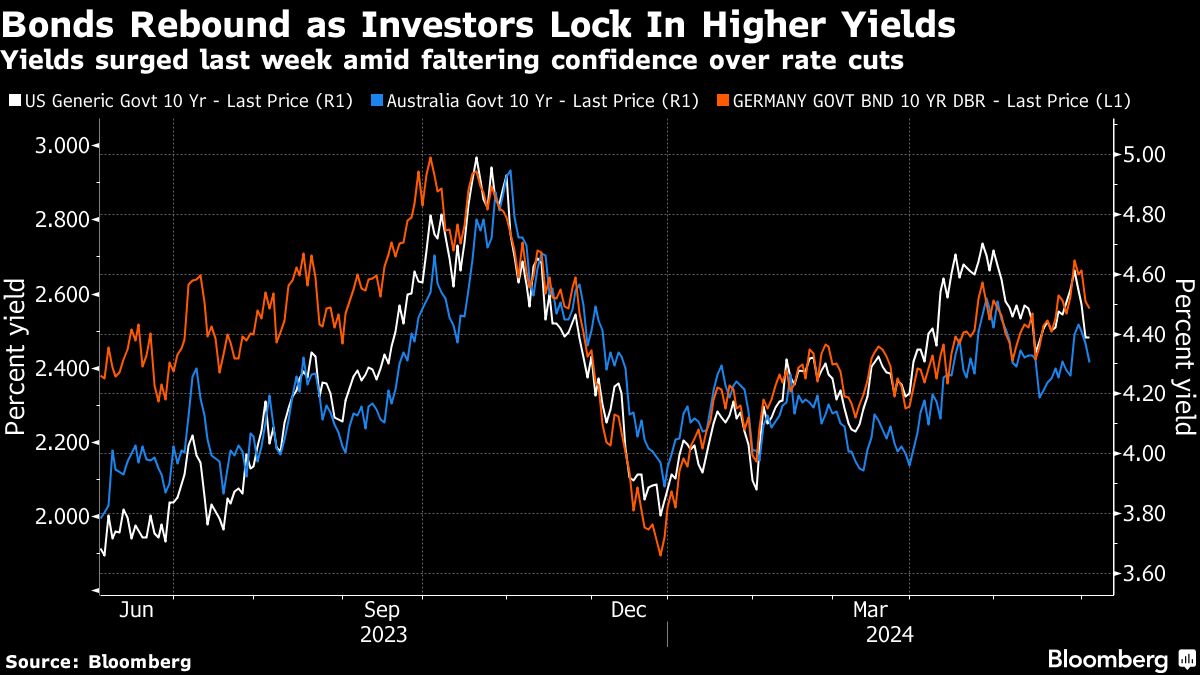
Investors wagering on an extension of last year’s global bond gains have been served a harsh reality check.
Bond traders are cautiously reloading wagers that burned them just weeks ago as the Federal Reserve and key global peers finally appear set to begin reducing interest rates as soon as June.
Snap up more Japanese stocks, ratchet up shorts on government debt and keep buying the yen: these are some of the most popular calls from big-name money managers ahead of a central bank meeting that may end the world’s last experiment with negative interest rates.
A Fidelity International money manager has sold the vast majority of US Treasuries from funds he oversees on expectations the world’s biggest economy still has room to expand.
The dollar will surprise by getting stronger next year as the US economy outperforms, according to some of the world’s biggest money managers.
The sizzling global bond rally stalled on Thursday ahead of a key US jobs report, with a slump in Japanese debt adding to the nerves of Treasury traders already fretting that yields had dropped too far.
Treasury 10-year yields rose above 4.5% for the first time since 2007 as a more hawkish Federal Reserve adds to concern the bonds face a toxic mix of large US fiscal deficits and persistent inflation.
Beaten-down US Treasuries are proving irresistible to some investors even after Federal Reserve Chair Jerome Powell said he’s ready to raise interest rates again to choke off inflation.
An abstract interest-rate metric is dominating discussions across trading desks ahead of the Jackson Hole symposium, with investors wondering if Federal Reserve Chair Jerome Powell will weigh in, and bracing for further declines in US Treasuries if he does.
JPMorgan Chase & Co. and Western Asset Management are among those saying this month’s jump in bond yields represents a buying opportunity, given central banks are getting close to the end of their rate-hike cycles.
Yields on 10-year Treasuries may fall as much as 150 basis points before the end of next year as the Federal Reserve cuts interest rates to bolster a slowing US economy, according to Jupiter Asset Management.
The dollar has defied predictions of a prolonged slump since at least the beginning of the year but top money managers say it’s now on borrowed time as US exceptionalism wanes.
Bond investors are bracing for fresh signs of strength in the US labor market on Friday after Treasuries tanked on fears the Federal Reserve will hike interest rates higher than previously assumed.
The barrage of fresh Treasury bills poised to hit the market over the next few months is merely a prelude to what’s yet to come: a wave of longer-term debt sales that are seen driving bond yields even higher.
Central banks have ramped up their hawkish rhetoric this month but for bond bulls, that’s a good thing.
Global bonds are slumping after two shock interest-rate hikes this week served traders a reality check that central banks are far from done fighting inflation.
The tension around the US debt-limit negotiations ratcheted up after Fitch Ratings warned the nation’s AAA rating was under threat from a political standoff that’s preventing a deal.
Hedge funds supercharged bearish Treasury bets to historic levels just days before the US banking turmoil took a turn for the worse and spurred a stampede for the world’s safest assets.
Some of the world’s top money managers are sitting on a windfall after the collapse of Silicon Valley Bank spurred the biggest rally in US Treasuries since the early 1980s.
Another week of gains for the dollar is putting the US currency close to erasing its 2023 losses amid growing bets for more Federal Reserve rate hikes.
Three straight days of gains are giving hope to embattled dollar bulls who are looking to a slew of Federal Reserve speakers and rising US-China tensions to extend a nascent rebound.
The chorus of buy calls on government bonds is growing louder but BlackRock Inc. begs to differ.