A stunning rally in Venezuelan assets after US forces removed president Nicolas Maduro from power has showcased how unprepared the local market is to absorb the new wave of attention.
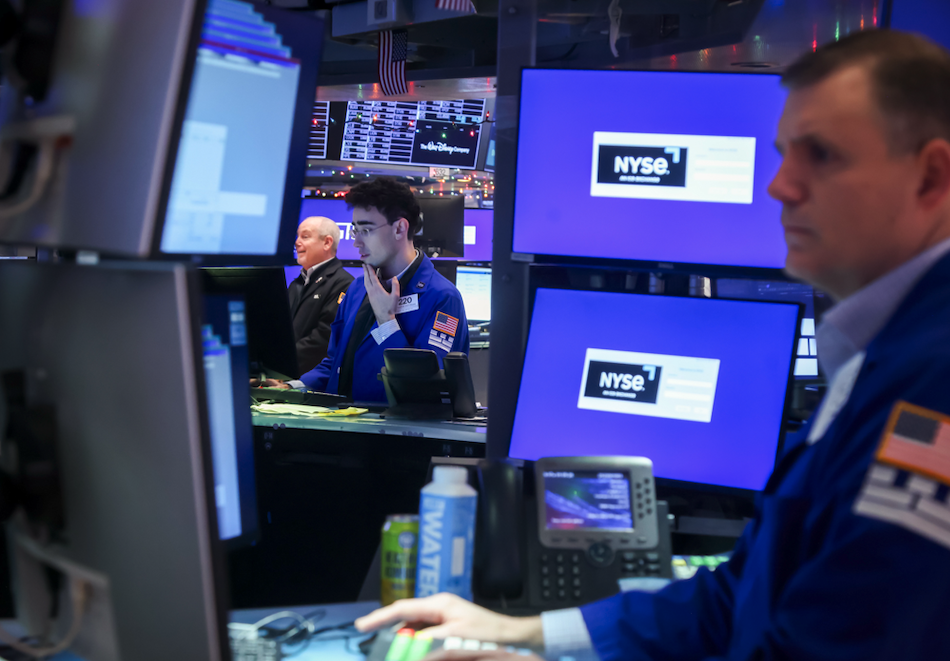
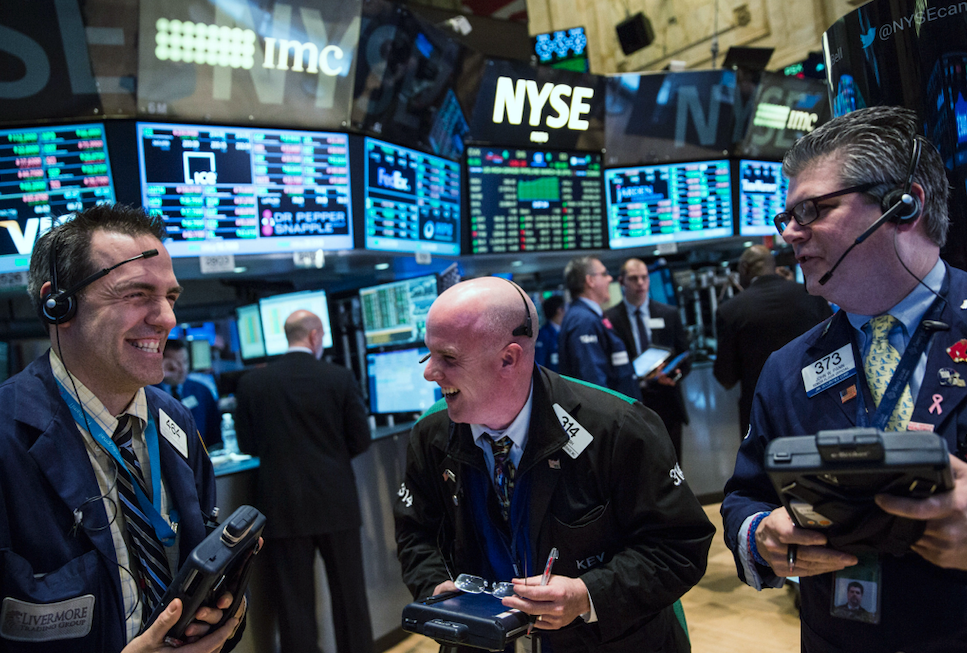
US equities edged higher on Friday, as December’s payrolls report did little to change the outlook for leaving interest rates on hold. Traders remain on alert for a possible Supreme Court ruling on whether President Donald Trump’s tariffs are legal.
Bets on artificial intelligence companies have dominated US equity markets for three years, powering a 78% gain. A growing number of investors are now wagering that run, led by the Magnificent Seven, is about to end.
President Donald Trump is set to outline his vision for rebuilding Venezuela’s battered oil sector Friday in a meeting with representatives from 17 energy companies, including crude producers, refiners and commodity traders.
Alphabet Inc. has overtaken Apple Inc. to become the second-most valuable company by market capitalization, a reflection of how the Google parent has emerged as one of the most significant winners of artificial intelligence.
The health-care corner of the US equity market has traditionally been viewed as defensive, thanks to steady growth and healthy dividend yields among the industry’s stalwarts. That narrative is changing.
Money managers like Blackstone Inc. and Pretium who binged on single-family rentals in the wake of the financial crisis took blow after blow as housing prices shot up. But the cohort has since cooled its buying, and the attacks slowed.
Federal Reserve Governor Stephen Miran said he is looking for 150 basis points of interest-rate cuts this year to boost the labor market.
US labor productivity accelerated in the third quarter to the strongest pace in two years, adding to evidence that efficiency gains are suppressing inflationary pressures from wages.
SpaceX’s dominance of rocket launches and satellite broadband internet service was reaffirmed last month with news of an insider share sale that would value the company at $800 billion. There was even speculation that Elon Musk’s space venture might sell shares to the public this year with a target valuation of almost double that amount.
Current and potential clients notice advisors who are thought leaders with a strong personal brand, but thought leadership is more than just the communication shared from a podium or social media platform — it’s also one-on-one conversations and small gatherings that drive change in individuals’ lives.
When advisors plan a transition to a new firm, they encounter a common challenge: How may they give a prospective buyer enough information to evaluate the practice without running afoul of Regulation S-P or breaching client confidentiality obligations?
As we kick off the new year, here are some suggestions for areas to focus on with your team in 2026 to build momentum, enhance momentum or change direction
The rich are increasingly looking for properties that can accommodate extended families, according to the 2026 Luxury Outlook report by Sotheby’s International Realty. Millennials and Gen Xers are driving the shift as they search for homes that work for both young children and aging parents.
Alaska Air Group Inc. is ordering 110 Boeing Co. aircraft, laying the groundwork for a global network with the largest investment in new planes in the airline’s history.
The speculation that has pushed its notional market capitalization beyond $20 billion — and that of all pure cryptocurrencies, including Bitcoin, to more than $2 trillion — is a social phenomenon that could end as suddenly as it arose.
Tesla enters 2026 grappling with its loss of the global EV sales title to BYD and a persistent production surplus that has strained profit margins. Despite growth in its energy storage division, the company faces significant underutilization of its manufacturing capacity as premium vehicle sales lag behind previous years.
Bitcoin options are showing that traders are setting their sights on a return to the $100,000 price level amid optimism that investors will turn back to digital assets following the crypto market’s crash in the fourth quarter.
Nvidia Corp. Chief Executive Officer Jensen Huang said that the company’s highly anticipated Rubin data center processors are in production and customers will soon be able to try out the technology.
Morgan Stanley filed for Bitcoin and Solana exchange-traded funds, marking its first foray into the popular corner of the funds world two years after the explosion of crypto-focused ETFs in the US brought them into the mainstream.
Taxes are a necessary fact of life. Although no one likes paying them, and they divert resources and cause waste, governments need revenue to provide essential (and some not-so-essential) services.
To resist the dollar’s assault and preserve monetary sovereignty, China has asked banks to start paying interest on e-CNY holdings in customer wallets from Jan. 1. Amid this superpower rivalry, nations must strive to preserve their unit of account — dollar, euro, yen, or yuan — from becoming a casualty of technological dominance.
We’ve reached the 100-year milestone for our dataset that we began collecting in the 1970s. We'll review key data from the prior century to gain perspective on that period and consider what it could mean for the future.
Ultimately, risk tolerance is revealed through thoughtful conversations about what must be fully protected and where clients are willing to take risk. But risk tolerance is just one piece of the puzzle — risk management is where advisors can add significant value and differentiate themselves.
A plan-based benchmark changes the advisor’s role from portfolio reporter to progress partner. Instead of reviewing performance against a market index, the discussion can focus on metrics such as cash flow resilience, adherence to the risk budget, and after-tax outcomes.
President Donald Trump has promised to address housing-market dysfunction and a lack of affordability in 2026. While we don’t know what the White House has planned, previous talk has included a (much criticized) suggestion for 50-year mortgages and exhortations to builders to do their duty and build more housing.
Silver’s parabolic rise has been remarkable. In this article, we examine the two similar price surges to provide context for what may be occurring today and, importantly, for what might cause this bubble to pop tomorrow.
Advisors who run or plan to run ETF-based portfolios need to have a formalized trading methodology. For those who haven’t yet developed one, this article is intended to help accelerate progress and avoid some risks that may not be obvious to anyone who is primarily experienced with trading mutual funds.
To help our clients and the marketplace navigate this evolving landscape, in the following sections, we’ve identified five key ETF industry themes to watch in 2026. These areas reflect the ongoing growth, innovation, and strategic shifts shaping the ETF industry, and they will be critical in understanding where opportunities and challenges lie in the year ahead.
Cathie Wood’s ARK Blockchain & Fintech Innovation ETF delivered a standout 29% return in 2025, defying an industry downturn by stretching the definition of “financial technology.”
Hedge funds are racing to Caracas to scout assets following the high-stakes removal of Nicolás Maduro by the Trump administration. Investors view the potential reintegration of the oil-rich nation into the Western financial system as a historic opportunity for restructuring debt and infrastructure.
US oil stocks jumped in premarket trading on Monday after President Donald Trump pledged to revive the Venezuelan energy sector following the capture of Nicolás Maduro over the weekend.
In 2026, AI hectacorns might go public. That process, historians would tell you, was a harbinger for the dot-com bust as hopeless balance sheets were ignored in favor of overhyped promises that eventually collapsed.
US initial public offerings delivered underwhelming results in 2025 as equity-market volatility and increasing scrutiny around themes such as crypto and artificial intelligence hit some of the year’s most high-profile listings.
From an AI-fueled stock rally to China shaking off US tariff threats and earning a record trade surplus, 2025 was full of economic marvels. Don’t expect debates over innovation and economic disruptions to disappear in 2026.
Major hedge funds achieved historic returns in 2025 as tariff-driven market volatility created ideal conditions for macro and multi-strategy trading.
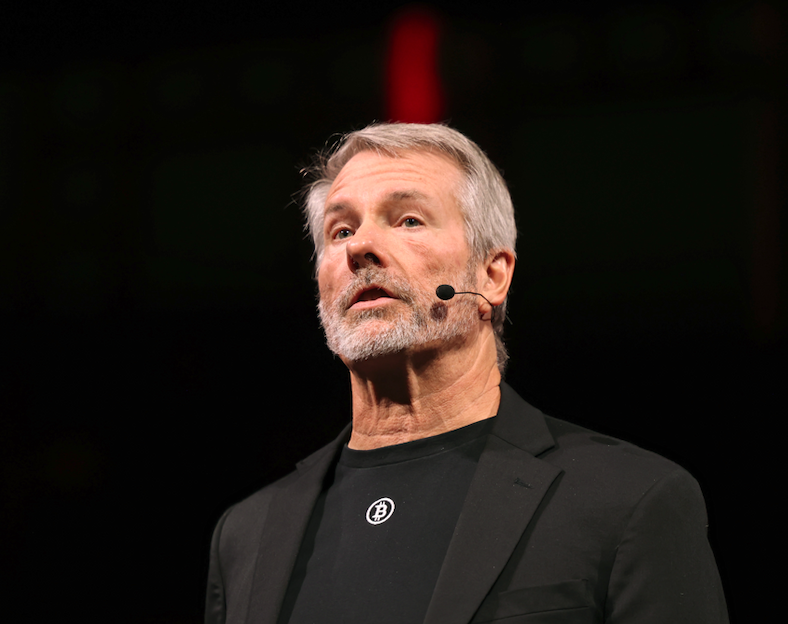
Michael Saylor has long noted that Bitcoin’s volatility “is a feature, not a bug” when pitching his cryptocurrency accumulator Strategy Inc.
Emerging-market stocks posted a strong start to 2026, following a $7.2 trillion annual rally, as Asia’s expanding role in artificial intelligence lifted Chinese technology shares to their biggest gains since September and pushed benchmarks in South Korea and Taiwan to record highs.
The S&P 500 Index climbed at the open on Friday as investors bought tech stocks ahead of next week’s massive CES conference and cheered signs President Donald Trump was easing up on tariff policies.
Gold and silver rose as 2026 trading kicked off, building on their best annual performances since 1979.
US Treasuries rose on the first trading day of 2026, getting off to a positive start after notching their best annual return in five years.
Investors were rationally exuberant in 2025. US consumers remained remarkably resilient, keeping the world's largest economy out of recession. The tariff blizzard waxed and waned, eventually settling at levies still compatible with maintaining global growth, albeit at an anemic level.
The most-read practice management articles of the year touch on topics ranging from helping clients retiring early get suitable health insurance to dealing with conflicting political views held by clients or colleagues.
Trillions of dollars hang in the balance of two questions that dominated this year and loom perilously large over the next. “Will the artificial intelligence bubble burst?” and “Will China beat the US?”
Step aside, artificial intelligence. Another transformative technology with the potential to reshape industries and reorder geopolitical power is finally moving out of the lab: quantum.
In 2025, Advisor Perspectives’ most-read commentaries mainly centered on uncertainty around U.S. equities and on record-high valuations, in particular. Key themes included the bleak forecast for U.S. equities and the opportunities presented by non-U.S. stocks. Other articles weighed in on the risks around private equity that await retail investors delving into the space and on the investment potential of utilities due to AI and the shift to clean energy.
Like previous generations, most young people are going to end up owning homes. The housing market is in transition, and despite the current lack of affordability, there’s compelling evidence that we’re grinding back toward more normal levels.
Retirement dominated 2025’s top articles, featuring insights from William Bernstein and Allan Roth among others. Key highlights include critiques of retirement calculators, Vanguard’s expectations for the next decade, Roth IRA strategies, and the nuances of dividend investing for long-term portfolios.
At the big banks and the boutique investment shops, an optimistic consensus has taken hold: the US stock market will rally in 2026 for a fourth straight year, marking the longest winning streak in nearly two decades.
Bitcoin briefly topped the $90,000 mark on Monday before tumbling, leaving traders waiting on a potential breakout after the token missed a Santa rally that sent stocks to record highs.