Noble Prize winners and “Modern Portfolio Theory” pioneers Harry Markowitz and William Sharpe developed what we know today as the 60-40 portfolio. This strategy consisted of a hypothetical 60 percent allocation to equities and a 40 percent allocation to fixed income.
No two clients are alike, and neither are their estate planning needs. Download this list of questions that go beneath the surface, allowing you to understand your clients’ wishes for their wealth to secure their legacies.
In my last blog, I talked about how strong Januarys historically tend to lead to strong returns throughout the remainder of the year.
Are you eager to secure long-term growth for your practice? If so, consider adding a next-gen advisor to your team. It’s a strategic move that can open new doors to both client and revenue growth. Download this Q&A that explores why your approach matters, how next-gen advisors are breaking barriers, the important of firm culture, and where to source this talent.
Thus far, market momentum has carried over from 2023 into 2024. Things started slow, with the S&P 500 closing down more than 1.5 percent during the first week of the year.
Making New Year’s resolutions usually involves some level of reflection on how to be a better person and the possibilities ahead.
The road to M&A is fraught with questions. Whether you’re a solo advisor or part of a large enterprise firm, we’ll walk you through M&A planning best practices that will help you leverage inorganic growth in any stage of your business.
Markets rose last month, continuing November’s rally as interest rates pulled back even more on expectations of Fed rate cuts in 2024.
When we put together economic and market outlooks, we typically focus on the near term—the next month, the next quarter, or the next year.
Markets improved last month across the board as interest rates pulled back on signs of slowing growth. U.S. markets were up by high-single to low-double digits, while international markets were also up by high-single digits.
Ninety-one percent of HNW investors incorporate charitable giving as part of their overall wealth strategy. Understanding your clients’ charitable giving preferences can help you better anticipate their needs and help them achieve their goals.
You've worked hard to build your business, so transitioning it the right way is important. Whether you’ve already started planning or are just exploring your options, we’ll walk you through four must-have strategies and key questions to ask yourself during this process.
Breaking a mirror, walking under a ladder, and a black cat crossing your path have all been seen as bad omens.
There were two stories that mattered this week: interest rates and the jobs report for September. For the week as a whole, rate increases seem to have taken away from markets, as they tanked on an increase in the U.S. 10-year yield from about 4.6 percent to 4.8 percent.
Successful businesses know excellent service. Giving yourself time to truly get to know your clients’ needs and then setting your business up to optimize how you serve them is key to establishing long-term relationships. If you’re working at a wirehouse, this isn’t always possible. It’s time to find the right business structure—one that gives you the freedom to work with your clients your way.
Last week was all about financial factors, primarily interest rates. But this week was all about the real economy, notably the United Auto Workers (UAW) strike and the pending government shutdown. Indeed, worries about a recession rose on those two risks.
August saw modest market pullbacks across the board, as investors were nervous about risk.
Connecting with your clients through personalized marketing can lead to stronger professional relationships. Not only will you attract the type of clients you want to serve, but you’ll also build trust with them as an advisor who truly understands their needs.
July was another good month for stocks across the board. The U.S. indices were up in the low single digits, while international markets also did well. Riskier investments like the Nasdaq and emerging markets did best.
Running a successful business means staying on top of day-to-day operations and of the evolving environment in which your business needs to operate as you grow. In our latest guide, we share seven risk factors every advisor should consider, with actionable tips to help you evaluate your firm’s potential liability.
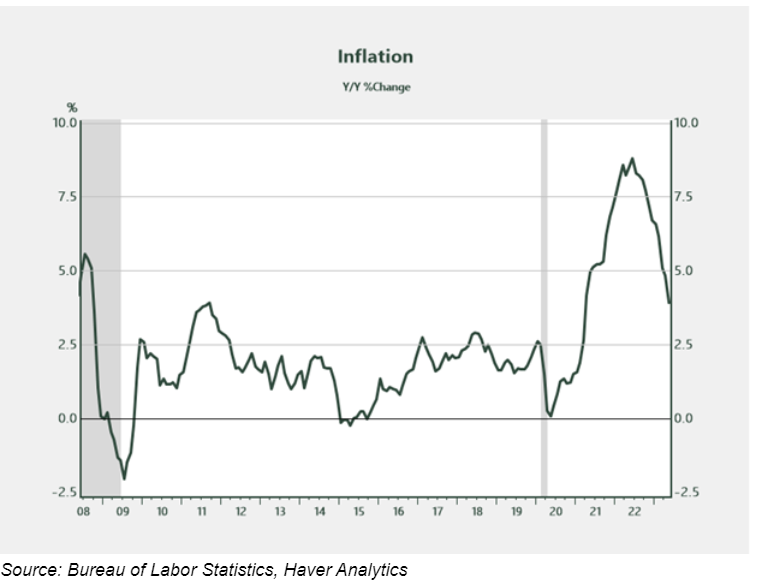
What a year it has been for financial markets. There have been several negative factors in play, including a high-single-digit inflation print, the ongoing war in Ukraine, and several regional bank failures. Nonetheless, the S&P 500 finished the second quarter up 17 percent for the year. Go figure!
Throughout 2022, high levels of volatility across all major asset classes created a difficult environment.
Want to develop your firm’s offerings today while also securing its future? Download our whitepaper for insights and actionable steps to help you successfully onboard a next-gen advisor, including guidelines for defining the position you want to fill, recommendations for where to find the perfect candidate, and tips for training and retaining top talent for the long term.
1969 is often remembered as one of the biggest years in pop culture history.
Heading into 2023, a looming recession dominated the headlines.
After a continued rally in April, markets largely pulled back in May. Exceptions here were the Nasdaq, which rose, and the S&P 500, which was essentially flat.
Being a financial advisor at a wirehouse can often feel like you’re living by someone else’s rules. The things that make your business approach unique can get lost in continuously shifting corporate goals and predetermined career paths. Download our infographic and learn six ways working at a wirehouse is holding you back—and why partnering with Commonwealth can make the transition worth the effort.
After moderate gains in March, markets continued to rally in April. U.S. markets were up by low single digits, while bond markets were moderately positive. International markets were mixed, with developed markets showing modest gains while emerging markets ticked down.
The big economic story today will be the end of the regular meeting of the Fed and what it decides to do about interest rates. Markets are expecting a 25 bp increase, to a range of 5 percent to 5.25 percent, with a slight bet on no hike at all.
We are at the start of the period when companies release their results for the first quarter of 2023, known as earnings season. With everything going on—inflation, rate hikes, a labor shortage, the weakness of the dollar, a pending recession, the list goes on and on...
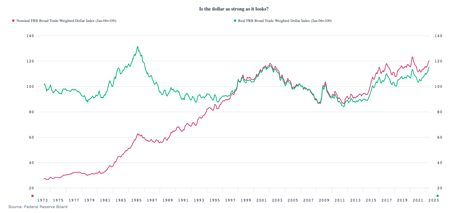
I have been getting a lot of questions around the dollar in recent weeks. De-dollarization seems to be a thing, as do central bank digital currencies, along with the latest round of worries about what the government is going to do to our savings.
There is a lot riding on the monthly jobs report, which comes out tomorrow. For the economy, more jobs are good: more workers, more wage income, more spending ability, and so forth. There’s no real downside.
After a weak February, markets rallied in March. U.S. markets were up by low single digits, while bond markets were in the same range. International markets also showed modest gains, with developed markets about the same as the U.S. and emerging markets doing slightly better.
Whether you’re just starting out or looking to take your practice to the next level, having a clear plan to grow now and in the future is vital. From outsourcing business solutions to building a talent pipeline, there are strategic considerations you can take today to keep your business thriving for many years to come.
There has been surprisingly little worry reported by advisors and readers in the past couple of weeks.
Yesterday, the Fed completed its regular meeting and announced that it would increase interest rates by 25 bps, or a quarter percentage point.
Whether you run a solo practice or a multiadvisor firm, if you’re looking to take your business to the next level, it’s time to decide if you’re at a critical growth juncture and what that means for your future.
Selling your practice is a process, not an event. So it’s critical to take the time—at least five years—to prepare your business and effectively position it to be bought at maximum value. How to Command the Best Purchase Price for Your Business provides key strategies to help you transform your practice into one that’s bought, not sold.
What could go wrong—or right—for the economy and market in 2023? A lot, it turns out. Read Commonwealth’s Outlook for more on what they’ll be watching and why CIO Brad McMillan says he sees brighter skies ahead.
You may think that going independent means you’ll have less time for client interactions—after all, you’ll have an office to run. Well, that’s not true for breakaway advisors who partner with the right firm. A recent Cerulli Associates study breaks down how much time breakaway advisors save by partnering with Commonwealth. You’ll get stats such as:
Take control of how you spend your time. Are you ready to make an informed decision about your independence? Get started today.
When you look at expectations for corporate earnings for the third quarter, you get a bunch of mixed messages.
The latest jobs market headlines have been discouraging.
We are now in another downswing in the ongoing bear market.
Yesterday’s inflation print was a big surprise—a bad one.
August was a resumption of the earlier pullback after a surprisingly strong July.
47 percent of industry assets are managed by advisors over the age of 55, and 49 percent of the advisors retiring within the next 10 years are solo practitioners. This means a relatively steady stream of advisors will enter retirement each year. In Transitioning Your Practice the Way You Want, you'll learn how independence affiliation models expand an advisor’s range of succession planning options, while creating opportunities for next-gen advisors looking to grow their practice through mergers and acquisitions.
The big question on everyone’s mind is, why is the market going down?
July was a surprisingly good month for financial markets, with the greatest monthly gains since 2020.
Independence has been the fastest-growing form of advisor affiliation over the last decade. Many affiliation models exist within that space, giving you the freedom to decide what’s best for your firm and vision. Learn how choosing the right partner allows you to run your own practice without giving up critical resources and support.
One of the headlines I have been asked about recently is the strong dollar. People are concerned about what it means, how it could hurt the U.S. economy, and, of course, how it will affect their investments. Good questions all.