While election news dominated July's headlines, small-cap stocks had their best monthly performance relative to large-cap stocks since December 2000.
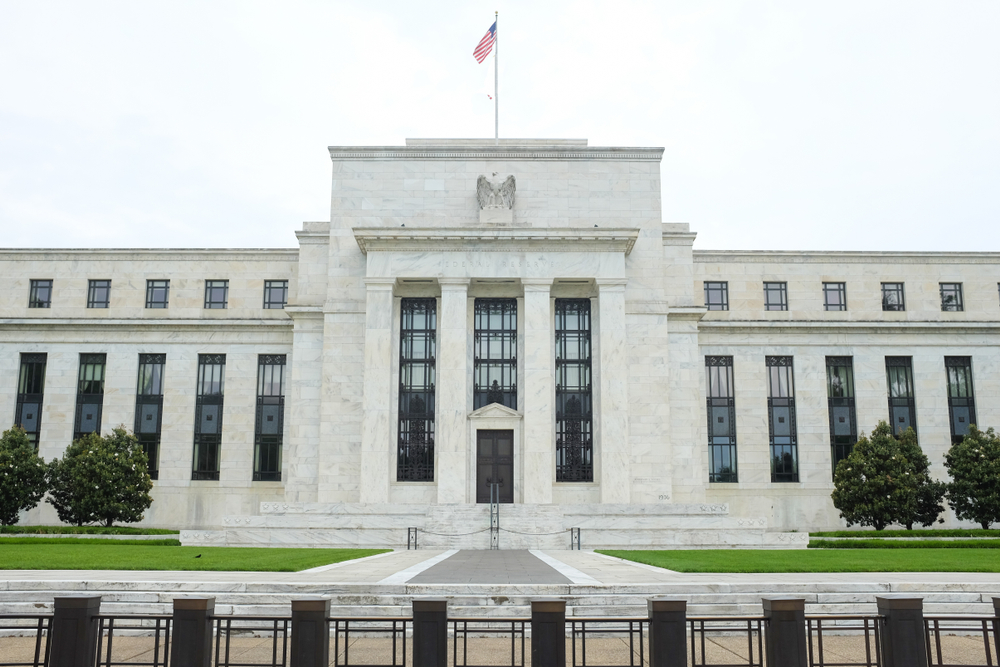
The Federal Reserve noted that inflation is moving closer to its 2% target after electing to hold rates steady at its July FOMC meeting.
We are approaching a turning point in policy decisions as the FOMC attempts to walk the fine line of hitting their inflation targets while maintaining a healthy labor market.
The Federal Reserve (Fed) doesn’t like to spook markets, that is the reason why it has crafted its communication on monetary policy to give indications way in advance and nothing has been pointing to a change of heart that could lead to a surprise move next week.
Following the historic decision by President Biden to drop out of the 2024 race, Raymond James CIO Larry Adam provides insight into his team's economic and market outlook.
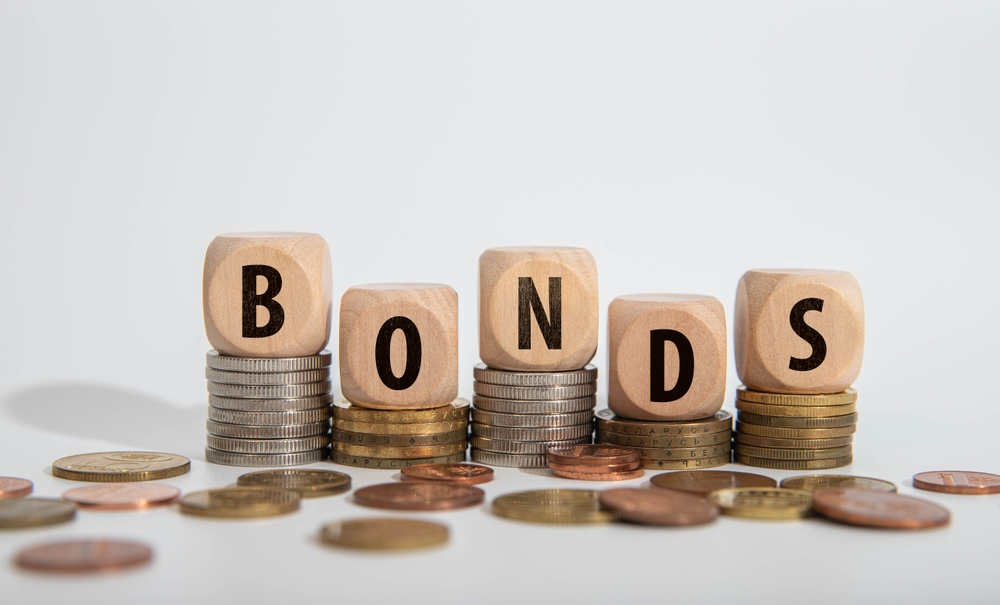
There are many advantages and risks associated with any investment. Whether you are buying a stock, a house, a business, or a bond, each investment has unique characteristics that allow an investor to gain from particular investment features with varying risks.
As we start the second half of 2024 and we approach next week’s release of the preliminary report on real GDP for 2Q, we continue to expect 2H economic growth and inflation to downshift versus what we saw during 1H of this year.
Artificial intelligence is set to become a game changer for the electric power industry, notes Pavel Molchanov, Managing Director, Energy Analyst, Equity Research.
The dilemma that all Fed committees and chairpersons face when the economic cycle nears a turn but then repeats itself can be summed up with Fed chair Jerome Powell’s recent references: “Easing too soon, too much could harm inflation progress.” “Easing too little, too late could unduly weaken the economy.”
This week marks the official start to 2Q24 earnings season, with the big banks among the first to report. While much of the last six weeks has been dominated by the softening macro backdrop, the S&P 500 looked past the weakening data – notching 37 record closes already this year.
We want to repeat what we have said in the past: “One data point doesn’t a trend make.” However, the June data, after weaker than expected readings for April and May, confirm our suspicion that inflation numbers during the first quarter of the year were a fluke.
After a fruitful career and plenty of practice paying taxes, you may feel prepared for the tax man in retirement. But a review of your post-retirement taxable income may yield some surprising insights.
It’s an election year, which means you can expect to hear presidential candidates being asked about their plan for preventing Social Security from going bankrupt.
The global population has surpassed 8 billion and according to the United Nations, it is projected to reach 9.7 billion in 2050.¹ However, the rate of population growth is slowing and is expected to continue to decline. Seems counterintuitive, no?
It’s inevitable. A recession is coming. Whether it gets here next month, next quarter, next year, or next decade will be continuously debated until it arrives. Yet, one thing that everyone will agree on is that we will have another recession eventually.
Having hit 31 record highs since January and up more than 15% year to date, the S&P 500 is off to its best start to the year since 2019 and the best start to an election year ever, driven by mega-cap tech stocks and artificial intelligence (AI) tailwinds.
We’re borrowing from the upcoming Paris Summer Olympics for our quarterly theme – with a twist. Instead of using the most popular events (like gymnastics, swimming, and track & field) to express our views, we’ll go beyond the spotlight.
Doug Drabik discusses fixed income market conditions and offers insight for bond investors.
Key Takeaways
Retail trade sales in the U.S. are reported by distribution channel. For example, gasoline sales are reported through the gasoline stations distribution channel, although those gasoline stations’ sales also include everything else sold at gasoline station convenience stores, i.e., hot dogs, tobacco, sodas, gum, chips, coffee, etc.
As you move through retirement, it’s important to set time aside to reflect on how you’re doing. While most people often focus on their health and finances, it’s equally as important to think about other areas of your life as you approach the midpoint of your retirement.
Although bonds may not always be able to significantly contribute to growing an investor’s wealth, their lower risk profile can bring comfort in positioning an investor to maintain that wealth.
After the S&P 500’s incredible run—up 57% from its October 2022 lows and with an election on the horizon, its normal for investors to wonder whether to take some chips off the table or hold off on investing to see what happens.
Total net worth, or household wealth, has reached a new record high, at least in nominal terms. This has pushed many to argue that Americans have been using the accumulation in net worth to increase consumption.
The Federal Reserve policy can set the tone that drives interest rates across the maturity range but an earlier market rate downturn can occur as a signal of investor perception of a slowdown in the economy.
The S&P 500 surpassed its 27th record high for the year this week—and still notching more (up to 29 already!)—driven by rising earnings, cooling inflation, and an economy that remains on solid ground.
For those of you who are not math geeks, ‘rise over run’ is the formula for the slope of a line. What does this have to do with the latest Federal Reserve (Fed) decision, you may ask?
The updated projection shows the likelihood of one rate cut by the end of 2024.
We are moving our first federal funds rate cut to September of this year compared to our current July call although we are going to get more information from Federal Reserve officials after the release of the Summary of Economic Projections and the new ‘dot plot’ on June 12.
Personal Consumption Expenditure (PCE) measures the price paid for goods and services by consumers. It reflects changes in consumer behavior and captures inflation (or deflation) across a wide range of consumer expenses. Prices for both goods and services are measured.
Why is there so much angst among investors? The mixed economic signals may have a lot to do with it.
Positive corporate earnings and greater participation from sectors other than technology carried stocks forward.
We connect the dots between the micro data points (what we learned during 1Q earnings season) and what we expect the forthcoming macro data will reveal about the state of the economy.
Survey after survey has been indicating that Americans feel worse off today compared to the recent past; so much so that many of them indicate the economy is currently in recession, that the rate of unemployment is the highest in several decades, that inflation is very high today, etc.
It’s natural to avoid loss, but sitting on the sidelines out of fear might lead to missed financial goals.
Market factors are constantly changing and require monitoring, analysis, and flexibility by the investors when it comes to choosing appropriate investments.
As we set our sights on the summer, here are five dynamics that could drive the financial markets between Memorial Day and Labor Day:
We are free trade enthusiasts, in economic terms, even at a time when free trade has been losing some of its aura within the U.S. political system.
As goes the consumer, so goes the U.S. economy. As Wall Street knows, the importance of the consumer cannot be overstated. That’s because consumer spending is the main engine of growth, representing ~70% of US economic activity – nearly 10% more of the economy than it did in the early 1980s.
To say that inflation data during the first quarter of the year surprised us and the markets is clearly an understatement and by Tuesday of this week, with the higher-than-expected Producer Price Index (PPI) print for April, markets were clearly on edge as they were also potentially expecting a higher reading for the Consumer Price Index (CPI) on Wednesday.
More than 338,000 Americans relocated for retirement last year – a 44% increase from 2022 – and about a quarter of those retirees moved to a different state.
The finance world can get complicated, especially for the passive or uninterested investor. Let’s face it, some of us are not curious about sports, movies, exercise, reading, or other things while others of us carry a passion for them.
Happy National Small Business Day! Every year on May 10, small businesses are officially recognized for their contributions to the US economy. And rightfully so. Small businesses are the backbone of the US economy.
Markets seem to have been basking in the spring sun as they wait for the approaching summer heat, so to speak.
A recap of the important drivers, along with our views on how things will play out over the rest of the year.
It can be easy to overthink the markets and it is human nature to try to out-guess, out-maneuver, or out-smart the average, but perhaps we can step back and simplify what seems to be occurring.
We try not to react to just one data point because, as we have always said, “a data point doesn’t a trend make.” Furthermore, we don’t know if this is just a one-time event or if it is the start of something more.
The Federal Reserve is looking for more confidence that inflation is headed back towards its 2% target before commencing with rate cuts.
The S&P 500 experienced its first 5% pullback since October 2023, but the long-term outlook remains positive.
One of the main advantages of constructing a portfolio of individual bonds is that it can be customized to meet the precise needs, wants, and objectives of the investor