If you've been in the industry long enough, you may have been able to look a client in the eyes and tell them the 3 greatest words an advisor can tell a client. “We did it.”
Is there a path upward for markets this year? Much has been made in the news recently about the possible onset of the next recession—and rightfully so, in our opinion, as we believe the next economic downturn is a matter of when, not if.
For over 20 years, Russell Investments has partnered with thousands of financial advisors to help them evolve and deepen client relationships. I’ve found that when advisors hear about our data-driven business solutions capabilities, advisors are generally most curious about two things…
With no-deal Brexit risks increasing and sterling having already experienced a strong year-to-date rally, we are now expecting to see sterling fall against the dollar and euro.
Early on in my career, I learned there are four psychological reasons investors buy (listed from strongest to weakest).
After ten years on the road, I finally bought a new piece of luggage and discovered that my act of consumerism and client portfolios have a lot in common. Have I piqued your interest?
Leading into today's Federal Open Market Committee (FOMC) decision, Chair Jerome Powell and a host of regional Federal Reserve (the Fed) bank presidents had unanimously expressed support for a pause in the Fed's tightening cycle. Even perma-hawk Esther George, from the Federal Reserve Bank of Kansas City, advocated for a cautious and patient approach to monetary policy in her speech a few weeks ago.
Investors are likely looking at their portfolios and trying to determine how the volatile fourth quarter impacted their returns and how it impacted progress toward their financial goals. Having the market (Russell 3000® Index) pull back -14% in a single quarter and drop -5% for the year is tough, but for taxable investors, the possible tax hit will add insult to injury.
Defense wins championships, the saying goes. Did it also help equity managers survive an otherwise bruising fourth quarter?
Asset allocation proposals--helping an investor visualize how a particular asset allocation can best help them meet their goals--are a mainstay of winning new clients. But proposals can also be used to generate new business from existing clients. One way is through introducing the concept of asset location: allocating assets across the various accounts within a household to be more tax-efficient.
How might 2019 shape up across the investment landscape? Here’s our take on the key issues to pay attention to.
We believe the U.S. is likely to experience a recession by the end of 2020. How might it stack up to previous ones?
Which blog posts generated the most interest from readers in 2018? We wrap up the year with a look back at our favorites.
Markets dropped sharply after the Fed raised interest rates again today and indicated two additional increases are likely in 2019.
An inverted U.S. Treasury yield curve has historically been a telltale sign of a looming recession for the U.S. Does the recent curve flattening spell trouble for the U.S. economy?
Can markets grind higher in 2019 before the clock runs out on the current cycle? See what our strategists’ views are for the year ahead.
How might the ceasefire on new tariffs between the U.S. and China impact markets and economies?
We believe that embedding ESG factors into an investing strategy can accomplish dual mandates of delivering value and aligning with investor values. Here's why.
What's driving the current market selloff?
Here’s a recap of the second part of our podcast on multi-factor investing, examining the strategy’s potential pitfalls.
Here’s a recap of the first part of our podcast on multi-factor investing, answering frequently asked questions such as: What is a factor? What are some common factors? Why is multi-factor investing so popular today?
How are markets reacting to the results of U.S. midterms? We have the latest.
Do markets still have room to run? See what equity managers across the manager universe are thinking in our Q3 report.
See what our latest survey of global fixed income investment firms reveals about expectations for U.S. interest rates, credit fundamentals and emerging market foreign exchange.
Italy's proposed budget deficit for 2019 has been ill-received by markets. Could things get worse before they get better?
Growth and value stocks are often seen as opposing one another—but we believe they can be complementary within an equity portfolio.
What impact are the looming U.S. midterm elections likely to have on financial markets?
As expected, the Fed raised interest rates today following its September policy meeting. Could the escalating trade war between the U.S. and China impact plans for future increases?
What impacts could escalating trade tensions and rising U.S. interest rates have on global markets and economies in the months ahead? See what our strategists’ views are for the fourth quarter of 2018 and beyond.
A new study suggests that earning wealth through the stock market may be better accomplished by focusing on slow and steady long-term growth, rather than chasing top-tier performance.
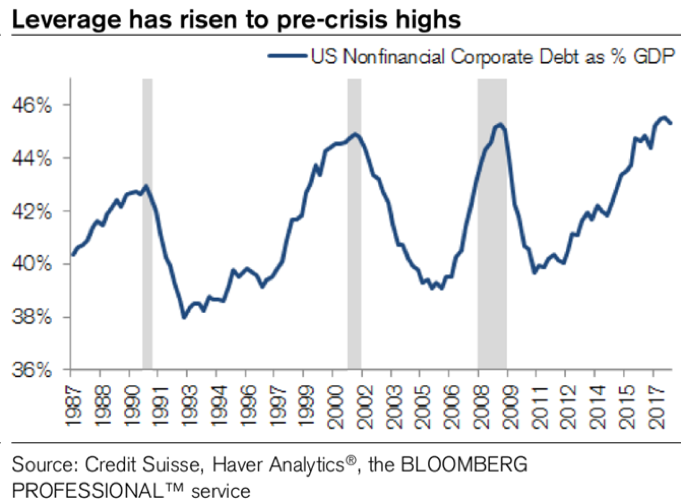
We believe that warning signs are starting to creep into the corporate lending market—and that the ramifications could be problematic for credit investors.
We asked hundreds of equity and fixed income managers how they are integrating ESG factors within their investment process. Which countries are lagging their peers? Does AUM correlate with ESG integration? Today, we share our findings.
When looking to build investment portfolios that target and solve for specific client objectives, we should be conscious of our competencies. We believe finding the appropriate expert to address or complement investor needs is just as important as acknowledging proficiencies.
Corporations are delegating more of their asset management responsibilities than ever. How does increased delegation affect fiduciary oversight?
As leaders in manager research, we have unique insight into the implementation of big data in equity portfolios. Today, we share our key observations.
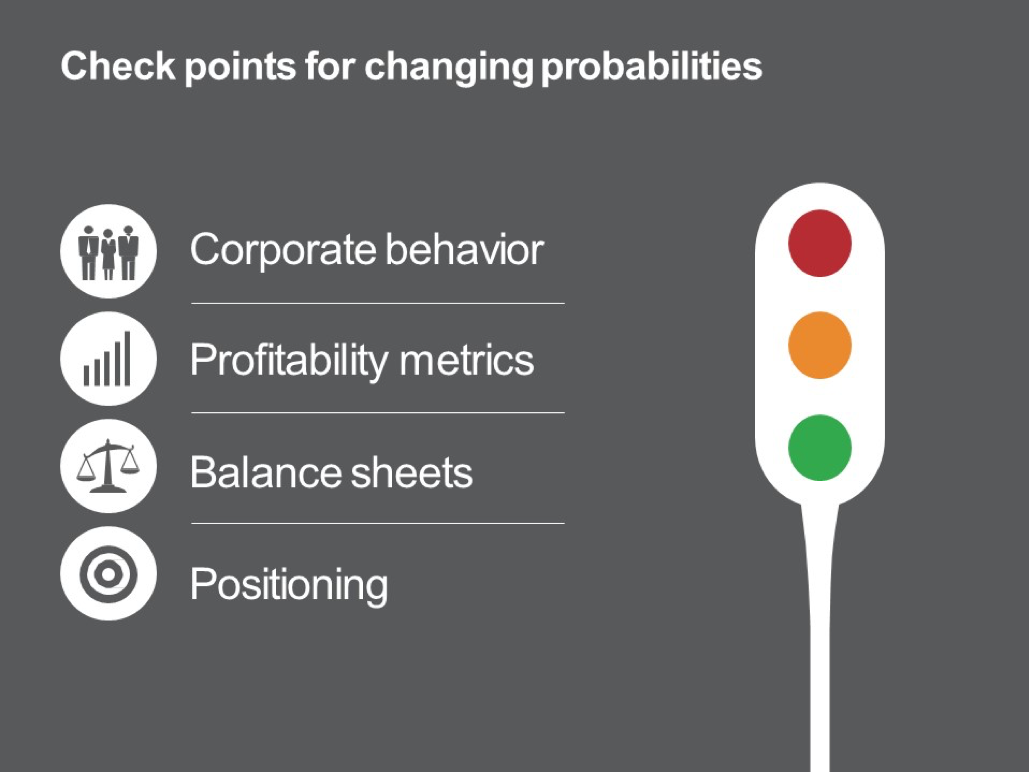
Senior Portfolio Manager David Vickers discusses the difficulties of predicting stock market crashes, while offering up four watchpoints that could help fuel the next one.
How are today’s fixed income managers integrating ESG factors into their investment practices? Learn what our latest ESG survey reveals.
We believe detailed conversations with managers are crucial to developing informed opinions on investment strategies. Here’s how our manager meeting process typically unfolds.
In the concluding piece of a three-part series focusing on how to potentially get returns in today’s bull market while protecting against the downside, Global CIO Jeff Hussey outlines why we believe alternative investments should be considered in a multi-asset investing strategy.
We offer up three books to consider reading as summer hits its stride.
Do increasing political risks pose to a threat to global economic growth? See what our strategists’ views are for the third quarter of 2018 and beyond.
Every quarter we ask bond and currency managers to consider valuations, expectations and outlooks for the coming months. Today, we’ve put the spotlight on U.S. rates and inflation expectations, credit markets and casualties from rising U.S. interest rates.
In predictable fashion, the Fed increased borrowing costs again today. How long could the central bank stick to its quarterly rate-hiking rhythm?
The U.S. economy has been growing for nine straight years—but current macroeconomic indicators hint that the good times may be coming to an end as soon as next year.
Italy’s proposed coalition collapsed over the weekend after the president refused to accept euroskeptic Paolo Savona as Minister of Finance. Markets have since reacted, with Italian government bond yields rising above their eurozone counterparts. Unsurprisingly, with the possibility of another election in the cards, market sentiment has shifted to risk-off in light of the political uncertainty.
Fiscal stimulus in the U.S. and newly imposed tariffs make today's late-cycle bull market stand apart from previous ones. Does this mean it could end differently too?
A strong start for markets in January was quickly replaced by uncertainty and volatility, which continue to this day. How might the rest of the year play out?
We believe there are five primary constraints for the UK that will push it toward a soft Brexit when it officially leaves the EU next March.
The first quarter of 2018 was plagued by volatility in equity markets. How did active managers fare in light of this?
Commodity prices have picked up steam recently, particularly in energy and metals. How long could the surge last?