Interest rates have been rising and yields have followed the same path. So traders bullish on bonds have essentially been seeing a repeat of 2022’s weakness. However, the recent pause in rate hikes by the Federal Reserve could bring more bulls back.
Given the response from China’s highest leadership levels, a fast recovery is preferable. The second largest economy will have to do this without a heavy influx of financial aid from the government. It would have to rely on measured steps in policy adjustments.
Amid soaring interest rates in the U.S., third-quarter issuance of ESG, sustainability, and related debt declined. But annual issuance of such debt is poised to be elevated — a theme that could carry over into 2024.
Advisors face a number of challenges in current markets, given risks and stock and bond correlations. They must grapple with how to invest smartly as well as keeping their clients invested in the traditional 60/40 portfolio.
Tesla’s stock has fallen 20% the past month as bears continue to apply pressure following the electric automaker’s Q3 earnings report. A Tesla turnaround or more selling will provide enough volatility for traders unsure of which side to take, which is where leveraged exchange-traded funds (ETFs) can help.
More investors are turning to active management for their fixed income exposure. In a poll conducted by VettaFi, a third of respondents have more than half of their fixed income exposure tied to active management.
It has been several weeks since ether futures ETFs have launched with little fanfare in early October. But since then, the crypto ETF market has seen several significant events which has caused the price of bitcoin to rise to near $35,000.
Amid hopes that a spot bitcoin exchange traded fund or multiple versions of that product will soon debut in the U.S., the digital currency is on a torrid pace in 2023.
Ultimately, October was a positive month in several different areas for the precious metal. It saw an increase in not only its price but also investor engagement on VettaFi digital properties. On top of that, a pair of gold miner ETFs saw a bump in their performance.
It all starts with the firm’s flagship ETF, the KraneShares CSI China Internet ETF (KWEB). The fund is designed to capture the growth opportunity in China. The concentrated thematic China ETF has a 10-year track record — and it’s volatile.
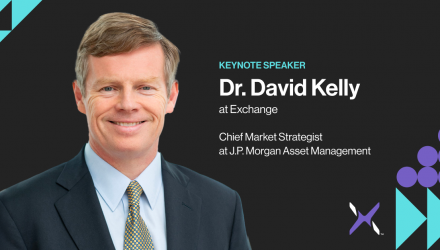
Exchange is delighted to announce that Dr. David Kelly will return to the stage as a keynote speaker at Exchange 2024. As the Chief Global Strategist and Head of the Global Market Insights Strategy team for J.P. Morgan Asset Management, he has decades of industry experience.
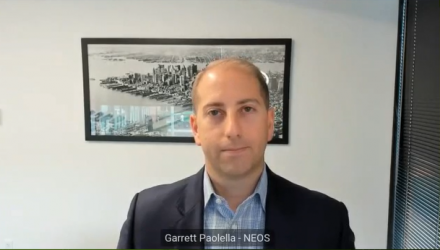
It’s been a great year for alternative income strategies as inflation, interest rate, and recession risk fears dominated markets. Garrett Paolella of NEOS and Christian Magoon of Amplify ETFs joined VettaFi’s Tom Lydon to discuss alternative income opportunities at the Income Strategy Symposium hosted by VettaFi on October 27.
Advisors plan to allocate more to fixed income ETFs as 2024 approaches. In a poll conducted by VettaFi, attendees were asked what bond changes they were considering heading into year-end. And 60% of respondents said they plan to add to fixed income ETF exposure using proceeds from cash and/or equities.
Active ETFs have been recently gaining momentum among investors as market conditions shift to serve active management. But when it comes to active or passive investing, it shouldn’t be an either/or proposition.
The renewed opportunity set in fixed income is enabling investors to achieve attractive returns while taking on less risk.
Over the past seven days, bitcoin has surged more than 20%. That’s a bull market unto itself. It’s also one fueled by speculation that the SEC will soon approve ETFs with spot bitcoin exposure.
Sugar prices continue their upward journey to new highs, but that shouldn’t prevent consumers from curbing their Halloween spending. From an investment standpoint, getting exposure to rising sugar prices amid inflationary pressures is an ideal move.
On October 27, 2023, VettaFi hosted an Income Strategy Symposium that saw nearly 900 advisors and investors register for the event. The symposium was a success for everyone involved, and included some of the top firms and individuals in the industry offering their insights into several different income-related topics.
With 10-year Treasury yields hovering around 4.84%, the flirtation with 5% is ongoing and dangerous, spooking many fixed income investors in the process.
VettaFi hosted an Income Strategy Symposium that saw nearly 900 advisors and investors register for the event. The symposium was a success for everyone involved and included some of the top firms and individuals in the industry offering their insights into several different income-related topics.
While environmental, social, and governance criticism remains elevated (and loud) and interest rates are affecting the performance of the related equities and exchange traded funds, ESG-committed investors can find relief on multiple fronts.
Despite some signs of slowdown in the economy, the biggest stories in the market still revolve around big tech earnings and artificial intelligence.
Rising yields have undoubtedly done a number on bond prices, but they open up bearish opportunities in certain inverse leverage exchange traded funds (ETFs).
The fixed income market has rapidly evolved in 2023. After a series of rate hikes, there's income in a wide range of bond strategies to consider. But there's also uncertainty about what's next.
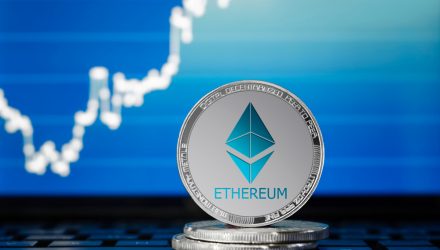
Ethereum serves as the platform for transactions conducted in the digital currency known as ether. It is widely known as the second-largest crypto asset behind Bitcoin.
Earlier this October, VettaFi announced that the Susan G. Komen Foundation would be the cause of the month. October is also Breast Cancer Awareness Month. VettaFi is pleased to announce that it will be taking its support to the next level.
Goldman Sachs Asset Management has seen strong net inflows in 2023 into its broad market equity ETFs and its income ETFs. Today, the firm expanded its exchange traded fund lineup to include two equity income ETFs.
For the 90 days ending October. 20, the S&P 500 Energy Index jumped 6.1%, while the broader S&P 500 slumped nearly 7%. Due in part to geopolitical concerns, oil prices are trending higher, providing support to the energy equity thesis.
In the past week, the price of physical gold has continued to rise. According to Kitco, on October 16, 2023, the price of gold was valued at around $1,922 an ounce, and it began Monday morning just above $1,970.
High-interest rates are keeping the residential real estate market in flux. This is due to borrowing costs making prospective buyers and even sellers think twice.
We are focusing a lot of attention on fixed income at VettaFi in October. This week, we are hosting webcasts with AllianceBernstein and State Street Global Advisors.
In the month of October, gold’s price began to trend upward. This jump in the price of the precious metal comes after consecutive drops in its value since May.
Big tech has obviously been a major mover for the stock market in 2023. With third quarter earnings forthcoming, there should be plenty of opportunities for broad-based ETF as well as single-stock ETF plays.
Some investors are rightfully pensive about employing a buy-and-hold approach when it comes to cryptocurrencies. Even when it comes to the largest members of the asset class, bitcoin and Ethereum.
The communications sector has been one of the best-performing sectors of the year, benefiting from both the tech boost and in certain areas, from consumer spending on services versus goods.
ESG isn’t a new concept. In recent years, it’s gained more attention and assets thanks partly to the proliferation of related ETFs.
The debate between active and passive management has been going on for years. And while active management has faced headwinds over the past decade or so, it’s starting to reclaim dominance over passive.
Active ETFs have gained in popularity in recent years. However, some pundits have prematurely taken out their shovels for some funds. Even as these products show signs of vitality.
Homeowners, drivers and other individuals in the marketplace for insurance, have a host of factors to consider to make sure they are appropriately covered in the event of a death, accident, or other untimely event, advisors shared in interviews with VettaFi.
When it comes to processing power for artificial intelligence (AI) applications, speed is essential, but chipmaker Nvidia also wants to be first in terms of manufacturing.
It may not be new, but one of the best modern-day examples of disruptive technology is the smartphone. It is a technology that has radically disrupted human behavior and changed how we live our daily lives.
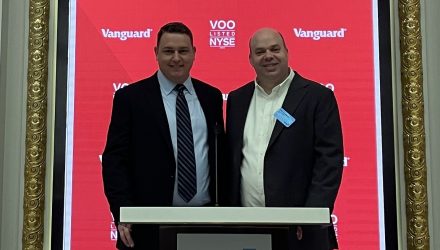
The third largest ETF recently reached the age of 13. Yes, the Vanguard 500 ETF (VOO) is now Taylor Swift’s lucky number. (Am I one of the first people to use Ms. Swift and Vanguard ETFs in the same sentence?)
Are markets actually set for a recession? That was the narrative that dominated entering 2023, but with just several weeks left, it hasn’t materialized.
A recent surge in bankruptcies and defaults by high-yield issuers is unnerving some fixed income investors. Bond investors, particularly those seeking elevated levels of income, are rightfully jittery.
Muni bond ETFs gathered $6.3 billion in the first nine months of 2023. However, a healthy $1.4 billion flowed in during September alone. According to Columbia Threadneedle, there is good reason to focus on the asset category.
To succeed, every advisor needs to grow. This growth must not be limited to the size of their practice either. Advisors need to grow their talents and their knowledge, and must always be developing their skill set.
In a year in which active strategies have done so well via allocator interest, as well as with their own returns, an active ETF could make a very good addition.
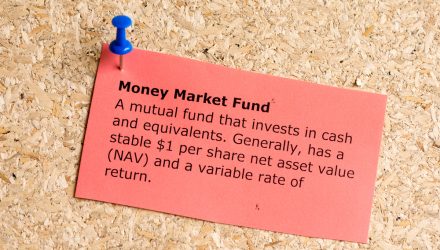
A money market fund is a type of mutual fund that invests in debt securities, specifically those characterized by short maturities and minimal credit risk. A money market fund generates income with little to no capital appreciation, making it a low-risk, low-return investment.
With oil prices trending higher, among other factors, market participants are bracing for a renewed round of elevated inflation. That could stoke renewed interest in traditional inflation-fighting asset classes, but investors may not want to overlook the ability of Bitcoin to act as inflation protection.