It's difficult to call any stretch a calm, quiet summer week, but this one would seemingly fit the bill. Earnings from Alphabet (GOOGL), Tesla (TSLA), and IBM (IBM) are the standouts, along with a slew of cyclicals reporting Q2 results.
The second-quarter earnings season kicked off last week with a resounding statement from Wall Street, led by stellar results across the nation's six largest banking institutions.
The Q2 earnings season is off to a rollercoaster start. The big banks collectively reported strong numbers, boosted by active capital markets and another impressive set of sales & trading revenue. And it was the usual chorus of bank CEO macro commentary:
What makes this earnings setup truly unique is the behavior of Wall Street analysts over the last 90 days. Because corporate guidance tends to be conservative, analysts historically cut estimates ahead of time.
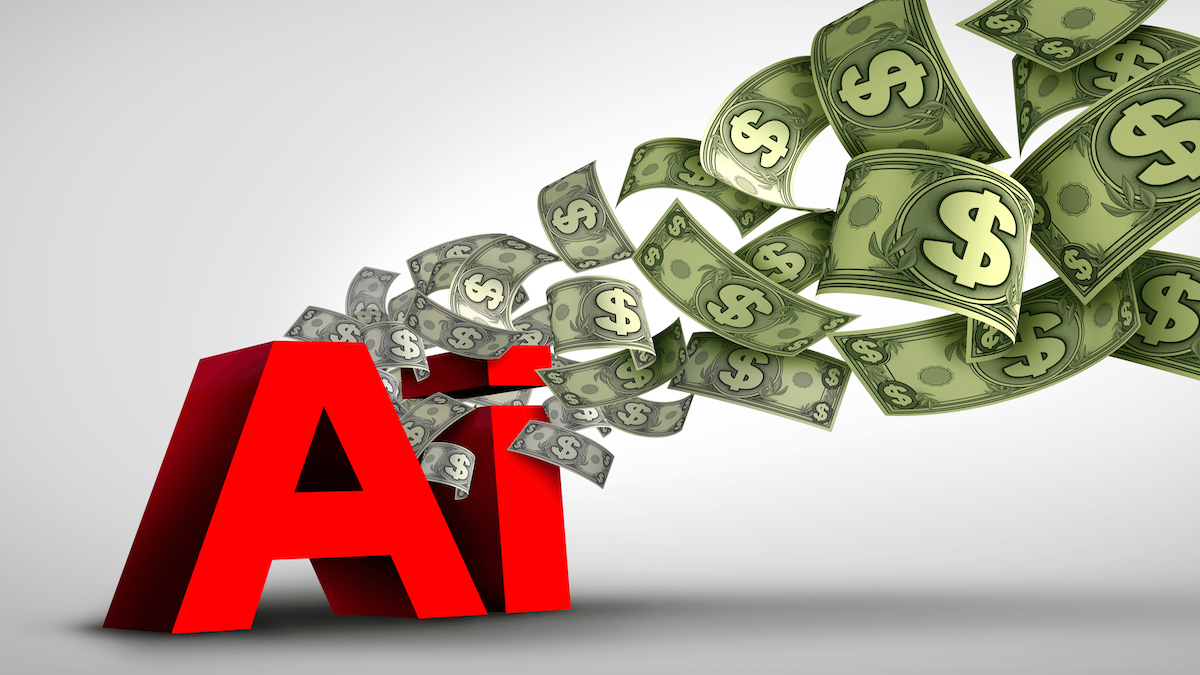
The corporate world is awash in capex. Leaders in the artificial intelligence (AI) arms race are pouring hundreds of billions of dollars into tech projects, and uncertainty surrounds their profitability. For now, the market rewards this use of cash, but it’s not without pitfalls. Share buybacks, for instance, are seen as a net loser, while the S&P 500® dividend yield has sunk toward all-time lows near 1%.
It’s a busy finish to the first half on the corporate event calendar. The bulls have the lead, but the bears have had their moments of glory so far this year. A handful of key AGMs, conferences, and earnings events will keep investors on their toes amid a colorful macro backdrop.
Dispersion continues to be the definitive story of 2026. As we progress through June and approach the conclusion of the first half of the year, the equity landscape remains distinctly bifurcated. Pockets of deep structural growth stand in contrast to areas grappling with macro headwinds.
Equity issuance is all the rage. The SpaceX (SPCX) IPO on Friday, Alphabet’s (GOOGL) up-sized secondary announced last week, and a slew of other major go-public names over the remainder of 2026 (Anthropic, OpenAI) buck the years-long trend of intense buybacks and shareholder-friendly activities by the world’s most valuable companies.
Get ready for an absolute blockbuster of a summer, and then some. While mega-cap tech stocks have been busy hogging the headlines on the corporate event calendar, a quiet transformation has been taking place just off the exchange floors. The IPO market, which spent the better part of the last few years stuck in a defensive crouch, has officially smashed the accelerator to start 2026.
Get ready for a magnificent month, and then some. Mega-cap tech stocks dominate the corporate event calendar in June, already highlighted by NVIDIA (NVDA) CEO Jensen Huang’s keynote address at Computex 2026 in Taiwan earlier this week, one of many major conferences.
The exchange-traded fund marketplace continues to expand. Now with more than $20 trillion in assets under management ($14 trillion in the U.S., growing at an 18% five-year annualized clip), 2026’s volatility and emerging investment themes have taken the universe to new heights.
Against this challenging macro backdrop, a stark divergence is expected as major retailers report earnings next week. Discounters are projected to perform well, with Walmart (WMT) expected to outpace Target (TGT) by gaining market share from high-income households trading down for groceries, while Target remains more vulnerable due to its heavier mix of discretionary goods.
AI is surely the zeitgeist at industry conferences across sectors right now. Emerging technology, increased efficiency, and scalability are all talking points. But so too are headcount reductions, reduced tech-sector free cash flow, and growing worries about a 1990s-like bubble.
The travel and leisure space remains a bright spot, with Marriott posting a robust earnings beat driven by a 12% increase in gross revenue and strong global booking trends. Airbnb also had a strong showing, topping revenue forecasts and raising its full-year outlook as global travel momentum drove a 19% increase in gross booking value.
It’s Shareholder Meeting Month on Wall Street. With the bulk of the Q1 earnings season now in the rearview mirror, investors turn their attention to Annual General Meetings (AGMs) held by some of the most important multinational corporations.
This week marks the busiest of the Q1 2026 earnings season with 3,213 companies expected to report. The S&P 500® is projected to deliver its sixth consecutive quarter of double-digit earnings growth at 15.1%, fueled largely by a powerhouse 46% expansion in the Information Technology sector.
For years, Warren Buffett shaped the meeting into something closer to a macro forum layered atop a company update. His commentary, alongside the late Charlie Munger’s sharp mind and entertaining voice, kept Berkshire stockholders and the investing world glued to TV screens on the first Saturday in May.
As the Q1 2026 earnings season enters its most frantic stretch, the market stands at a critical crossroads between resilient corporate fundamentals and macro-driven anxiety. While the high percentage of early beats suggests that American business remains surprisingly nimble, the coming days will determine if that momentum can withstand the Mag 7’s massive spending requirements.
It’s a busy macro stretch as company earnings reports come in fast and furious. A focus on real data and earnings may be a welcome development for investors wary of geopolitical headlines. The team at Wall Street Horizon will keep you up to speed with the latest trends, and you can access our industry-leading forward-looking corporate event data to stay ahead of markets.
The Q1 2026 earnings season has officially started, and the early results suggest a market that is largely defying the geopolitical fog we’ve discussed.
In a rare plot twist, Goldman Sachs front-run the banking pack today, marking the first time the firm has kicked off the earnings season ahead of JPMorgan Chase since 2018. The storied investment bank delivered notable results, comfortably surpassing analyst’s estimates on both the top and bottom-line.
Just last week news broke that SpaceX had confidentially filed to go public, meaning the financials of the company are not disclosed until later. SpaceX is reportedly eyeing a June 2026 listing, and is targeting a staggering $1.75 trillion valuation, seeking to raise between $50 billion and $75 billion. If successful, this would comfortably unseat Saudi Aramco as the largest IPO in history.
As Q1 2026 comes to a close, we follow up on an article we published last week on buybacks by analyzing corporations' other favorite way to return value to shareholders. The percentage of companies increasing dividends in Q1 was the highest level since Q1 2019 (45%).
The SEC is reportedly finalizing a proposal to allow U.S. companies to transition from quarterly to semi-annual reporting (SAR), potentially ending a 90-year-old mandate.
Software stocks are down big YTD, but AI-targeted companies have signaled confidence through increased buyback announcements. Record YTD buyback authorizations suggest potential equity market support—but execution remains the wildcard.
Have no fear—ETFs tracking crude oil, natural gas, and even wholesale gasoline futures are at the ready.
With one month left in the quarter, M&A is running a little light compared to the record-breaking close of 2025. According to Wall Street Horizon’s coverage universe of 11,000 global equities, there have been 59 M&A announcements and 78 closes as of March 2.
March came in like a lion. Stock market futures plunged last Sunday night following U.S. and Israeli attacks on Iran. WTI and Brent crude oil had surged 7% by the following morning, along with big gains in gold.
As the Q4 earnings season draws to a close, the market finds itself at a crossroads of record-breaking AI growth and shifting fiscal policy.
It’s a short week for traders and portfolio managers, but a long one for those dissecting macro data points. FOMC Minutes hits before a slew of mid-tier economic updates on Thursday. Friday morning could be the big reveal, with growth and inflation numbers followed by bellwether business and consumer surveys.
Volatility was once again the theme in US markets last week as a profound alpha rotation reshapes Wall Street. Investors continued to flee mega-cap tech, software stocks, and anything considered an AI loser, in favor of more cyclical sectors such as energy, materials and industrials.
Push will come to shove in the weeks ahead as tech executives take questions at key investor conferences over the back half of the first quarter.
The AI spending scare that rattled investors during Microsoft’s earnings call nearly two weeks ago intensified last week as Alphabet and Amazon followed suit. On Wednesday, Google’s parent company reported record annual revenues exceeding $400 billion and a 48% surge in Google Cloud growth.
Tech stocks and the AI trade have powered global markets ever since the bull run began in October 2022.
Headline whiplash returned to US equity markets last week, but this time the drama wasn't geopolitical. On Thursday, the tech-heavy Nasdaq fell 1.3% as the market digested mixed results from some Magnificent Seven earnings reports.
The real hero of the late-week recovery was the Information Technology sector. Despite a jarring 16% slide from Intel (INTC) following a tepid outlook shared on their Q4 2025 earnings call, the broader semiconductor space and "Magnificent Seven" megacaps provided the necessary ballast.
It was a sea of red to kick off the holiday-shortened trading week yesterday. President Trump’s ambition to annex part or all of Greenland drew backlash from European leaders.
After rising to its highest level in four years during the last quarter of 2024, the Late Earnings Report Index, our proprietary measure of CEO uncertainty, has now recorded five consecutive quarterly readings below the historical benchmark as companies prepare to report their Q4 results.
We’ll call it a steady year for the box office in 2025. A handful of big-time flicks are on deck for the holidays, while studios hope for an improved macro backdrop to drive bigger numbers next year.
Plenty of official economic data is already coming down the market’s chimney, much to the delight of our partners at Econoday. Now that the pesky government shutdown is over, the pace of macro updates is set to accelerate as we head into the end of 2025.
Retail earnings ahead of Black Friday show a clear split: value-focused discounters like TJX and Walmart are thriving, while Target and home improvement stores struggle with consumer pullback on discretionary items. This shift reflects broader economic pressure, as consumers trade down due to high prices, weakening income sentiment, and increased reliance on credit.
With peak earnings season now in the rearview mirror, the market's focus shifts from broad-based results to specific, unresolved questions. Last week's tech sell-off and mixed IPO fortunes have put a spotlight on valuations, making Nvidia's upcoming report a critical test for the entire AI sector.
It's been a minute since we’ve touched on traditional stock splits. Our last look at this type of share-price engineering came in Q2, when reverse ETF splits were happening all around us. For individual investors, when a company’s management team chooses to split its stock, it can have more impactful implications for longer-run returns.
Q3 Earnings growth continues to improve, with 64% of constituents reporting thus far, S&P 500® EPS growth for Q3 2025 accelerated to 10.7%
Earnings season gets underway this week, with reports from major banks providing the first look at corporate performance. The technology sector is expected to be the standout performer with over 20% projected earnings growth, driven by the ongoing "AI arms race".
According to Wall Street Horizon’s proprietary data, Q3 2025 marked a record in the number of new U.S. ETF launches. The tally (above 200) brought the trailing four-quarter sum to more than 800. Investors have never had more choice to tweak their strategies, aim for higher income yields, or even bet on single stocks in new, creative ways.
Earnings season kicks into high gear this week, with the big banks unofficially firing the starting gun on Tuesday.
American companies continue to buy back their shares at a record pace in 2025. This has not only padded balance sheets but it’s helped drive the stock market rally that’s persisted since the April 8 trough.
The latest read on the US labor market will be out this Friday, October 3, when the Bureau of Labor Statistics releases September nonfarm payrolls, unemployment, average hourly earnings and other metrics.
Dividend-increase announcements are on the rise. According to the Wall Street Horizon research team, 71.9% of all dividend changes have been positive so far in 2025.