The equity bull market is expected to continue through the second half of 2026, supported by resilient U.S. growth, AI investment and solid earnings.
Kevin Warsh’s early overhaul of Federal Reserve communication and policymaking suggests investors should prepare for a higher-for-longer rate environment with greater uncertainty around policy signals.
The market received encouraging inflation news last week as both the CPI and PPI came in below expectations, as inflation pressures moderate. A negative monthly CPI print effectively removed any concern about an immediate Federal Reserve rate hike.
In June we pointed out that Health Care looks cheap. Even though it has been rallying hard of late, the sector continues to trade at a 59% price-to-sales discount to the S&P 500, despite having an 18% return on equity (ROE) that is just a hair below the 19% ROE accorded the S&P 500.
Despite renewed geopolitical tensions in the Middle East, markets continue to display remarkable resilience. Major equity averages sit within striking distance of new all-time highs while oil, perhaps the biggest surprise of the year, remains anchored in the low $70s despite renewed hostilities.
For investors who have been tracking this space, the signing is a continuation of a policy architecture that has been assembling with surprising speed.
The June jobs report underscored our thesis that while the labor market remains in the 'economic plus column,' some of the prior months' increases in new hiring seemed a bit too high.
The June employment report’s headline readout was softer than expected, but the details reinforce my view that the U.S. economy remains on a stable footing. Headline payroll growth disappointed, yet the previous two months—which had surprised to the upside—were revised lower, bringing hiring back toward a pace that is far more consistent with a mature expansion.
There’s no doubt the most important aspect to the June FOMC meeting was the fact that policymakers kept the Fed funds rate unchanged and removed its prior easing bias. But, this was not just your normal, run-of-the-mill policy gathering. It was Kevin Warsh’s first meeting as Fed Chair and instead of being a ‘rubber stamp’ for rate cuts, as some market observers were opining, the new FOMC leader put his stamp on the Fed in a different way.
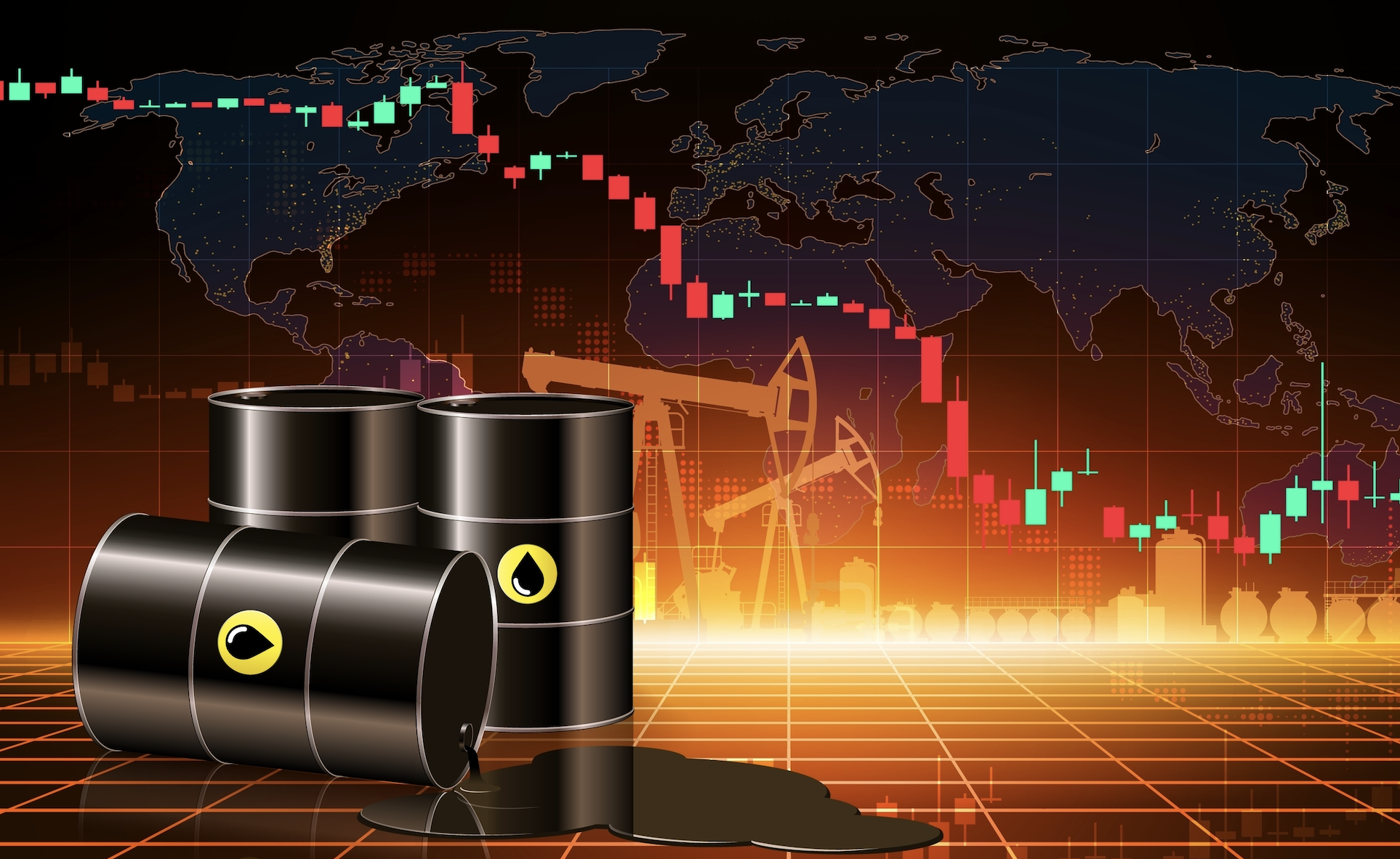
The sharp retreat in oil prices has dramatically altered the market narrative. Just weeks ago, investors feared a renewed inflation shock from the conflict with Iran. Instead, crude has fallen back toward pre-conflict levels, Treasury yields have declined, and markets have begun rotating aggressively away from the large tech hyperscaler, the Magnificent Seven, that dominated recently and toward more cyclical and value-oriented sectors.
Model portfolios have helped many advisors solve for scale. The next challenge is more nuanced: how do advisors keep that scale while delivering more personalization, tax awareness and differentiated value to clients?
New Fed Chair Kevin Warsh is already reshaping policy communication by reducing forward guidance, questioning the dot plot’s future and emphasizing real-time data, potentially increasing Treasury market volatility.
On May 5, 2026, researchers from Cleveland Clinic, RIKEN, and IBM successfully simulated a 12,635-atom protein complex using quantum-centric supercomputing, a problem relevant to drug discovery that classical computing could not match at comparable speed and accuracy.
The most important development this week was not the Federal Reserve meeting itself, but the sharp and unexpected decline in oil prices. Just days ago, many market participants expected crude to remain elevated amid ongoing tensions in the Middle East. Instead, WTI crude briefly traded with a 73 handle, only modestly above its pre-conflict levels and far below the $90-$100 range that many feared.
Co-packaged optics, the technology of integrating lasers and optical components directly into network switches rather than using pluggable modules, is becoming the standard architecture for large-scale GPU clusters, and Nvidia needed to lock in supply for the buildout it is planning.
Once again, the Federal Open Market Committee (FOMC) decided to remain ‘on hold’, keeping the fed funds trading range at 3.50%-3.75%. This result was largely expected by the markets. Of course, one of the more notable aspects to this gathering was that it represented Kevin Warsh’s first official policy meeting as Fed Chairman.
The slippery slope never fails. Go back to the 1979 Chrysler bailout and we can find the roots of the US government’s current predilection for getting involved in stocks and bonds.
As we go to press, fighting in the Mideast has escalated, sending crude higher, but stocks, in early Monday trade, have shown remarkable stability following Friday’s deep selloff.
The rise in U.S. Treasury (UST) yields, specifically the ten-year note, since late February has captured the attention of global investors in a very visible fashion. Just a couple of weeks ago, headlines were blaring that the UST 10-year yield had reached its highest level since the beginning of 2025, leaving market participants to wonder: What comes next?
Even if the Middle East war does find a lasting settlement, the specter of inflation appears poised to hang over the markets. Indeed, while employment data had, up until recently, been the primary focus for investors, arguably, inflation reports have now moved into the ‘leaderboard’ position.
The market continues to demonstrate remarkable resilience. Lower oil prices, easing Treasury yields, and the relentless buildout of artificial intelligence infrastructure are still providing a favorable backdrop for risk assets.
The U.S. government’s decision to invest $2 billion directly into nine quantum-computing companies through minority equity stakes—not just grants—signals a major shift toward treating quantum as a strategic commercial industry, with potential implications for investors seeking targeted exposure through funds like the WisdomTree Quantum Computing Fund (WQTM).
Yes, we have been there before, only to be disappointed. But the market smells a real settlement to open Hormuz, and WTI oil briefly dipped below 90 for the first time in weeks. If an opening occurs, expect the market to continue its march upward, as the momentum trade gathers strength.
I still don’t think the Fed is close to a rate hike, but for the upcoming June FOMC meeting, a shift in the language of the policy statement from an easing bias to one of a ‘balanced’ outlook seems to be the most likely scenario. However, the fed funds futures market has now fully priced in a rate hike for March 2027, a remarkable shift from its pre-war status of discounting almost three rate cuts for the same timeframe.
Stocks’ rally off the March 30 lows has been nothing short of wild, with internal market dynamics showing some performance divergences that we haven’t seen for decades. For example, in the first 6 weeks of the rally, the S&P 500 Growth index beat the S&P 500 Low Volatility Index by more than any other 6-week window on record.
Markets ended last week under pressure as the optimism that had been building around a potential geopolitical breakthrough faded quickly. The China summit did not deliver the progress that had been hoped for. The Boeing aircraft order was smaller than expected; there was no meaningful movement on Iran; the Taiwan issue was brought forward in a way that unsettled markets; and the hoped-for easing of tensions around the Strait of Hormuz did not materialize.
Typically, an investor’s traditional bond portfolio begins with a cornerstone, or core holding of some sort. From either a strategic or tactical perspective, a core fixed income position provides the investor with some ballast to help anchor any other strategies that may be included.
Last week was very strong for the market narrative because the economic data continued to show resilience where it matters most: jobs, earnings, and investor confidence. The latest payroll report was not just stronger than expected; it showed broad private-sector strength, with government jobs actually declining and the prior month revised higher. That is an important distinction.
The April FOMC meeting’s four dissents and resistance to maintaining an easing bias signal a higher bar for rate cuts under incoming Chair Warsh, suggesting investors may favor Treasury floating-rate strategies to navigate a prolonged “higher-for-longer” environment.
While the Middle East war takes on the lion’s share of headlines, and rightfully so, there has been another development in bond-land that has gone relatively unnoticed. Indeed, one concern that crops up in the U.S. Treasury (UST) market is the potential for higher budget deficits from the already lofty current reading.
The Federal Reserve held rates steady as expected last week, but the real story was the shift in tone inside the Committee. Three dissents in favor of moving to a neutral bias are highly unusual, and I do not recall seeing dissents on a bias in this way before.
Join the experts at WisdomTree for an educational webcast exploring how an efficient core can add diversification without compromising on the essentials.
The stock market would love to see nothing more than the labor market holding up. Time and again, we find monetary policy having a beautiful, lagged effect in the jobless claims series. We are of the view that the cumulative 175 basis points of Fed rate cuts that hit the market in 2024 and 2025 is exactly what the labor market needs in 2026-2027. We will soon find out if manufacturing employment continued to mend in April.
For the third consecutive policy gathering, the Federal Open Market Committee (FOMC) decided to remain ‘on hold,’ keeping the fed funds trading range at 3.50%–3.75%. This result was largely expected by the markets. Unfortunately for the Fed, the policymakers are in a challenging position of juggling incoming economic and inflation data as well as the uncertainties emanating from the Middle East war.
Markets continue to ebb and flow with every headline out of Iran and the Strait of Hormuz, but the most important message from the markets is resilience. Earnings season is off to a very strong start, with roughly a 75% beat rate, and the AI investment cycle continues to provide a powerful tailwind for equities.
Markets are being pulled in multiple directions. Geopolitical tensions, questions around Federal Reserve policy and the rapid rise of artificial intelligence are all competing for investor attention.
Clearly the path to peace is not as easy as it looked last Friday when the easing in Middle East tensions, the reopening of the Strait of Hormuz to commodity flows, and the sharp retreat in oil prices calmed fears on the most immediate macro threat to equities.
The Middle East war has replaced tariff-driven inflation concerns with fears of rising energy prices feeding through the economy. On Friday, the Bureau of Labor Statistics (BLS) released its March CPI report, when markets received their first ‘official’ glimpse of how the surge in energy prices has begun to impact the U.S. inflation setting.
The war in the Middle East has brought about an elevated uncertainty quotient when examining the U.S. macro backdrop. The resultant rise in energy prices is being looked at as both a potential ‘tax on the economy’ as well as a catalyst for a near-term elevation in inflation.
The market remains remarkably resilient, but I have expressed a more cautious outlook in the near term as rising oil prices and a renewed pickup in money growth complicate the inflation outlook.
Developments in the Middle East continue to be, without a doubt, taking center stage for the financial markets. However, it’s important to keep tabs on the U.S. macro-outlook, especially the labor market and inflation aspects.
The economy continues to show resilience, and the March jobs report reinforced that view. Payroll growth came in stronger than expected, prior months were not meaningfully revised away, and the unemployment rate edged lower. Wage growth eased, but the broader message was clear: the labor market remains too firm to support any near-term case for Fed easing.
Markets often react sharply to geopolitical developments, but just as often, they overreact. Investors today are grappling with heightened global tensions, rising oil prices and uncertainty around central bank policy. The key question is whether these risks meaningfully alter the economic outlook or simply create short-term volatility.
Given the rise in the 10-year Treasury yield and oil prices, the case for near-term Fed cuts has weakened materially. That is the key message from this market.
At the risk of leaving aside the flow-through of the crude oil price into expenses such as electricity, trucking, and so on, let’s just look at the pocketbook hit from filling up the family car specifically.
Faster productivity growth lifts earnings, improves the long-run fiscal arithmetic, and allows the economy to run stronger without recreating the inflation regime of 2022. Historically, markets are slow to recognize when the supply side of the economy has improved. This time should be no different. The productivity story is more durable than this week’s Iran developments, which is dominate trading over the near term.
In practice, many advisors use SMAs alongside ETFs, not instead of them—combining the scalability of ETFs with the customization and tax management SMAs can provide.
The FOMC held the fed funds rate at 3.50%–3.75% for a second straight meeting as policymakers weigh slowing growth, persistent inflation, with core PCE at 3.1%, and geopolitical uncertainty from the Middle East.