On this episode of the “ETF of the Week” podcast, VettaFi’s Head of Research Todd Rosenbluth discussed the Neuberger Berman Option Strategy ETF (NBOS) with Chuck Jaffe of Money Life. The pair discussed several topics related to the fund to give investors a deeper understanding of the ETF overall.
Chinese stocks overcame a bout of early volatility to post their biggest gain in a week on Monday, suggesting that investors are hopeful the government will deliver on its promise of more fiscal support.
When most people hear the word “risk,” they think about wild market swings, scary headlines, and losing money overnight, but Howard Marks, Co-Chairman and Co-Founder of Oaktree Capital Management, takes a different approach. In his new video series How to Think About Risk, Marks digs deep into what risk is and how investors should handle it. Spoiler alert: It’s not just about volatility.
With over 36,000 metric tons in reserves—about one-fifth of all the gold ever mined—central banks know something we should too: Gold is the ultimate safety net.
As the Fed shifts its stance, investors must now weigh the broader economic implications.
For decades, a key component of many investors’ portfolios was a fixed income ladder. It was intended to provide ballast to the more volatile equity allocation and help reduce interest-rate risk.
In the past few years it certainly has been. No wonder.
Credit indices rallied during the third quarter, despite a variety of economic headwinds, and it appears FOMO (fear of missing out) is fueling the bullish sentiment more than fundamentals.
The latest S&P 500 rebalance introduced Dell and Palantir to the index, and Apple’s weight grew with annual float changes, signaling technology’s ongoing influence.
The US debt is near its highest level in history and on track to grow. Neither political party currently seems intent on making it more sustainable.
The bond market is growing less convinced by the day that the Federal Reserve will embark on two further interest-rate cuts this year.
The market continues to trend higher on Goldilocks pixie dust.
BlackRock Inc. reaching $450 billion in alternative assets is putting a finer point on a case it has been making all year: it’s not just an ETF powerhouse.
JPMorgan Chase & Co.’s net interest income was the hot topic of its third-quarter results, much to the irritation of Chief Executive Officer Jamie Dimon, who grew impatient with quibbling over details of the bank’s outlook on its earnings call on Friday.
VettaFi looks at midstream/MLPs by subsector and underlying trends driving strong performance through the first three quarters of 2024.
Quarterly recap: Fed rate cut and Chinese stimulus take the spotlight.
Investors in Hong Kong have bet a record amount on exchange-traded funds that profit when stocks decline, showing how quickly sentiment is shifting following a breakneck rally.
Traders are pushing the dollar toward its second-straight weekly gain in anticipation of a slower pace of interest-rate cuts by the Federal Reserve.
Elon Musk unveiled Tesla Inc.’s highly anticipated self-driving taxi at a flashy event that was light on specifics, leaving investors questioning how the carmaker expects to achieve its ambitious goals.
The 2022 broad market downturn across major asset classes came as a nasty surprise to investors. Historically, such an event is very rare, and no one was expecting to see almost all asset classes down for the year. Yet, even though it might seem as if diversification was of no help in 2022, the story changes if we look beyond the major headline asset classes.
In the last year, we’ve written about the poor performance of clean energy, while highlighting the strong long-term outlook for the sector and the attractive valuations. These are typically the sorts of things we focus on…valuations and the long-term fundamental prospects for companies. We tend to shy away from overanalyzing short-term market dynamics.
Supply chain disruptions related to the port workers’ strike loom, the impacts of which we know can be incredibly destructive.
Long-term US Treasury yields rose last week as investors digested mixed economic data that reinforced the idea of a "Goldilocks" economy.
Join the experts at Invesco for an educational webcast exploring strategies and ETFs for tax optimization.
Alpha (α) is a fundamental yet poorly understood concept in finance. Simply put, it is the difference between the return of an investment and that of a risk-adjusted benchmark. In a more advanced definition, alpha is the residual in an asset pricing equation (see Appendix A). Alpha is what active managers strive to achieve and passive managers do not pursue.
A return to lower yields has been every bond fund manager's dream since the nightmare of 2022. But now, with expectations dashed that they’d get their wish this year, it appears they’ll have to hang their hopes on 2025.
Investors who buy bundles of loans packaged into bonds are increasingly using exchange-traded funds to do so, according to a report from Bank of America.
Private capital – encompassing private equity and private credit – is in the midst of a bit of a renaissance at the moment. IPO activity hit a peak in 2021, the year after the pandemic and then promptly plunged to levels not seen in years.
The Fed’s “recalibration” of monetary policy is more than just about shifting to rate cuts. It also involves where the policy maker is now placing its greater emphasis on setting the course for easing in the future. Rather than inflation being the primary driver in the decision-making process, labor market activity has now taken center stage, and with that, one could argue, for the Fed, it’s now about the economy.
With interest rates declining, enthusiasm for muni bond ETFs could be reborn in income investors, including retirees.
Market participation broadened beyond technology stocks during the third quarter.
Elon Musk went all-in to get robotaxis onto roads, sacrificing a widely anticipated cheaper car, gutting teams focused on other projects and downplaying Tesla Inc.’s sales slowdown.
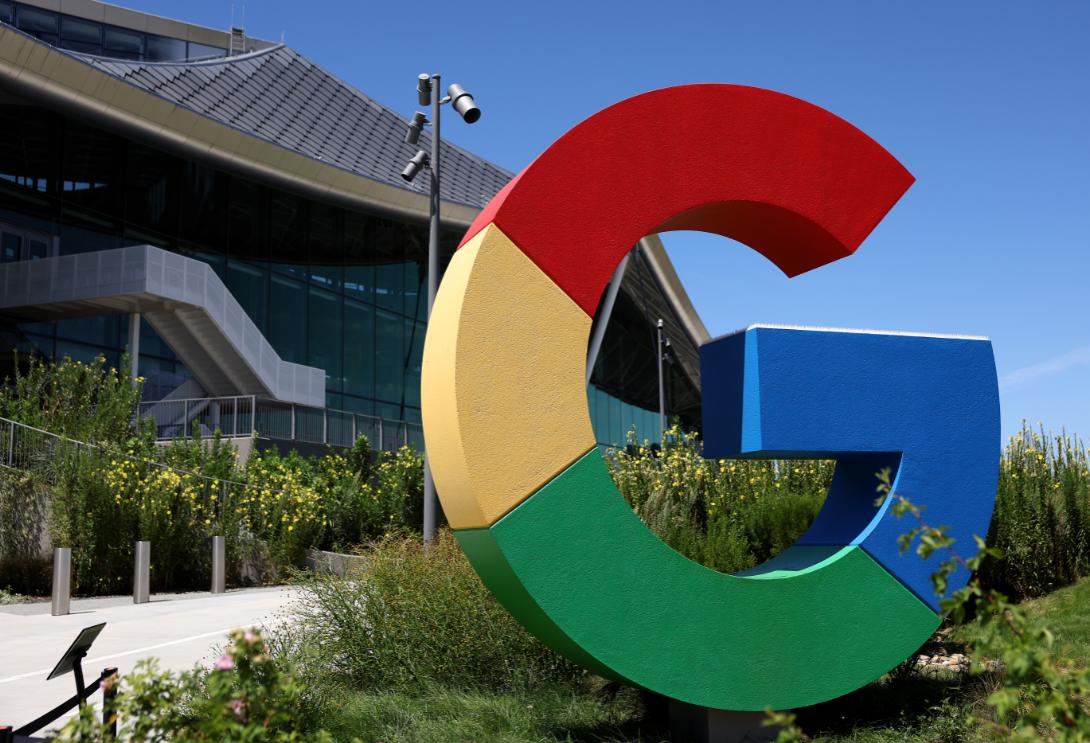
The US Justice Department is considering asking a federal judge to force Google to sell off parts of its business in what would be a historic breakup of one of the world’s biggest tech companies.
It is hard to be “the most pro-union president in American history,” as Joe Biden likes to claim, while also leading an effort to “reimagine and rebuild a new economy,” as he has also promised. That’s because these goals are fundamentally incompatible: America’s unions no longer fit the modern economy.
If investors in Alphabet Inc. weren’t all that worried at first about the possible consequences of Google losing its search antitrust case, they perhaps should be now.
Many emerging markets have delivered a robust performance this quarter amid a number of headwinds and we expect key geographies to build on that in the coming months.
As the November 2024 election draws near, the election outcome will profoundly affect the financial markets. Whether Donald Trump or Kamala Harris wins the presidency, each administration will bring distinct policies creating investment opportunities and potential risks for investors. With a divisive political landscape, it is crucial to understand how these potential outcomes can shape the stock market and your portfolio strategy.
Last week marked the beginning of the end of one of the most rapid interest rate hiking cycles in U.S. history.
Real estate stocks are notoriously rate-sensitive assets. It’s not surprising the delivery of the rate cuts were beneficial to the sector.
A crystal ball enlightening a trader about the rate cut headlines would have been costly. However, a trader with the crystal ball and proper context may have been more successful.
Palmer Square Founder Chris Long discusses the $32 billion firm’s ETF entrance, spotlighting their Credit Opportunities ETF (PSQO) and CLO Senior Debt ETF (PSQA). VettaFi’s Todd Rosenbluth offers perspective on Bitwise’s XRP ETF filing, CLO ETFs, and the continued rise of actively managed ETFs.
Foreign Agents provides a powerful and depressing master class in the famous warning of Hamilton’s Federalist No. 21. To quote another founding father, Benjamin Franklin, “a republic, if you can keep it” indeed.
China’s recent stimulus announcements sparked a massive rally in its stocks, and a growing chorus of analysts see more gains ahead. Is this a reawakening of the country’s long slumbering stock market or just another false start? Bloomberg Opinion’s Nir Kaissar and Shuli Ren, based in the US and Hong Kong respectively, met online to discuss the risks and opportunities.
Judging from the public commentary, last Friday’s US jobs report confused economists in terms of their understanding of economic developments in the world’s largest economy and the policy approach of the Federal Reserve.
The rout in US government debt extended slightly on Tuesday, with longer-dated yields at the highest levels since late July and inflation data later in the week expected to enable Federal Reserve interest-rate cuts.
It’s no secret that betting on defense suppliers when geopolitical tensions ratchet higher pays off — at least in the short term. But Wall Street says there’s more to this latest rally.
Global monetary easing and modest growth are creating a fairy tale story for investors. Their very high conviction in the outcome of that story, however, belies a number of serious risks.
The Federal Reserve began cutting interest rates. Whether the economy falls into recession, hard or soft, is anyone’s guess.
Gold and the related exchange traded funds are among this year’s best-performing assets, helped in part by interest rate cuts.
Building a TIPS ladder gives us a license to spend and creates a spending floor. My TIPS ladder combined with Social Security provides a $10,000 monthly inflation-adjusted cash flow, though I’m delaying taking Social Security until age 70, of course.