For four decades, the USA has relied on debt-financed consumption and a service-heavy economy to mask an unsustainable model.
Given the large pool of options available to fixed income investors in the bond market, the ideal option given the current economic uncertainty is still Treasuries. With that, Vanguard has three options worthy of consideration for any portfolio.
Early signs of diminishing economic activity and inflation could be a harbinger for bond prices to rise. If so, consider taking advantage of a potential bond rally with a pair of ETFs from Vanguard.
Value stocks and related ETFs have been decent performers of late. They’ve been generating buzz for a group of equities that long trailed growth stocks. Enthusiasm for value could earnestly be reborn. If so, investors should take that as a reminder to be judicious regarding evaluating value ETFs.
Closed-end funds can offer stable income streams, but also have some benefits over ETFs when it comes to fund structure.
Treasuries have been the default go-to safe haven bonds during times of heavy market volatility. But with Moody’s recent downgrade, an opportunity for mortgage-backed securities (MBS) exists.
Mortgage rates last week climbed to their highest levels since the beginning of the year on elevated economic risks. With markets still hopeful of at least one interest rate cut in the second half, the real estate sector stands poised to bounce back in a lower rate environment.
Treasury floating rate notes and ETFs like the WisdomTree Floating Rate Treasury Fund (USFR) are often seen as beneficial tools to fixed income investors when yields on U.S. government debt are rising.
With the private equity market plagued by uncertainty and volatility, it's more important ever to locate compelling long-term opportunities.
Every year, a large number of ETFs launch in December, aiming to get the benefit of a fresh calendar year of performance.
Many investors have underweighted high yield bond ETF strategies in recent years, satisfied with the opportunities found in other segments of the fixed income market.
There could be a silver lining in the volatile clouds hovering above the bond markets. Investors may want to give municipal bonds a closer look given their sound fundamentals.
Index ETFs have evolved beyond merely providing passive exposure to the market, with a new generation of factor ETFs utilizing complex rules-based methodologies to beat benchmarks.
A monumental week of announcements from Google, Microsoft, and Anthropic signals a strategic shift from standalone AI models to integrated “AI agents” that can act on a user’s behalf.
Mounting concerns regarding growing U.S. government deficits and a volatile tariff policy create a challenging backdrop for U.S. bonds.
Actively managed ETFs pulled in approximately 40% of the industry flows through the first four months of 2025. These ETFs tap into professional expertise, which has been helpful in the volatile market environment. The latest model allocation changes made by BlackRock’s team will help more ETF-minded advisors have greater access to active strategies.
From an energy perspective, while the trade dispute with China initially impacted oil prices and raised concerns about oil demand (mirrored across tariff discussions), the direct effect on midstream has been limited.
Given the headwinds Target has faced this year, many advisors were not expecting to hear good news at the retailer’s latest earnings call.
For many of us, ETFs have been synonymous with passive management.
The market narrative appears to change on a dime these days. Stocks may have staged a comeback to recoup almost all their post-“Liberation Day” losses. But the bottom line on the fixed income market hasn’t changed all that much.
One of the biggest stories in the ETF market in 2025 has been the nonstop impressive asset-gathering pace of the Vanguard S&P 500 ETF (VOO).
Tariffs, inflation, geopolitical tensions, and other factors continue to feed into market uncertainty for even safe haven assets like Treasuries. As such, investors could be giving riskier emerging market (EM) bonds a second look.
This year’s turbulent market environment underscores the value proposition of actively managed strategies. Active ETFs may offer diversification benefits, a responsiveness to changing market environments, and a depth of fundamental research above and beyond that of their passive peers.
Innovative ETFs are making waves as investors look for fresh ways to navigate a market marked by rapid growth and ongoing volatility.
With the latest Target earnings report coming in weaker than expected, advisors might want to reassess how they gain exposure to the company.
In an investment landscape dominated by market-cap-weighted benchmarks, the Barron’s 400 ETF (BFOR) offers a different path through GARP.
Bitcoin was launched in 2008. It was the following year when it was initially used as an actual currency.
Major gauges of investment-grade corporate bonds were stung by the April bout of volatility that permeated the bond market.
While equities are on their way to recovering January 1 levels, enhanced volatility lends itself to active ETF strategies this year.
Alternative ETFs, which package exposures like commodities and digital assets, have experienced record-breaking adoption in the past year.
Are you trying to grow a stable team of advisors and retain top talent? Young advisors are looking for RIA firms that offer remote work flexibility, a clear path toward advancement and role transparency.
With the latest Fed meeting leaving rate cuts in doubt, advisors might want to look to active managers to navigate the fixed income space.
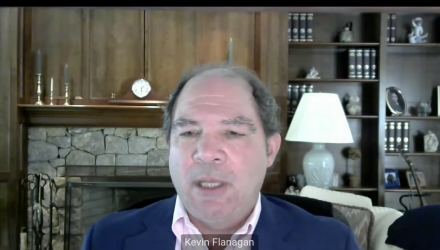
Kevin Flanagan, head of fixed income at WisdomTree, joined a VettaFi panel to break down the most attractive fixed income strategies.
Fixed income investors who want to diversify their portfolios in a challenging market environment shouldn't overlook CLOs.
Financial advisors will be working with millennials and Gen Z, either as new clients or as family members of existing ones.
Investors bearish on the dollar have generated attractive returns in the current environment with Invesco's UDN.
Advisors continue to seek out diversified strategies to gain stable income this year. In addition to the growing universe of fixed income mutual funds and ETFs, there are other alternatives to consider.
May 8, VettaFi will host an Income Investment Strategy Symposium. Income is top of mind for many investors.
For investors looking to add bonds, muni bonds remain an attractive option for an ideal blend of yield and stability.
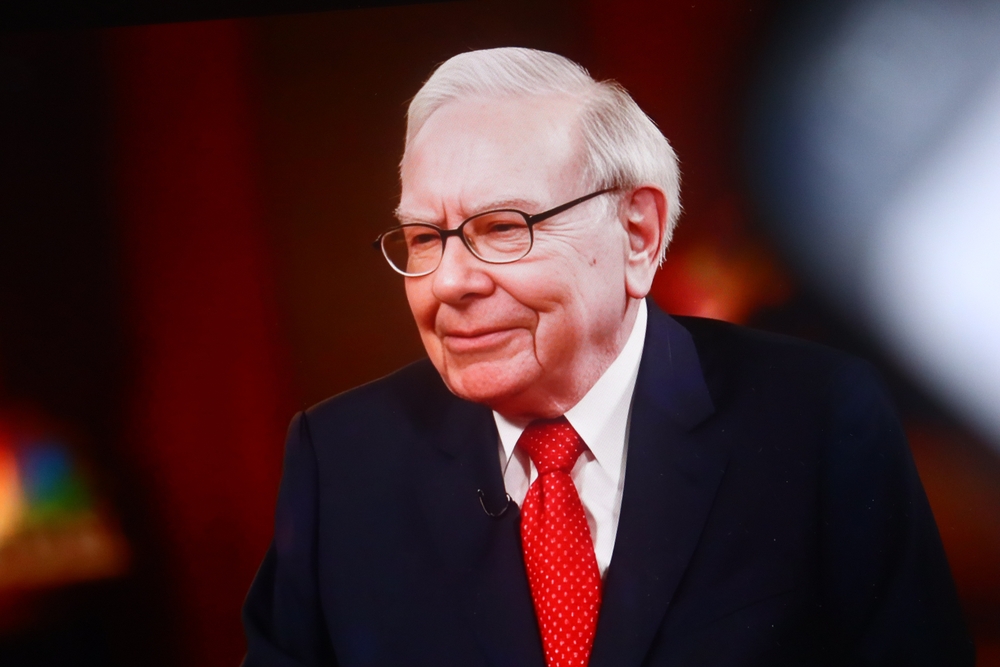
Warren Buffett is retiring, but his investment advice is likely to carry weight for years to come.
Last week's economic data arrived against the backdrop of a buoyant stock market enjoying a nine-day winning streak — its longest since 2004.a
At the end of April, U.S.-listed ETFs gathered approximately $360 billion of new money.
Vanguard is well-known for making investing more accessible, affordable, and efficient for investors over the past 50 years.
Investors are currently using leveraged ETFs to embrace market volatility, particularly in disruptive technology.
This week's economic data revealed a split in the housing market. New home sales unexpectedly surged while existing home sales declined.
Even with tariff uncertainty, there’s no stopping the engine of ETF creation. More than 288 new ETFs have already launched this year.
The utilities sector could offer up a safe haven sector that traders could also take advantage of during heavy market fluctuations.
It’s been another strong year for ETF demand. ETFs gathered approximately $350 billion of new money year-to-date through April 16.
For financial advisors, moving to independence and an RIA means navigating a sea of decisions, including business model types and vision.