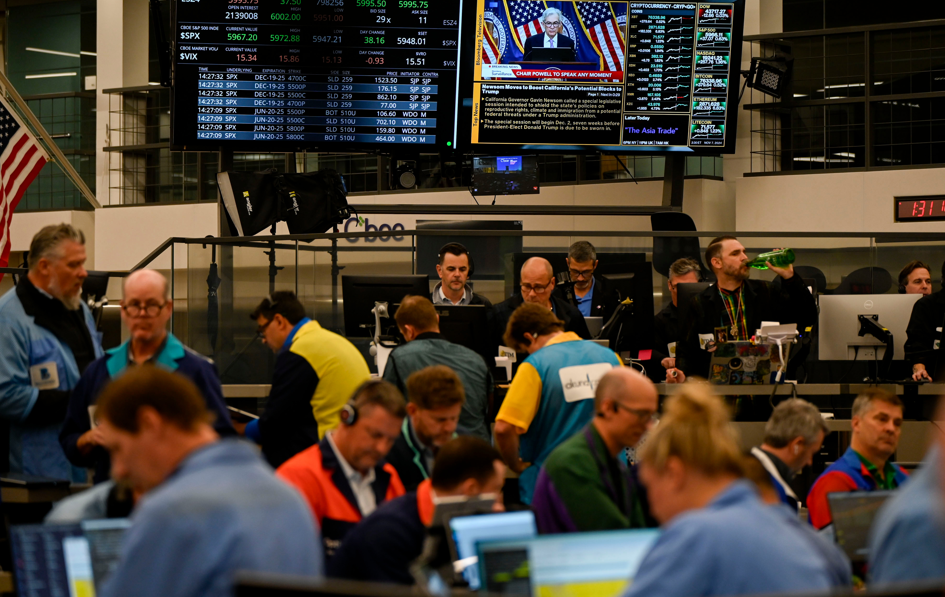
Stocks rose at the end of their best week in 2024 after solid consumer sentiment data and bets that newly elected President Donald Trump’s pro-growth agenda will keep fueling Corporate America.
The collapse of Germany’s deeply unloved and dysfunctional three-party coalition offers Europe’s biggest economy an opportunity for political and economic renewal. Two important questions arise: Will Germany put aside political squabbles and grab its golden opportunity.
Here’s something that would have seemed pretty much inconceivable two years ago: According to Zillow, home prices have now risen more in New York City and its environs since the beginning of 2020 than in metropolitan Austin, Texas.
Detroit voted overwhelmingly for Vice President Kamala Harris, but investors in “Detroit” backed President-elect Donald Trump. Shares in General Motors Co. and Ford Motor Co. jumped on news of Trump’s election win, with GM reaching a new high for the year and Ford up by almost 6% on Wednesday, more than double the S&P 500 Index’s gain.
Following the September FOMC meeting’s much ballyhooed 50-basis point (bps) rate cut, the voting members scaled back and reduced the Fed Funds by 25 bps this time around.
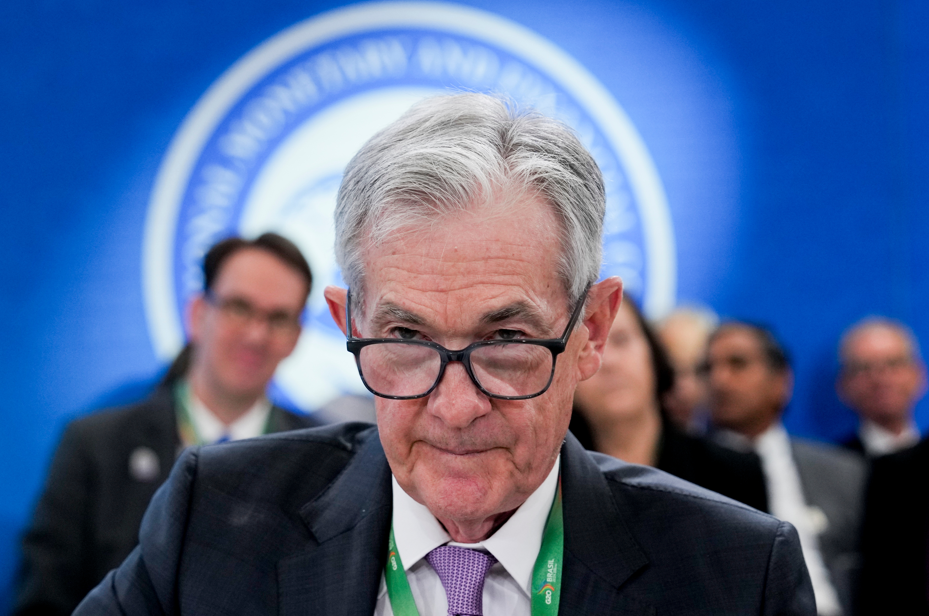
While investors and institutions were digesting the results of Tuesday’s elections, the Fed was meeting to determine the path forward for rates. Following on the 0.5% (50 basis points) start in September, the Fed cut rates by a further 0.25% today and the markets are forecasting another cut to come in December, but the odds of that move have ticked lower.
Volatility is likely here to stay until we get some level of clarity on the political landscape.
Western economies are inching towards soft landings, and their central banks are reducing interest rates. These developments will be helpful to economies in the Asia-Pacific region as they conclude 2024 and look forward to next year. However, the outlook for China remains a central concern.
Marc Pinto, Head of Americas Equities, and Lucas Klein, Head of EMEA and Asia Pacific Equities, say a surprisingly straightforward U.S. election could provide additional momentum to U.S. stocks through the end of 2024. But it remains to be seen how policy will impact future earnings—the real driver of long-term returns.
There’s a problem brewing in the world of ETFs: We are running out of ticker symbols. Bloomberg recently reported that, with so many new funds hitting the marketplace in recent years, issuers are forced to produce catchy four-letter ticker symbols rather than the more eye-pleasing three-letter abbreviations.
Corporate buybacks have become a hot topic, drawing criticism from regulators and policymakers. In recent years, Washington, D.C., has considered proposals to tax or limit them.
Stocks have had a habit of gaining ground no matter who becomes President.
The Exchange conference offers investors firsthand exposure to the ideas, strategies, and tools top-tier issuers are deploying.
Join the experts at John Hancock Investment Management for a webcast that unpacks the securitized market and explores how an active approach could fit in your portfolio.
Bentley Motors Ltd. is delaying a plan to offer only fully electric vehicles by 2030 as EV sales continue to disappoint projections across the industry.
Results from tech giants largely underwhelmed this earnings season — but they included plenty of good news for Nvidia Corp.
One of the memorable moments of Nvidia Corp.’s most recent conference for developers came toward the end of the chip giant’s semi-annual event.
Cerebrospinal fluid leaks, caused by tears or holes in the spinal cord, are rare and difficult to identify. Because the symptoms aren’t uncommon — including nausea, neck pain, ringing in the ears and debilitating positional headaches — patients can spend years without a proper diagnosis. Some have been told they have allergies.
The Federal Reserve is widely expected to lower its benchmark federal funds rate by a quarter of a percentage point on Thursday to a range of 4.5% to 4.75%. The big question is how much lower the Fed might go from there during this rate-cutting cycle. The bond market suggests it won’t be as low as some expect or as low as policymakers signaled less than two months back.
This is not a typical business cycle. We see structural forces holding inflation higher long term, keeping the Fed from cutting as much as markets expect.
The election is unlikely to influence monetary policy.
If we had to choose one indicator to watch over the next few months, it would be weekly initial jobless claims.
In this video, Chuck Carnevale, Co-Founder of FAST Graphs, a.k.a. Mr. Valuation will uncover value in the Consumer Staples Sector.
While the primary focus for the financial markets has been on the continued resilient U.S. economy and what the current Fed rate cut cycle will ultimately look like, there has been another topic that has been making the rounds in the bond arena: the budget deficit.
Dow Jones (publisher of The Wall Street Journal) announced that Nvidia (NVDA) will replace Intel (INTC) in the Dow Jones Industrial Average. Intel was brought in to replace Union Carbide four months and nine days before the peak in Intel’s stock price. Union Carbide became Dow Chemical via merger.
Over the past few years, investors and regulators have increased scrutiny of greenwashing.
Investors have been married to their money market funds for the better part of the last two years.
Better than expected economic data drove interest rates higher, changing the market narrative and contributing to an equity market pullback early in the month. This unraveled expectations of further rate cuts by the Federal Reserve (Fed) and resulted in real rates moving higher. The 10-year Treasury has moved up 48 basis points, ending the month at 4.27%.
ChatGPT may have sparked a revolution, but the real story of A.I., e-commerce, and cloud technology is much bigger. Discover where the next big opportunities are and how to gain exposure in your portfolio.
Things are looking up for bonds - learn what makes them a great addition to your portfolio right now.
Humans are wired for "self-focus," but shifting to "other-focus" can help advisors build better relationships with clients.
Members of successful teams generally get along with each other. Bev Flaxington offers some insights on how to cement those relationships.
The S&P 500 Index has returned nearly 81% since the last presidential election, with a wide disparity between performance of sectors.
The Fed’s rate cut last month has not jumpstarted U.S. housing market. Buyers need lower rates to get back in the game.
Commodities broadly declined on prospects that a stronger dollar and potential trade disputes under a Donald Trump presidency will weaken the appeal of raw materials in global markets.
At the height of summer, Europe had hoped that the coming winter would be its last difficult one to secure enough natural gas. By the middle of next year, liquefied natural gas was expected to turn into a buyer’s market, easing the squeeze the region has suffered since Russia invaded Ukraine. No longer.
The idea that money can’t buy you happiness is one of the world’s most persistent tropes. King Midas is granted his wish that everything he touches will turn to gold only to starve to death.
When Covid-19 brought the US economy to a standstill in the spring of 2020, America’s top executives called for a “national conversation” about the need for workers to return to work, warning of an “economic catastrophe” if they didn’t.
Credit risk fell in reaction to Donald Trump’s US presidential win, even though his presidency may be marred by tariffs and possible trade wars.
Tech adoption by advisors can improve client relationships, but they need to find the right tools.
Franklin Templeton Fixed Income believes investing in companies promoting gender equality and diversity can lead to inclusivity and strong financial returns. Despite the persistent gender gap, there's an increase in women in leadership roles, positively impacting financial performance, corporate governance and crisis resilience.
Enthusiasm for structural reforms is only going to wane.
U.S. equity-market leadership reversed course during the third quarter of 2024, with small cap stocks outperforming their large cap counterparts and the value factor beating the growth factor.
At GMO we have spent the last four decades taking a long-horizon approach to equity investing. Over time, a unique and reliable group of standout companies emerged from our research.
As you know, economists are normally criticized and accused of being ‘two-handed.’ This is because when we talk, we typically say, “on the one hand, and on the other hand.” Many argue that we are hedging our bets and lack the spine to take a position. While we disagree with that simplistic view of our job, we can understand why we are accused of being ‘two-handed.’
Last week's jobs report hit a "sweet spot" for the markets, confirming enough economic cooling to signal potential Fed rate cuts without yet sparking fears of a recession. I expect a 25-basis-point cut from the Fed this week and Powell may set us up for a data-dependent pause in December.
Cambria’s Meb Faber goes in-depth on ETF taxation, 351 tax-free conversions, and the firm’s innovative Tax Aware ETF (TAX). VettaFi’s Kirsten Chang offers a tour around the world of ETF flows.
VettaFi Voices dive into actively managed and fixed income trends in the ETF market in what is likely to be a record year for industry flows.
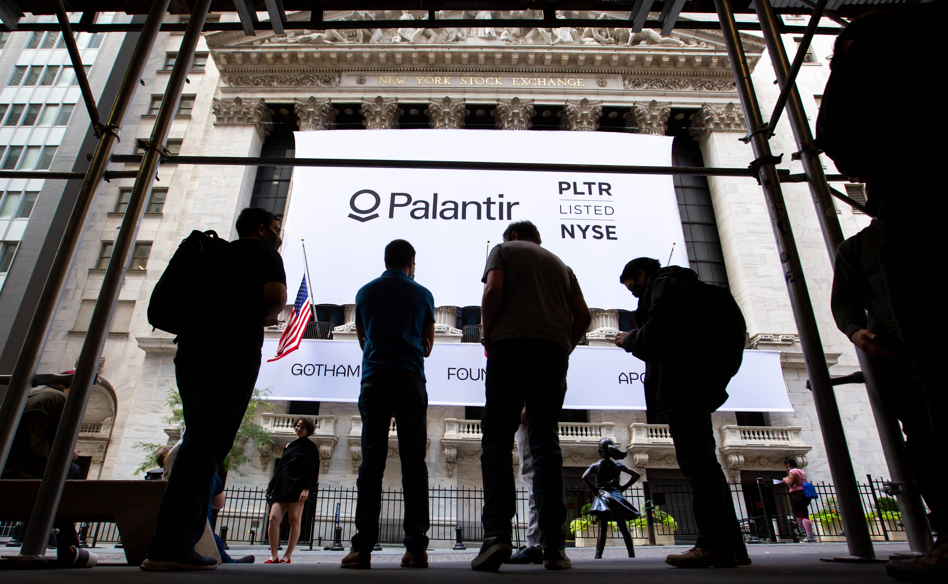
Palantir Technologies Inc.’s premium valuation will be put to the test when the data analysis and software company reports results after the market close on Monday.
Apple Inc. is exploring a push into smart glasses with an internal study of products currently on the market, setting the stage for the company to follow Meta Platforms Inc. into an increasingly popular category.