Drugmakers don’t have to dominate a healthcare portfolio. Equity investors should cast a wide net across the sector to find innovation and growth.
Our analysis explores how potential post-election tax policy changes might impact dividends, capital gains, and municipal bonds and how investors might prepare for different election outcomes.
Year-end can be an opportune time to review finances, rebalance portfolios, and possibly reduce taxes. Our Bill Cass shares some highlights from a year-end planning checklist.
In this article, Russ Koesterich discusses why he believes U.S. exceptionalism is a trend that is likely to continue.
The high cost of housing is prompting many individuals to consider downsizing, but advisors recommend gradually reining in spending habits.
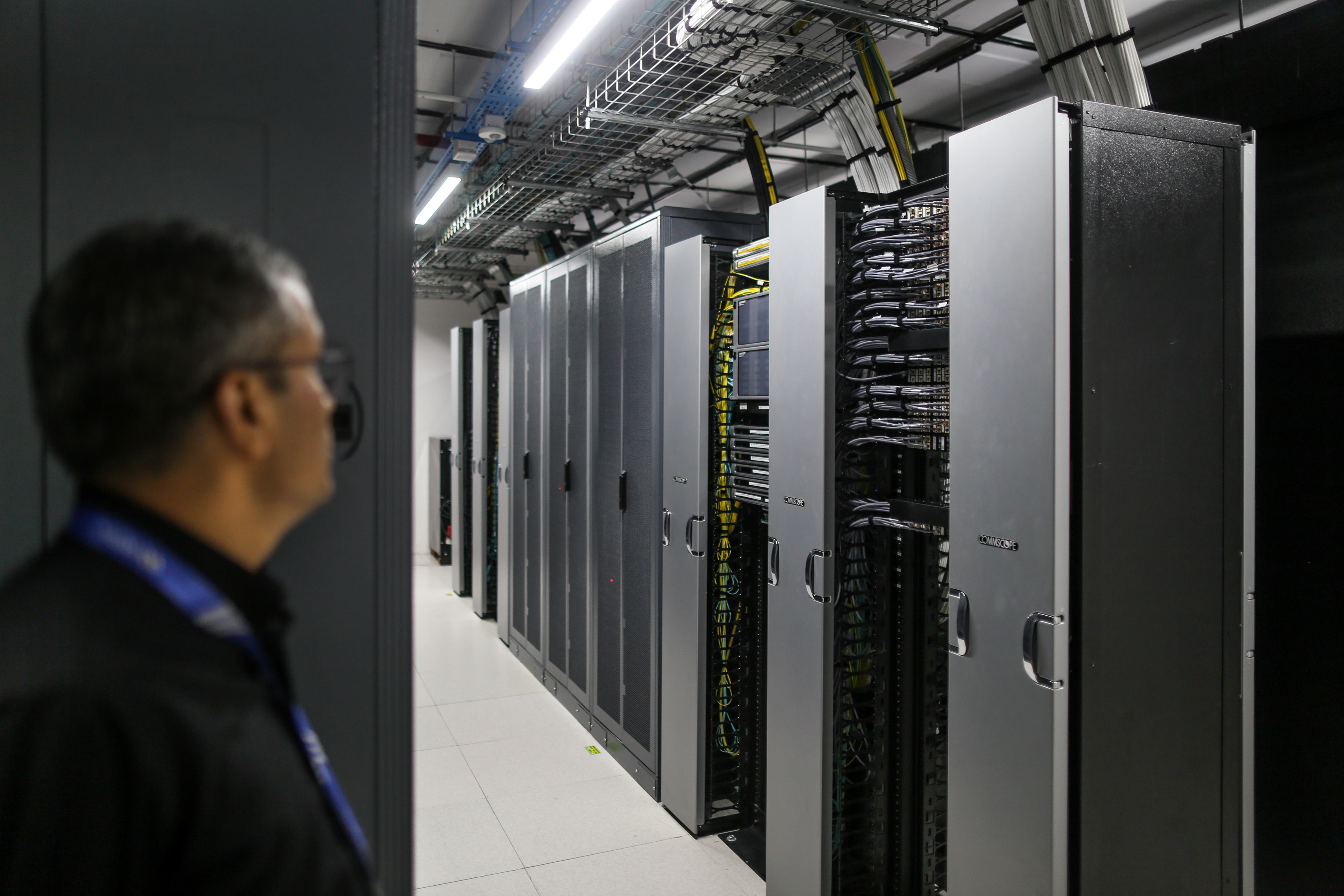
Data centers represent 1-2% of global power consumption. Goldman expects that range to grow to 3-4%, requiring record levels of energy production.
Cryptocurrencies have been a rollercoaster for investors, but Bitcoin is proving that it is here to stay. The question smart investors are asking is what the future of bitcoin holds.
Join the experts at CoinShares for a deep dive into the fundamental investment case for Bitcoin.
Today, Apple is having to become a different type of company. Its two most important products are being developed very much in the full view of the public, and I would say before they have met the previous Apple standard. “It just works” is now “we’re working on it.”
The most common questions we’ve been asked as the election approaches are generally about the Federal debt and deficits. Many investors worry about a looming “day of reckoning” for US debt. They fear the US’s fiscal imprudence will eventually force a sudden and dramatic repricing of US debt. In this insight, we explore the modern history of US debt to GDP across several Presidential administrations and outline why investors should not be worried about a financial apocalyptic abyss.
I was emailed several times about a recent Morningstar article about J.P. Morgan’s warning of lower forward returns over the next decade. That was followed up by numerous emails about Goldman Sachs’ recent warnings of 3% annualized returns over the next decade.
It’s a good time to buy asset-backed securities tied to data centers, according to a October research note from DoubleLine Capital LP, as demand for digital infrastructure is booming and supply is constrained by energy requirements.
Meta Platforms Inc. CEO Mark Zuckerberg will ramp up heavy investments in AI and other futuristic technologies, continuing a years-long tug-of-war between the company’s long-term bets and the core advertising business that provides the vast majority of Meta’s revenue.
For the land of free markets and open competition, the US has surprisingly little choice when it comes to payments. Americans use cards for most of their purchases, and most of those transactions are handled by just two companies, Visa or Mastercard, which levy billions of dollars of fees on the merchants that rely on them.
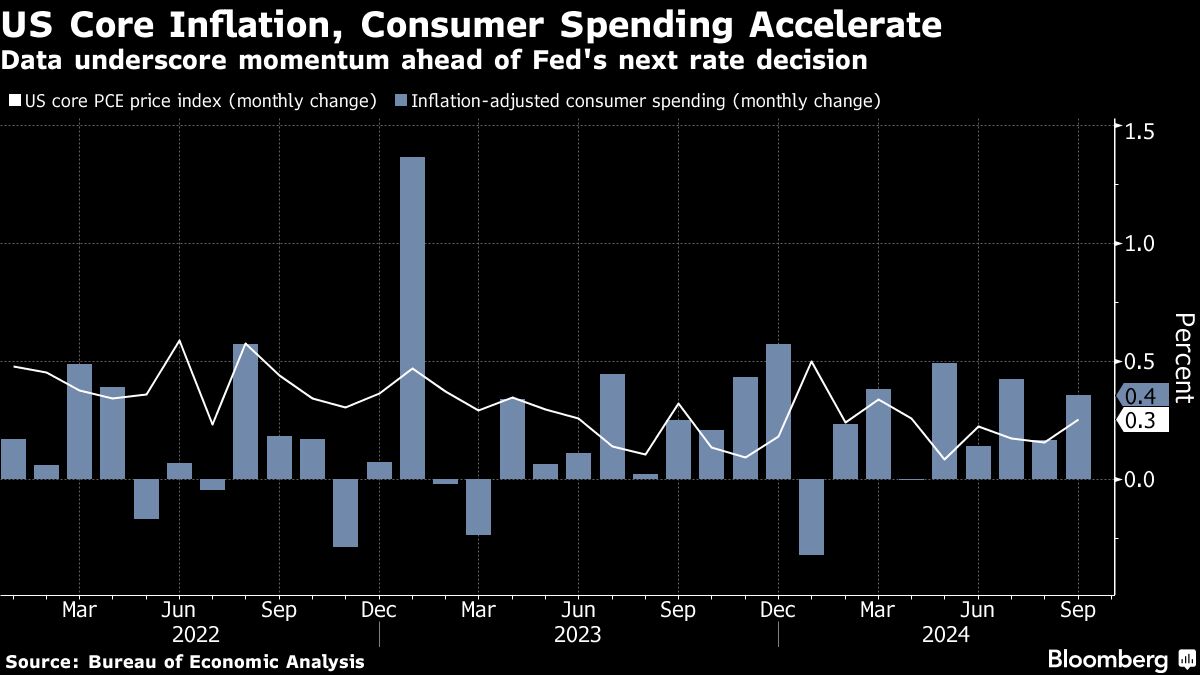
The Federal Reserve’s preferred measure of underlying US inflation posted its biggest monthly gain since April, bolstering the case for a slower pace of interest-rate cuts following last month’s outsize reduction.
Although investing in in-state municipal bonds may have tax advantages, there can be good reasons to buy out-of-state munis.
If Elon Musk sold plug-in hybrid vehicles, he surely wouldn’t call them plug-in hybrid vehicles, or PHEVs, or anything else that sounds coined by an engineer. Far too clunky. Surely “Cyborgtruck” would offer a more futuristic spin on these marriages of gasoline and batteries?
Equities continued to climb in Q3, with fixed income remaining steady despite international conflicts, inflationary pressure, and election-related uncertainty in the United States.
Derivatives are complex financial instruments with associated risks, costs, and potential payoffs.
Integrating the physical toll of climate change helps investors spot key risks—and opportunities.
Investment products have evolved, which makes understanding the latest trends and the portfolio construction landscape more crucial than ever.
In a corner of the credit market that regulators last year characterized as a potential hot-bed of greenwashing, there are signs that bankers have been cracking down on corporate pitches.
Gold rose to a record on Wednesday on haven demand before the US election, and held a narrow gain after jobs and GDP data that showed the ongoing resilience of the US economy.
Google parent Alphabet Inc. is showing an expensive foray into artificial intelligence is starting to pay off, delivering better-than-expected sales for its cloud-computing business and driving more usage of its flagship search engine.
To understand the wave of bank partnerships with private-credit fund managers during the past year or so, think back to the boom in mortgage lending through securitization in the early 2000s. The same forces are at work: a huge demand for finance, limited and costly bank capital and investment bankers’ ingenuity and desire to generate business.
In corporate-speak, when a company says a key target is “currently” unchanged but it plans to disclose a “review” soon, you know trouble is coming. And indeed, there’s trouble ahead for BP Plc.
Wall Street has been steadily raising the alarm on mega-cap concentration risks, and recent notes have cranked up the hazard level a notch.
Questioning leads to closing. A number of the advisors I work with are pretty good at engaging, asking questions and caring about the answers. However, they are really uncomfortable with the close. I promised you I wouldn’t give you coaching on “closing,” so I won’t.
I’ve identified long-term care as the greatest unsolved challenge in the field of goals-based retirement investing. This doesn’t make me Sherlock Holmes. Anyone who has requested a quote for LTCI knows we’ve got a problem.
While the overall market tends to respond favorably once the uncertainty of the election is behind us, it's important to recognize that there will be different winners and losers depending on the outcome.
The "ideal life" is a harmful myth that can distort perceptions of success and happiness. By recognizing different values and goals, you can foster a more inclusive – and realistic – understanding of what it means to lead a fulfilling life.
Deep value stocks are GMO Asset Allocation’s highest conviction investment idea. In a world where many stocks are being driven ever higher by positive sentiment and investor optimism, some fundamentally sound but unloved companies are being left behind, consequently trading at extraordinary discounts.
Earnings season is shaping up to be relatively strong so far, but the market will likely continue to shift focus to an increasingly murky sales picture.
State and municipal budgets are adjusting to life after pandemic interventions.
Yields have risen from the dead since their recent lows in mid-September presenting investors with an opportunity that many were scared had disappeared following the FOMC’s 50 basis point rate cut at their last meeting.
To paraphrase Milton Friedman: There are four ways in which you can spend money. You can spend your own money on yourself. You can spend your own money on somebody else. You can spend somebody else’s money on yourself. Finally, you can spend somebody else’s money on somebody else.
The latest AI-driven euphoria, led by big tech names that include NVIDIA, has dominated investment sentiment in the post-COVID era. Of course, many investors know that this has driven the U.S. equity market to an all-time high, stretching valuations to an extreme level (U.S. CAPE is at the 98th percentile of historical observations!).
Investment grade bonds have long been synonymous with a “core” fixed income allocation, but we believe a flexible strategy also belongs in most bond portfolios, as managers can adjust their exposure based on market conditions.
Throughout history one of the most significant features of the global business cycle is the synchronization of individual country economies.
Crossing a new ETF AUM threshold, Amplify ETFs has also launched new funds this year and may be set to intrigue entering 2025.
Most advisors grow by referral and word of mouth. But what happens when your clients stop talking about you? Here are three ways to start marketing.
Tradr ETFs’ Matt Markiewicz highlights the industry’s first weekly, monthly, and quarterly reset leveraged ETFs, detailing the issues they address and their potential uses in investment portfolios. VettaFi’s Cinthia Murphy explores the most interesting trends in this year’s ETF launches.
The greatest dangers to a portfolio during an election year are either external events or the investor’s own actions. An election year makes staying the course more important than ever.
Fed interest rate cuts have historically been good for small-cap stocks with falling inflation rates acting as a tailwind for small-cap valuations.
Alphabet Inc. shares have gone nowhere for months, trailing Magnificent Seven peers as investors struggle to price risks confronting the company. It’s a stretch to believe Tuesday’s results will blow away those concerns.
Despite recent headwinds from a strong U.S. dollar, EM local currency bonds present a compelling investment opportunity.
The titans of finance who congregated in Riyadh this week for Saudi Arabia’s annual Davos-style confab were mostly upbeat on the prospects for the US economy, but concerned about more sluggish growth in Europe.
If you’re unfamiliar with synthetic risk transfers, there’s a chance you’ll hear all about them when the next financial crisis hits. They’re the latest way for big banks to game rules designed to safeguard the system, and they’re growing fast. So far, regulators seem all but oblivious.
The US presidential election Nov. 5 is shaping up to be the mother of event risks so you’d think the safest of all havens would be holding up. But it’s not — and that’s only one of the notable anomalies springing up in financial markets. Yields on 10-year US Treasuries have risen nearly 70 basis points since the Federal Reserve's punchy half-point initial rate cut on Sept. 17.
Apple Inc.’s iPhone exports from India jumped by a third in the six months through September, underscoring its push to expand manufacturing in the country and reduce dependence on China.
This week’s economic indicators continue to reflect a resilient U.S. economy despite the ongoing pressure from higher interest rates. Jobless claims dropped to 227,000, indicating a steady labor market. Durable goods orders came in strong, aligning with estimates, and GDP growth for Q3 is expected to come in between 3% and 3.25%, a robust figure by most standards.