While many lessons have evolved over time, one maxim has never changed for children: look both ways before crossing the street. I reinforced with my children to then look again. We might not see everything on a quick glance, and traffic can change quickly.
Two weeks ago, the International Monetary Fund (IMF) issued an updated World Economic Outlook. In it, the IMF edged up its global growth forecast for 2025, suggesting that U.S. tariffs haven’t turned out to be as damaging as the Fund anticipated in April.
These shifts are not signs of stress; shortfalls have been minor, and relief systems are working as intended. However, we can be certain the era of excess liquidity has ended. Fed speakers have characterized the pandemic-stimulated economy as one of “abundant reserves,” with bank reserves elevated beyond their natural level.
Global equity markets have surged this year, in spite of moderate economic growth and an accumulating series of risks. This has led some to worry that valuations have been stretched a little too far. The same can be said of credit markets, which have seen spreads fall to levels last seen in 2007.
U.S.-China frictions continue, highlighting that greater volatility is likely not a bug of the current trade stand-off but a feature of the emerging geopolitical landscape.
Not all low volatility strategies are created equal. The goal may be simple — smoother returns with less risk — but execution determines success. Portfolios built only on historical volatility can leave investors vulnerable.
After an extended period of surprisingly resilient economic activity, marked by buoyant consumer spending and robust labor market gains, the U.S. economy is shifting gears. The sprint phase, characterized by fiscal tailwinds and pent-up demand, is giving way to a more measured pace.
Broad measures of the U.S. economy are strong. Stock market indices have set new record highs this year.
In high-stakes negotiations, there are usually a series of threats and retreats before the final handshake. Each side uses bargaining chips to shape the outcome of the discussions. But bargaining chips don’t always lead to bargains.
So while there is a lot of focus on drug prices, measures taken to date are unlikely to make a meaningful impact on costs paid by the U.S. and its citizens. More fundamental reform would likely take an act of Congress, which would be hotly contested by lobbyists. There is no end in sight for debate on this front.
We examine the broader implications of China’s threat to expand restrictions on rare-earth exports.
Argentina's latest lifeline does not address the nation's structural issues.
The GENIUS Act shows the way forward for payment stablecoins.
With the U.S. government shut down, the Labor Department was unable to release the monthly employment report on October 3. You could almost sense the economics community experiencing a kind of withdrawal, not sure of how to cope with the deprivation of data.
Private equity secondaries transactions likely will surge to a record in 2025. Learn what’s driving institutional investors to use them.
Labor markets are not keeping pace with young adult populations.
The office real estate sector is working through a difficult cycle.
Powering intelligence: the molecules, metals, and markets behind AI.
How the shutdown may impact the Federal Reserve, the economy, stocks and bond yields.
Central banks are walking a tightrope, carefully fine-tuning their next moves as they face lingering inflation and subdued growth.
Oil prices are notoriously difficult to forecast. Production can be volatile, and the global oil supply chain is complex.
Back in the day, the arrival of the postman was a big deal. E-mail and texting existed only in the dreams of technologists, so people communicated with one another by writing letters.
Investors are increasingly confident that the U.S. Federal Reserve will cut interest rates several times through mid-2026, signaling a more aggressive easing cycle.
Clearer policy and lower rates are favorable for growth.
Healthcare costs will be a chronic pain.
France, Britain, and the Fight for Fiscal Credibility
China continues to struggle with deflation. Producer prices have been falling for more than two years, and consumer prices have been essentially flat over that time.
The Fed lowered rates by a quarter of a percentage point (0.25%) at its September meeting, citing increased risks to employment; Powell emphasized ongoing inflation and a divided Committee, with future moves dependent on incoming data.
Cuts are in store, but decisions will be weighed carefully.
Today, volatility isn’t a blip on your radar; it’s the landscape. The question isn’t if, but when the next market shaking event will hit your portfolio. So, are you equipped—or exposed?
Gold, digital gold (blockchain-backed gold), and critical minerals are drawing interest as money supply grows and certain resources become scarcer.
The U.S. economy has thus far avoided recession, yet growth has decelerated and economic risks persist.
Independent central banks are a relatively recent concept.
Relations across the English Channel have stabilized.
Powell’s speech seemed to give an all-clear signal for a cut in September. The speech started with a focus on the softening labor market, concluding it is in a “curious kind of balance” with rising risks of layoffs.
Radical policy changes can launch new economic eras.
The year to date has been complicated by a cloud of uncertainty as a new U.S. administration took the world economy by storm.
Fed Chair Jerome Powell’s comments at Jackson Hole shifts the outlook for interest rates.
China’s economy has propagated itself through branches like trade, finance and infrastructure. But supply chains are where its roots have thickened into trunks, particularly across Southeast Asia.
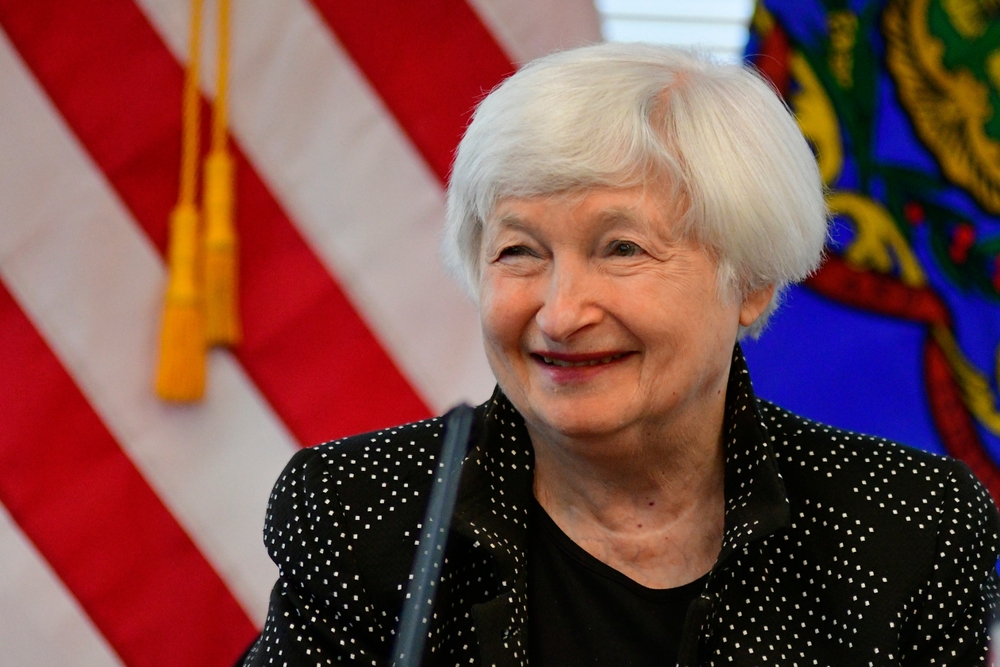
Few have accomplished as much as Janet Yellen during the course of their careers. She broke two significant glass ceilings, becoming the first woman to serve as the Chairman of the Federal Reserve and as U.S. Treasury secretary.
AI’s long-term potential remains strong, but supply chain risks and uneven adoption may impact near-term gains.
Resilient data continues to fuel market momentum, but policy risks and global fragility remain close behind.
Switzerland lacks leverage to challenge punitive tariffs.
Limited price collection will complicate estimates of inflation.
Younger workers are facing difficult employment prospects.
The U.S. economy is like a finely tuned sports car—powerful, tough, and built for speed. It has managed to climb steep inclines in recent years, competently maneuvering past multiple roadblocks.
A cooler labor market was long in the making.
Trade deals demonstrate that tariffs are here to stay.
A sharp shift in Fed expectations may trigger bond-market volatility while concerns about the economy may impact equities.
U.S. trade strategy is a top worry among economists.