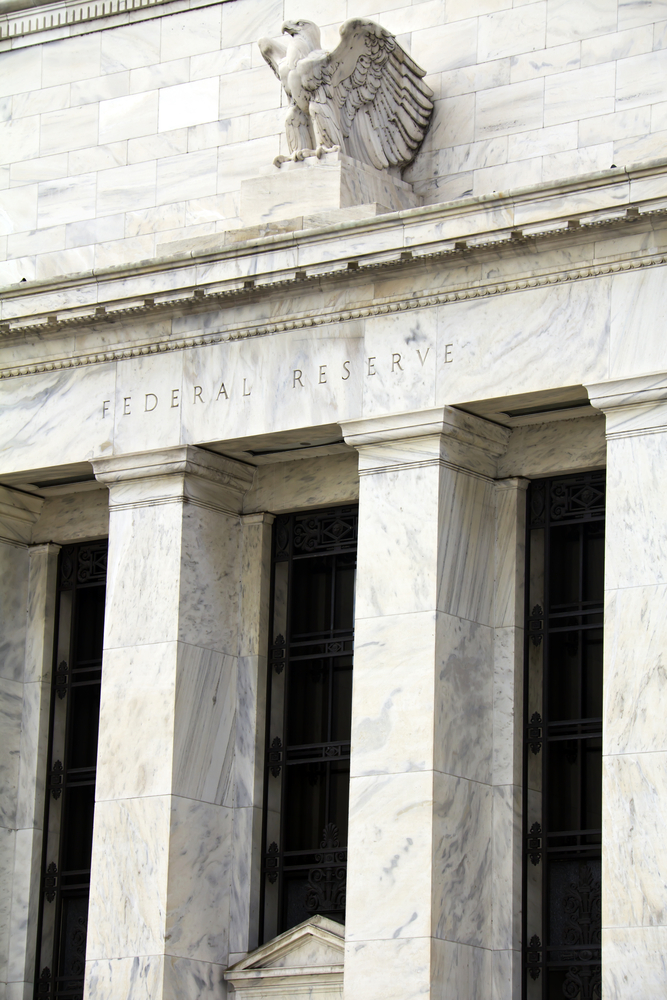
Interest rates remain one of the primary concerns for investors as Kevin Warsh has officially assumed leadership at the U.S. Federal Reserve (Fed). While we believe the possibility of a rate cut has diminished considerably, we are not yet expecting additional rate hikes.
As we enter 2026, the U.S. economic momentum continues based on the foundation of a solid private sector with fiscal and monetary policies also contributing to growth. As we refine our global asset allocation, we maintain a diversified overweight stance on U.S. equities despite relatively high valuations.
The U.S. economy appears poised for a measured and confident expansion into 2026 driven by a stabilizing monetary policy, corporate strength, and resilient household income growth. Our outlook suggests a supportive environment for risk assets, particularly domestic equities, while favoring specialized strategies in fixed income.
As investors enter the distribution phase of their financial lives, the priorities of portfolio construction shift dramatically. Liquidity becomes essential, diversification grows more important, and the ability to meet income needs – sometimes by tapping into principal – must be balanced against risk and market volatility.
Though we are getting limited amounts of economic data during the federal government shutdown, the official and private sector data we are receiving generally paints a positive picture for U.S. economic activity.
After decades of increasing global integration, signs of geopolitical and economic fracturing are becoming more visible.
The U.S. economy in late 2025 presents a complex but increasingly coherent picture. Labor market dynamics, trade policy uncertainty, and evolving monetary conditions are each contributing to a recalibration of the economic landscape.
The U.S. dollar has experienced a notable decline in value this year relative to a broad basket of foreign currencies. This depreciation has meaningfully affected the investment returns of U.S. based investors holdings in international stocks and bonds.
The U.S. economy grew at a surprisingly strong annualized rate of 3.0% in the second quarter of 2025, which far outpaced the post-2000 average of 2.3% and easily beat expectations.
The U.S. economy remains resilient despite headline volatility tied to shifting trade and tariff policies. Meanwhile, we continue to see a lot of volatility in the economic data as the world adjusts to these changing policies.
As 2025 progresses, investors and policymakers are navigating a highly complex economic landscape shaped by three powerful and interrelated forces: evolving trade policy, a cautious U.S. Federal Reserve (Fed), and growing concerns over U.S. fiscal discipline.
Similar to the equity market’s response to the recently announced tariffs, the bond market responded with a widening of credit spreads. These spreads represent the difference in yield between a U.S. Treasury bond and other bonds of the same maturity but different credit quality.
Recent revisions to the IMF’s World Economic Outlook reflect a sobering message: the world economy is entering a more volatile and fragmented era.
Our Cash Indicator methodology acts as a plan in case of an emergency. Importantly, each of these systems work together.
The current market unrest over the potential for tariff increases and their impact is unpredictable. The volatility can be unnerving.
The equity market tends to see a correction every 18 months. If it's not a recession-induced bear market, it may be a buying opportunity.
The U.S. housing market has been a critical factor in the broader economic landscape, and its trends have profound implications.
We manage risk tactically over the short-term by investing across a broad array of themes and asset classes including cash.
The decision to drill for oil is not primarily driven by government mandates or regulatory pressure, but rather by market forces.
Investors should not be overly distracted by the recent spate of political headlines and social media updates.
Nothing is more fundamental to the current health of the economy than jobs creation and income growth.
Our Cash Indicator methodology acts as a plan in case of an emergency. Investors should expect more equity market volatility ahead.
The U.S. economy is experiencing a remarkable period of economic stabilization and growth
China’s economic ascent over the past four decades has been a remarkable story of growth, driven by several factors.
Our Cash Indicator methodology acts as a plan in case of an emergency. This is analogous to the multiple safety systems in a modern automobile, which includes an airbag. Importantly, each of these systems work together to potentially help smooth the ride.
The housing market inderwent huge transformations in recent decades with the aftermath of the Global Financial Crisis & the COVID-19 pandemic.
With the backdrop of U.S. Federal Reserve (Fed) headlines in addition to the shifting narratives of the election season, we have been focusing on what we are calling the Great Normalization as overall economic trends in the U.S. are getting back to normal.
Fed easing cycles and lowered target interest rates impact various economic sectors, such as mortgages, consumer credit and cash investments.
The yield curve measures the difference between short-term, intermediate-term, and long-term Treasury yields.
In an election year, we are bound to hear a lot of commentary about the merits and drawbacks of both major candidates’ economic policies. History shows that while a president’s policies can make life easier or more difficult for various sectors of the economy, U.S. Federal Reserve (Fed) policy has much more impact on the economy overall.
We manage risk within our strategic, long-term allocations based on diversification across equity, fixed income, and alternative assets.
In terms of manufacturing, value added, which is basically the value of the output minus the costs of the input, the U.S. produces almost twice as much as Japan, more than three times as much as Germany, and five times as much as India.