The real issue comes when these investments are held in tax-advantaged accounts like a 401(k) or traditional IRA. Since the income is generated by a partnership, it will be considered Unrelated Business Taxable Income (UBTI) in these types of accounts.
We are living through what Torsten Slok of Apollo Global Management calls a K-shaped economy, with the two arms of that K moving in radically different directions.
Everywhere I go, people ask me what’s next for the economy. My answer depends on what they mean by “next.” Today I’ll review some of the alternate employment and inflation data to see where we stand. There’s a lot we know and a lot we don’t know… but for the big decisions, we probably know enough.
Everyone is wondering if we’re in another tech bubble. Tech companies are breaking valuation records, with Nvidia Corp. leading the charge. On Wednesday, it became the first company ever to reach a $5 trillion market cap.
My series on Ray Dalio’s book raised a bunch of questions, one of which stood out above the others. To paraphrase, readers asked, 'How do we get ready for this?' It is certainly fair for you all to ask what I am personally doing to prepare for the big picture I anticipate. It’s tough to answer because the coming debt crisis could unfold in many different ways.
It’s not just the US, China, and Japan that have debt issues. It’s a large portion of the developing countries, and especially Europe. The developed world now has as much debt in terms of GDP as it did during the Napoleonic Wars. And as much or more debt (and growing!) than it did following World War II.
The Fed’s balance sheet has two sides: On the asset side are Treasury bonds and mortgage-backed securities—the financial instruments the Fed buys to inject money into the economy. On the liability side are the reserves that banks hold at the Fed, along with physical currency in circulation.
Debt-driven growth definitely feels good. We all enjoy it immensely as long as it lasts. Then the lights go out and the party’s over. Yes, it starts again, but not until we all stumble around in the dark for a while.
Today we’ll go through the steps central banks typically follow through the debt cycle. Then we’ll contrast them with what central banks could do that might actually work.
There’s a concerning undercurrent running through the US labor market. The unemployment rate has been steadily climbing. That’s unusual. Typically, when unemployment goes up, it spikes.
Debt is a curse that can also be a blessing, depending on how the borrower uses it. Sadly, human nature seemingly ensures we often use debt unproductively—and not just as individuals. Governments have their own special way of using debt to buy benefits (and votes?) today that future generations will pay for.
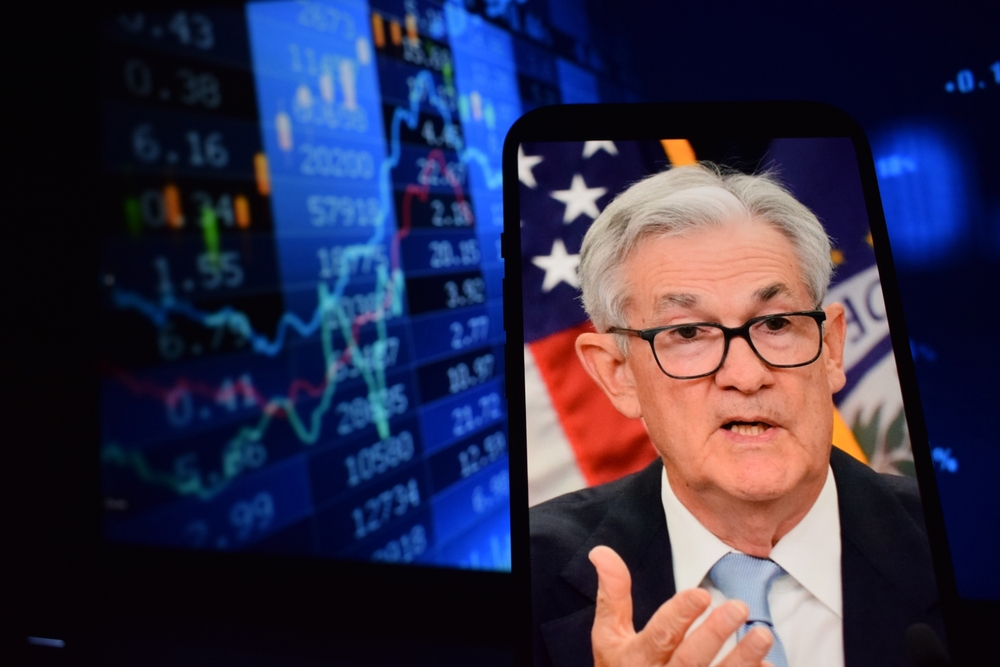
The newest member of the Federal Reserve Board, Stephen Miran, recently outlined his reasons for wanting interest rates to come down by roughly 2 percentage points—far more than any other Fed member.
There’s small change and big change. The small ones are notable: recessions, market crashes, etc. You’ll see several in your lifetime. The greater changes tend to be technology-driven: the Industrial Revolution, the internet, and now maybe artificial intelligence, robotics, and what I’ve called the Age of Transformation.
When I first wrote to you about quantum computing in October 2024, I called it the “next big thing.” Many readers agreed that the potential of quantum computing was exciting but felt it could be a decade or more away from commercial viability.
I am growing more and more convinced that we simply can’t rely on historical precedents anymore. Economics is about human decisions, and humans, at least in a broad sense, seem to be making decisions differently than they did before the pandemic. I think we don’t fully understand how much has changed—for employment, inflation, consumer behavior, and more.
No one wants to be a party pooper. It drives away friends and makes you generally unpopular. But if you are a monetary policymaker, ending the party before it gets too wild is quite literally your job.
The average household feels inflation as rising living costs, of which shelter is usually the largest. This will be today’s primary topic. What is going on with housing costs, and is there any hope for relief?
Much of the data we see today indicates the economy is fine. Stocks continue making new highs. Consumer spending is shattering records. Unemployment rates remain low. Yet a single anecdote can dispel the illusion that everything is truly fine for the average American.
Curiosity gave birth to philosophy. Ongoing intellectual curiosity is still driving investment success thousands of years later.
Today is the day that analysts and investors have been waiting for the entire earnings season—earnings and updated Q3 guidance from NVIDIA Corp. (NVDA).
Our economic-number friends are behaving badly, leaving us unsure where to turn. Maybe in time we will see who was right and wrong. This week we’ll look at some of the data and then at the wide array of diverse opinions from my favorite sources.
Since the global financial crisis, value investing has been a lonely grind. Yet I know several managers who never gave up on value, and others who are uncomfortable with tech valuations and have been reallocating to lower P/E stocks.
With economic data, the challenge is that our instruments are more error prone. The monthly jobs reports rely on employers responding to surveys correctly and quickly.
Almost everything we think we know about the economy comes from initially flawed data. Jobs data, inflation data, spending data, production data, all of it is imperfect. There is no certainty in this business. But that doesn’t make the data useless.
Today, let’s take a look at a company sitting at the center of all these technologies. It’s a great example of the outsized potential and the volatility that often come with investing in companies on the edge of big breakthroughs.
Cutting to the chase… prepare to muddle through. I should point out that I felt that 2025 would be a Muddle Through year at the beginning of the year. We will talk about that below plus look at a lot of charts and yesterday’s rather poor employment data…
Today I’ll continue talking about uncertainty. I want to highlight the complexity we face and also describe the jarring surprise some of us feel when our most trusted sources say things we didn’t expect… and the importance of listening to them anyway.
This week, the White House released America’s AI Action Plan. This plan is the clearest signal yet that Washington now views AI as launching the next industrial super-cycle.
Last week, we covered my concerns about AI’s impact on jobs. This week, we’ll take a look at its impact on energy demand and who pays for that energy.
Unfortunately, the lush financial terrain we enjoyed from 2008 to 2022 was more like artificial turf. It wears out, gets ugly holes, and eventually needs replacement. But how to replace it without causing other problems? That turns out to be a real problem.
If owning a specific stock is keeping you up at night, then it’s time to sell.
There’s a connection between our willingness to let the debt problem fester and investors throwing their money into a wildly overvalued stock market. In both cases, we’ve grown way too comfortable with uncertainty.
Most of us are not prepared for the incredible degree of change Artificial Intelligence (AI), combined with automation, is bringing to society.
We are in a period of market greed right now, even if you haven’t noticed it.
In last week’s letter, I referenced Torsten Sløk’s excellent midyear outlook for Apollo Global Management. Today I’ll share some longer quotes which will, I hope, help you visualize where the economy is headed.
Until that US government debt-crisis moment arrives, which we will get through, things will muddle along.
Money doesn’t buy happiness. But financial security means you can devote your time and energy to things you actually want to be doing.
This week the news is about the Israel-Iran conflict. It’s terrifyingly real for those in the crossfire, while we who are safe naturally wonder what it means for us. As investors, we think about the economic and market effects. But are we seeing signal or noise?
Separating the signal from the noise may be the hardest challenge investors face. We’re all surrounded by constantly changing but mostly unimportant information. Of the small part that really is important, we must decide if it affects our investments.
Today we’ll continue our SIC highlight series featuring a relatively new face who is now indispensable, plus some new ones who were crowd favorites.
Today I’m going to highlight some speakers who added an equity market perspective to their big-picture views. Getting both right would be much easier if more investors behaved rationally. Alas, they don’t, which is why stock prices do incomprehensible things. Fortunately, you can succeed without catching every twist and turn.
My next few letters will share some initial thoughts from SIC organized around the major topics. Today we’ll start with inflation, and specifically the sharply different views of David Rosenberg and Jim Bianco, then balance them with some thoughts from other speakers.
This is the story of how we got to a moment in history defined by global and national crises. It is the story about how a radical geopolitical transition is taking place as old socio-economic and institutional cycles in the US end and new ones begin.
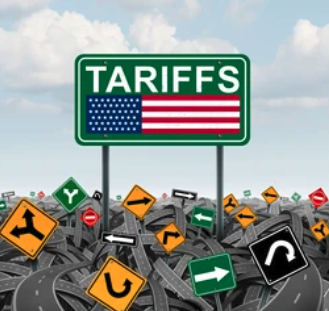
I’ve been writing about tariffs for a couple of months now, focusing mostly on the macroeconomic harm and the costs they impose on small businesses. Today I want to consider something else: the new risks they are adding to the financial system alongside the old risks.
I hate to be the one to break it to you, but the economy and the markets are not working efficiently. It’s been that way for at least all of my adult life (2008), and maybe a handful of years before that.
Economic data can be soft or hard. “Soft” data reflects attitudes, expectations, opinions, and feelings. It’s a step removed from the “hard” data reflecting actual events. Soft data is still valuable because future expectations shape the hard data that follows.
I don’t believe the current level of tariffs will be maintained. I think most of them will be walked back, and the country will adapt to, say, a 10% tariff here and there. The Chinese (and a few other countries) tariffs are different in that they will have a more significant impact.
Today we are going to look at some of the uncertainties in our world and then explore some ways to gain a little certainty.
If I had a dollar for every time I heard or read the word recession in the last week, well, I’d have enough not to be financially worried about one. Add a dollar for every mention of tariffs and I’d be comfortably flushed with cash.
You probably noticed we are having one of those “weeks when decades happen.” Notice also, however, that we are still here. Your investments and businesses may be bruised but you’re still in the game.