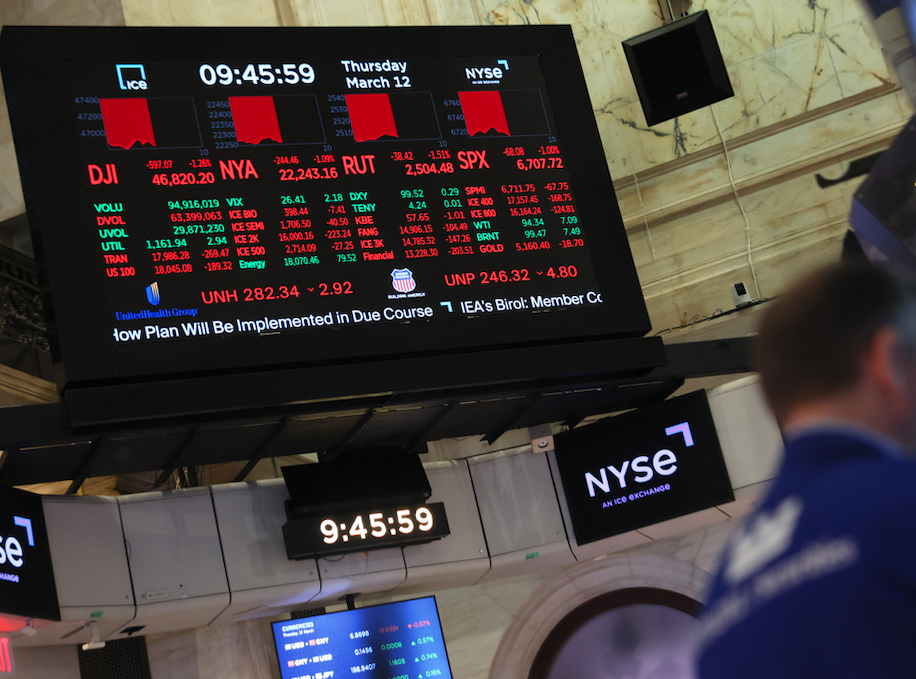
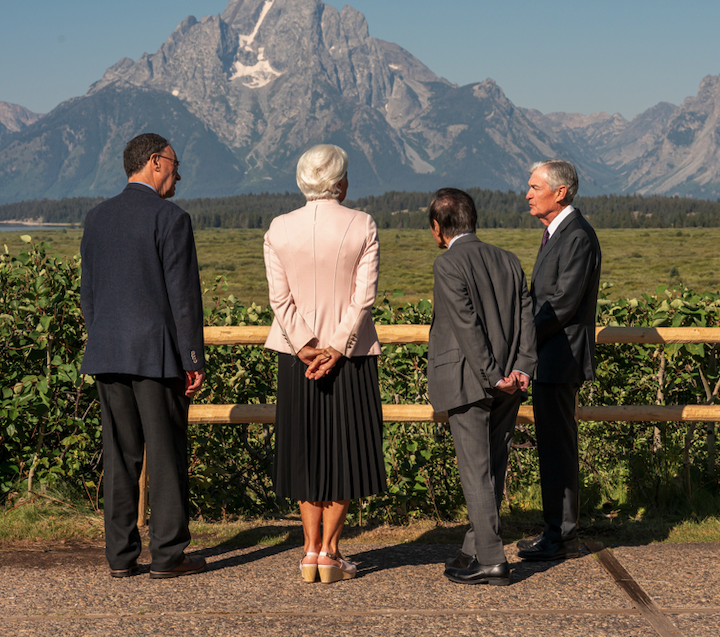
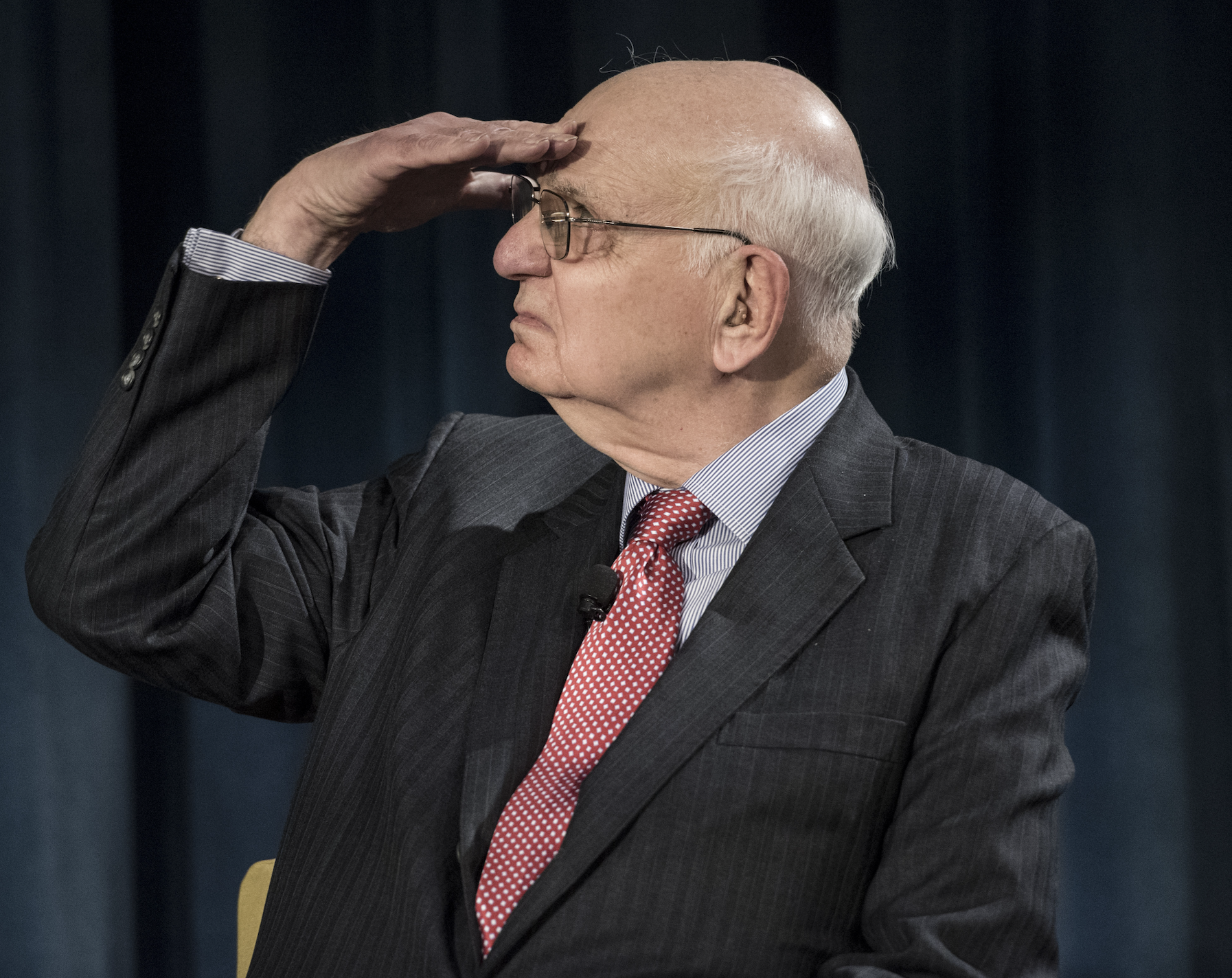
Alan Greenspan, the titan of global central banking who led the Federal Reserve during decades of prosperity, has died at 100, just when elements of his free-market philosophy are experiencing a renaissance.
All of this is a warning to other developed markets with debt levels on the verge of exceeding their gross domestic product. Following the Truss chaos of four years ago, the market has decided to approach the UK through a lens of always assuming the worst, a default that continues to cost British taxpayers in the form of higher interest rates.
Financial markets generally displayed exuberance Monday after the US and Iran agreed to an interim peace deal to reopen the Strait of Hormuz. Oil prices fell to the lowest since early March and the S&P 500 Index surged, leaving it just a few points below its all-time high reached at the start of the month.
There’s a whiff of panic among investors these days. US Treasury yields have climbed to levels unseen in more than a year at the same time as a furious rally has left stocks near all-time highs. Surely, both moves can’t coexist for long, goes the narrative.
The next 12 months are expected to bring a bumper crop of mega initial public offerings to market. Billionaire Elon Musk’s rocket, satellite and AI company SpaceX has reportedly filed for a potentially record-breaking offering.
The US economy looks amazingly resilient on the surface. Notwithstanding the two-month Covid-19 recession of 2020, the US hasn’t experienced a downturn since the end of the financial crisis in the middle of 2009.
Modern markets have gotten used to central bank support whenever the global economy wobbles. But as the world confronts a fresh energy shock unfolding against brittle labor markets, investors need to prepare themselves for the possibility that central bankers won’t have their backs — quite the opposite.
The scariest portmanteau in macroeconomics is making a comeback in market discourse: stagflation.
The public loves to hate short sellers, the investors who profit from declining securities’ values. Their bad reputation is mostly undeserved. In reality, many provide a valuable service, taking the other side of frauds and bubbles, and generally helping drive prices toward a semblance of fair value.
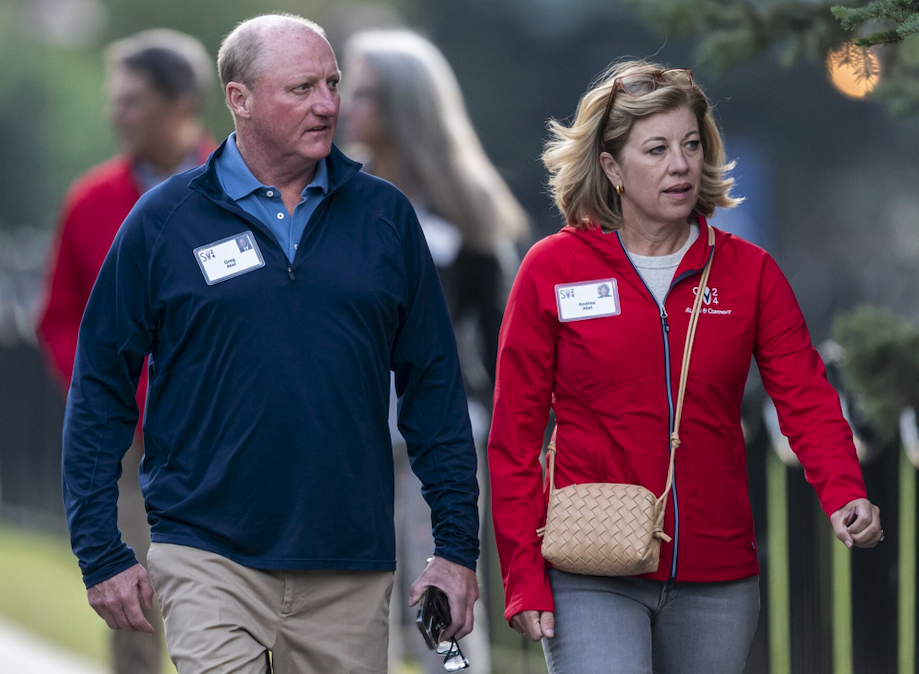
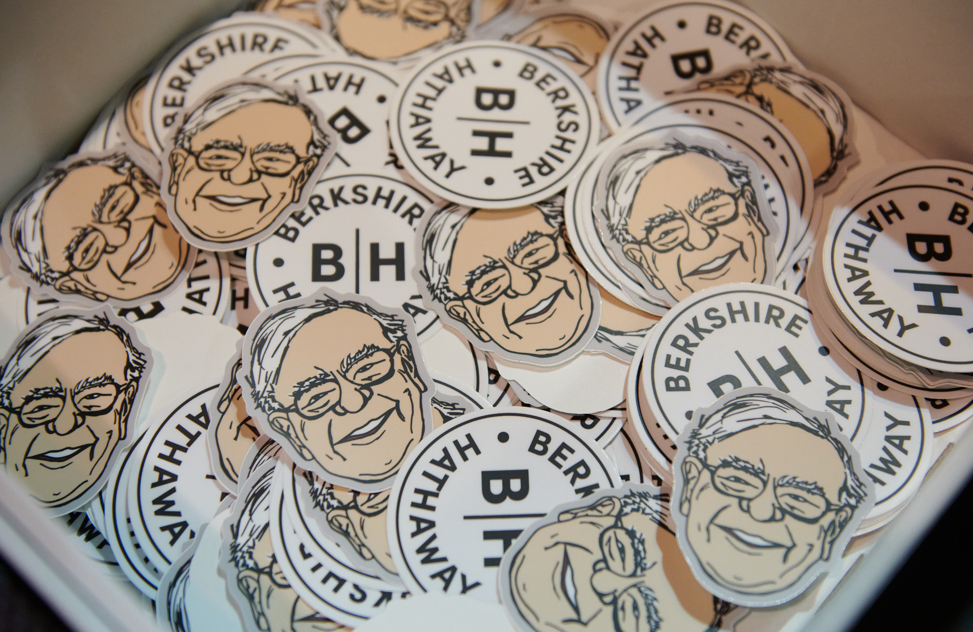
Greg Abel has passed his first test since taking over from Warren Buffett as Berkshire Hathaway Inc.’s new chief executive officer. In his introductory shareholder letter, he emphasizes that Berkshire’s culture runs far deeper than a single man. Yet, almost in the same breath, he tells us not to worry — after all, Buffett is still lurking around the office.
It’s been a wild few months for software and other “middleman” stocks. First, there was “SaaSpocalypse,” in which investors dumped enterprise software purveyors that help companies manage accounts and internal workflows.
The S&P 500 Index is in the midst of a tug-of-war. Companies are beating earnings per share estimates by significant margins and are set to deliver impressive 12% growth this reporting season.
The best growth opportunities are overwhelmingly found among highly scalable technology and communications companies. Many of them get started with the help of venture-capital funding and are already behemoths when they go public.
The US economy seems to be in the throes of one of its biggest bursts of productivity in decades, weighing on business labor costs and hastening the disinflation process.
It’s crystal ball season again on Wall Street — the time when strategists attempt the impossible task of divining where the S&P 500 Index will end the next calendar year.
Imagine I get extremely rich like Michael Burry on a contrarian short position. I’d immediately cash in my chips (but I wouldn’t tell anyone I was “semi-retiring” from the game).
For investors, a concentrated portfolio of equity-market winners tends to work just fine — until it doesn’t. At the moment, the S&P 500 is a case in point: Its earnings remain both spectacular and spectacularly concentrated around the artificial intelligence story.
Innovation and influence are very distinct phenomena. Bob Dylan, for instance, didn’t invent folk music: He borrowed extensively from Woody Guthrie, Pete Seeger and others in the folk revival movement of the fifties and sixties, yet he became far more influential than any of them.
It’s important to remember that QT, at least in the current context, was never really a proactive policy. Rather, it’s the undoing of a policy — quantitative easing — that the Fed used to support markets and the economy during the Covid-19 pandemic.
The latest inflation data was softer than anticipated and has locked in expectations for a couple of Federal Reserve interest rate cuts to close out 2025. But inflation is far from dead, and the labor market is far from collapsing — policymakers would be wise to proceed cautiously.
Americans place a premium on elite and exclusive institutions. Many of us want to get into top-tier universities, pledge storied fraternities and, upon graduation, attain membership at Soho House.
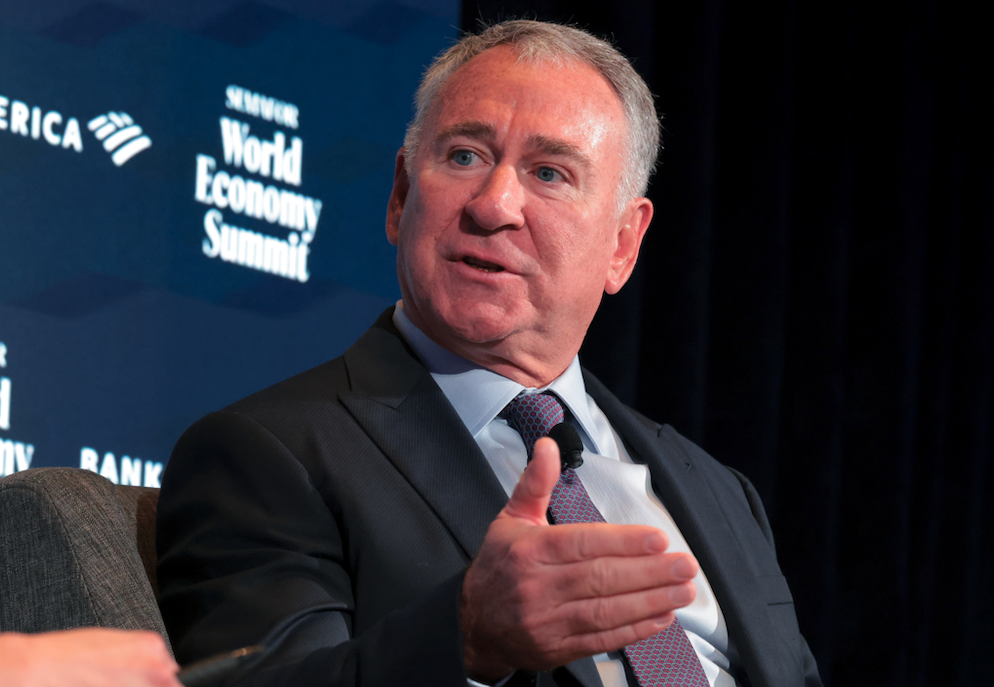
In the history of Wall Street, few have been as successful as Ken Griffin. Over the past three decades, he has built his Citadel hedge fund into a global financial behemoth, helping Griffin accumulate a personal net worth of about $48 billion. So when he makes a market call, it’s worth paying attention.
Always intense, the perennial debate over whether equities are too richly valued has become even more fervent of late.
The market’s attention usually seesaws between corporate fundamentals and monetary policy.
he safety record of zeppelins was relatively unimpeachable prior to the Hindenburg, and that’s why the deadly disaster so shocked the public and devastated the rigid airship industry.
President Donald Trump’s chaotic tariff policies have upended global trade and led to questions about whether the days of US exceptionalism and leadership that attracted capital from around the world are over.
The US economy hasn’t seen tariffs like these in around 80 years.
“Liberation Day” feels like a long time ago. Since President Donald Trump shocked markets with sky-high new tariff rates and a hasty U-turn, the S&P 500 Index has rebounded to all-time highs.
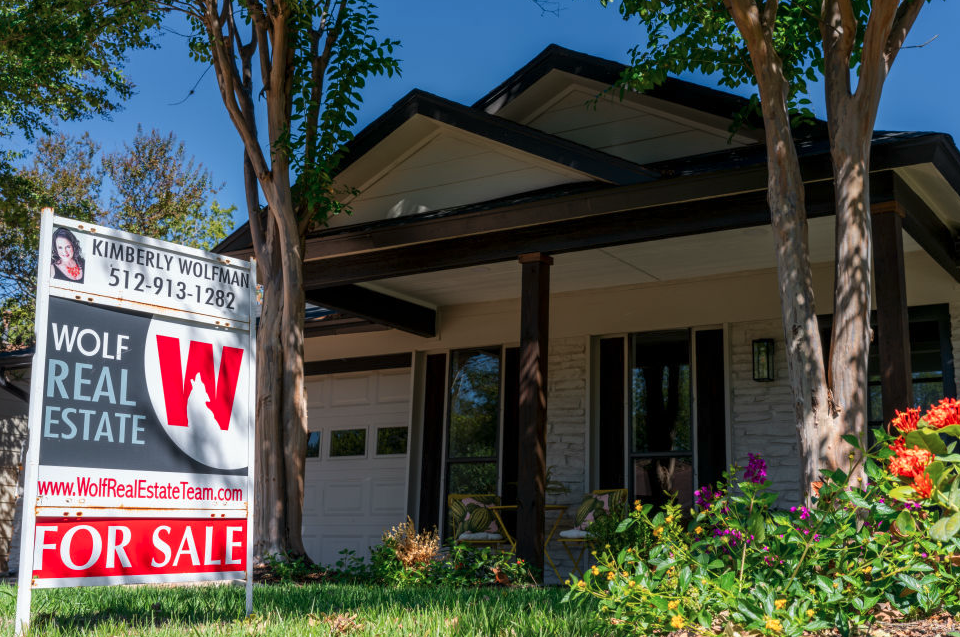
With mortgage rates still near 7%, even relatively wealthy households are choosing to rent rather than buy, and it’s easy to understand why.
The S&P 500 Index just rallied back to all-time highs, brushing off the April tariff shock, the conflict with Iran and the insidious and persistent increase in US continuing jobless claims.
If we’ve seen the worst of the oil price shock from the Israel-Iran conflict, then another ostensible impediment to Federal Reserve interest rate cuts may have just disappeared.
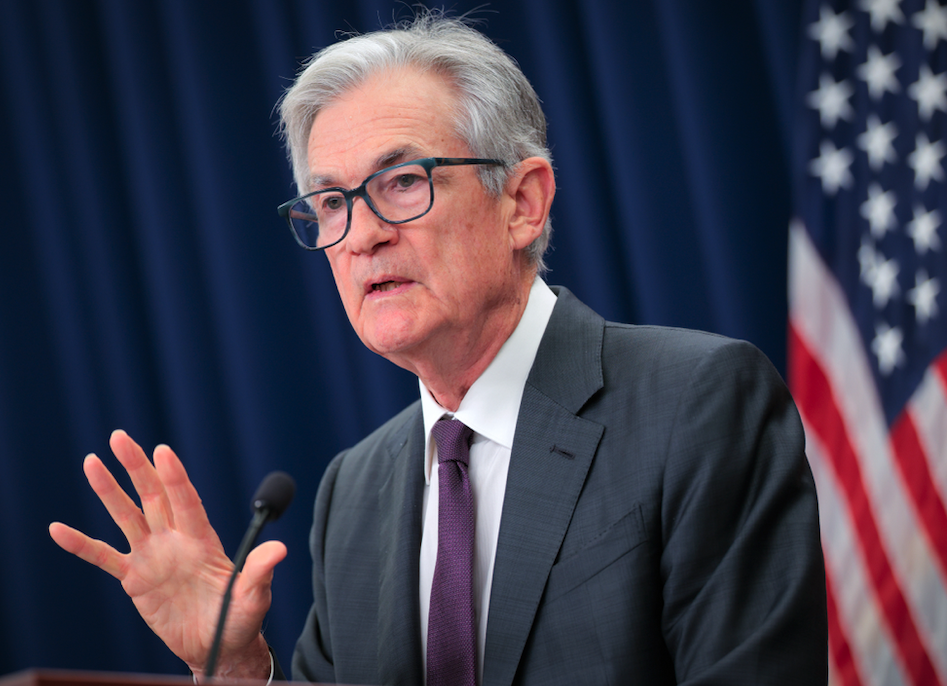
The most powerful institution in global finance is as completely and utterly confused as the rest of us.
It’s premature to assume that tariffs won’t push up inflation, but the developments have been pretty encouraging thus far.
Wall Street analyst outlooks are typically bullish. If you aggregate every price target on every S&P 500 Index company and weight them to match the index, it’s exceedingly rare for the overall number to fall.
f you are wondering why the S&P 500 Index has held up so well in the past two months, look no further than the technology and communications sectors, which collectively account for nearly half of the index by weighting.
Moody’s Ratings has followed S&P Global Ratings and Fitch Ratings in stripping the US of its top-notch credit score, lowering it one level to Aa1.
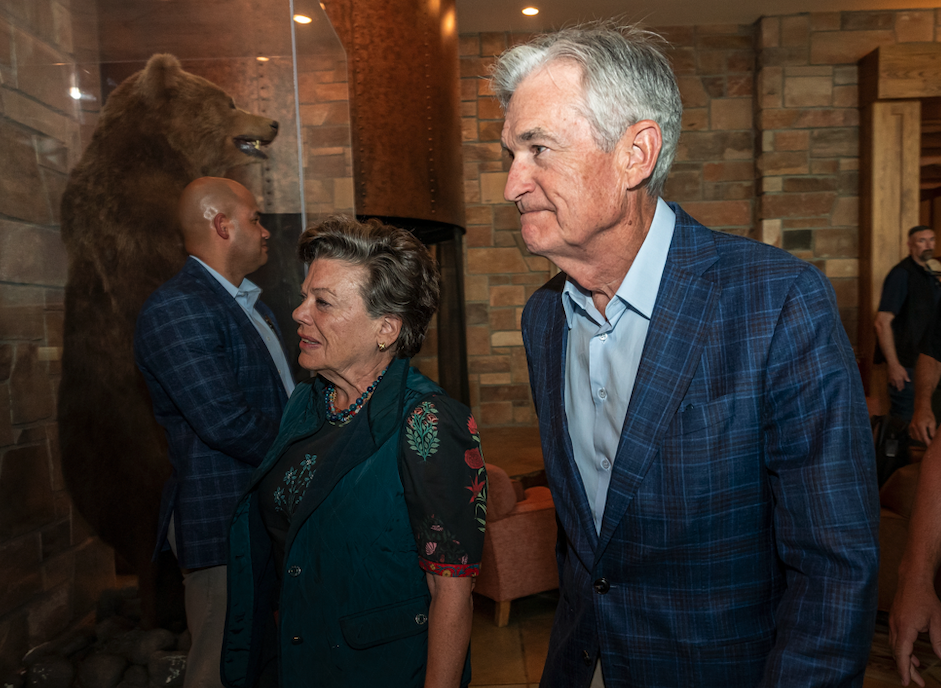
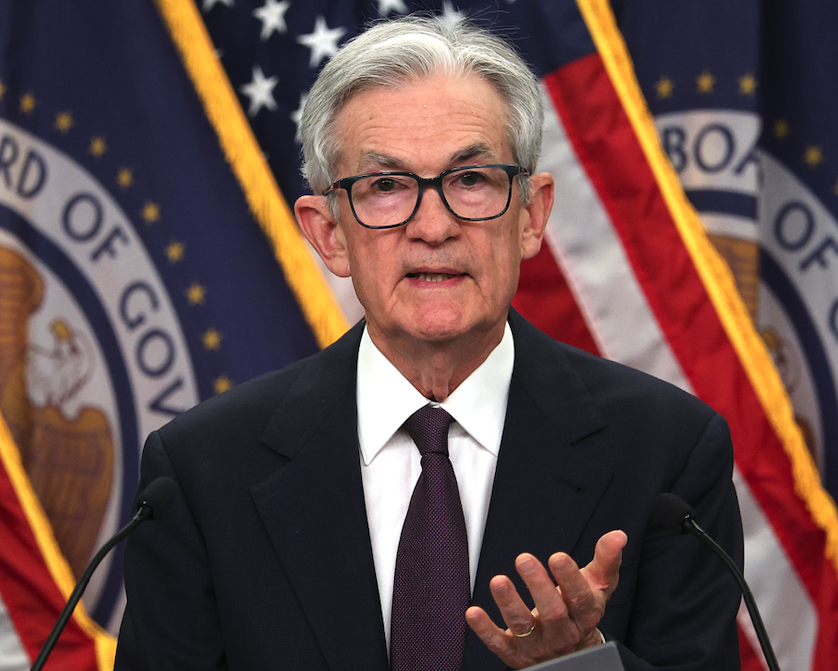
In a speech Thursday, Federal Reserve Chair Jerome Powell hinted that the central bank’s five-year framework review will focus on the particulars of its maximum employment and stable price goals, as well as efforts to communicate clearly with the public.
Warren Buffett is stepping down as chief executive officer of Berkshire Hathaway Inc., the company he built alongside his later partner Charlie Munger for the past six decades.
Delta Air Lines Inc. and the parent of Frontier Airlines recently yanked earnings guidance for 2025, with JPMorgan Chase & Co. Chief Executive Officer Jamie Dimon saying that he expects “to see more of that.”
President Donald Trump has said his reciprocal tariff policy was meant to stand up for the American worker, whom he portrayed as the victim of a decades-long shift toward unfettered globalization.
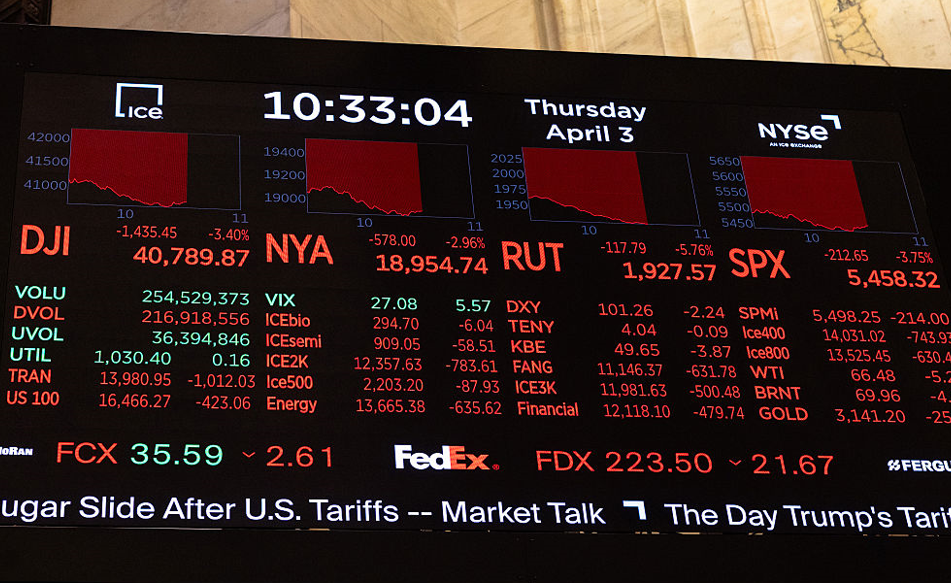
President Donald Trump’s new reciprocal tariff policy is straightforwardly bad for the US economy and markets. The only conceivable reason that the S&P 500 Index was down just 4% on Thursday is that investors still don’t believe it will stick. Unfortunately, there’s no quick way out of this quagmire.
President Donald Trump has pledged to hit countries on Wednesday with “reciprocal tariffs,” whatever that means. In the president’s characterization, the US will raise tariffs to a level that’s suitably high to match the tariff and non-tariff barriers that our exporters face in international markets.
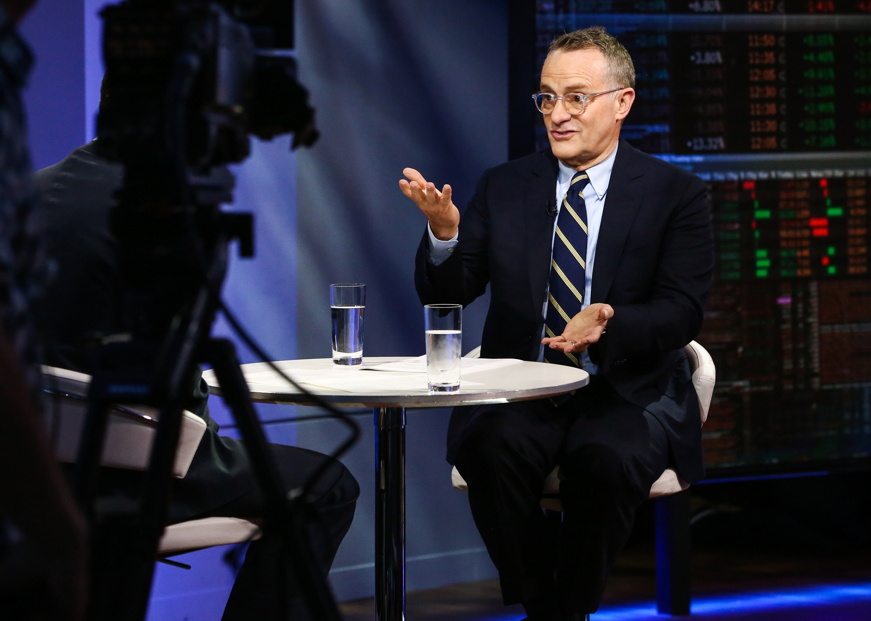
The world is a risky place, and high-yield debt spreads to safe US Treasury securities are close to historic levels of stinginess, signaling complacency in markets — at least on the surface. But legendary investor Howard Marks says that’s the wrong way to look at it and long-term investors should consider allocations to credit.
On the predictable side, the Fed kept policy rates in a range of 4.25%-4.5%, and the rate-setting committee pledged to slow the pace at which it’s allowing securities to roll off its balance sheet.
Markets will be laser focused on Federal Reserve policy and economic projections next week, looking for signs about where interest rates are heading.
Berkshire Hathaway Inc. released its latest shareholder letter Saturday, and the content is — by and large — the usual timeless Warren Buffett fare.
I recently asked DeepSeek to model the impact of artificial intelligence on US labor productivity growth.
The S&P 500 Index plummeted as much as 2.3% on Monday over DeepSeek, a Chinese artificial intelligence startup that developed a model competitive with the US’s very best — and, supposedly, on the cheap.
Most people assume that the S&P 500 Index will go up over long holding periods.
It’s that time of year when Wall Street soothsayers look ahead 12 months and try to divine the path of US stocks.